REVIEW · DA NANG
Da Nang: Ao Dai Show
Book on GetYourGuide →Operated by La Ban Tour · Bookable on GetYourGuide
Curtains up and suddenly you are in imperial Vietnam. The Da Nang Ao Dai Show turns the Nguyen Dynasty era into a one-hour performance with folk dance, traditional martial arts, and costumes inspired by royal court attire. I like that it is visual right away, not a slow lecture.
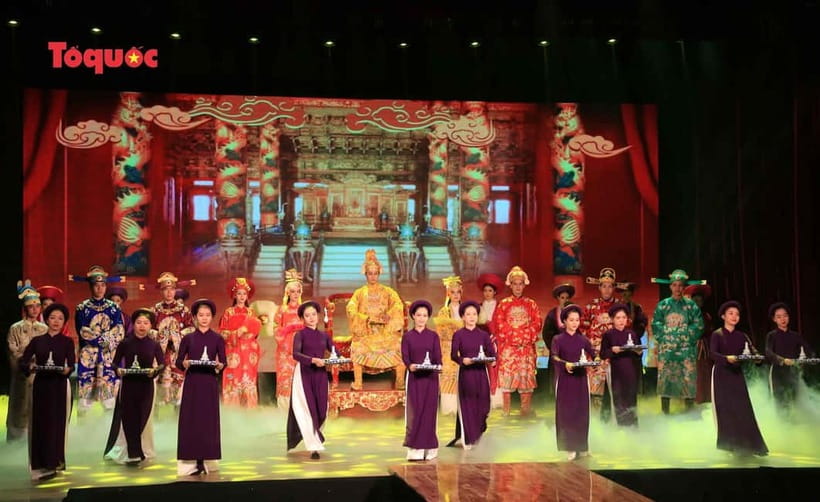
Two things I really love about this experience are the costumes and the way the show builds a sense of being part of the moment. The Ao Dai outfits, designed to reflect what you would expect from kings, queens, and court officials, land with real wow-factor. It is also elegant in a way that does not feel staged or stiff, even when the choreography is clearly precise.
One consideration: the show is about performance, not hands-on history. If you want deep backstory, you might feel like you only get snapshots of the past, even though the presentation is polished and story-driven.
In This Review
- Key Takeaways Before You Go
- The Ao Dai Show in Da Nang: What This 1-Hour Performance Really Delivers
- What You’ll See on Stage: Nguyen Dynasty Court Life, Costume-First
- Ao Dai, Folk Dance, and Traditional Martial Arts: Why This Mix Works
- The Views From Your Seat: A Small Venue Advantage
- The Pace: How a 1-Hour Show Fits Into Your Da Nang Day
- Price and Value: Is $18 a Good Deal?
- Included vs. Not Included: What You Should Plan Around
- Rules That Actually Affect Your Experience: Flash, Photos, and Smoking
- Who This Ao Dai Show Is Best For (and Who Might Skip)
- A Note on the Feel: Elegance, Originality, and That Surprise Factor
- Should You Book Da Nang: Ao Dai Show?
- FAQ
- Where is the Ao Dai Show located?
- How long does the show last?
- What is the price per person?
- What’s included with the ticket?
- Is transportation to and from the venue included?
- Are flash photos allowed during the performance?
- Is photography allowed inside the venue?
- When should I arrive before the show starts?
- Can I cancel for a full refund?
- Is the venue wheelchair accessible?
Key Takeaways Before You Go
- Nguyen Dynasty-inspired Ao Dai: royal-style costumes that visually explain court life
- Folk dance + martial arts: two traditional styles that keep the pacing lively
- Royal court scenes: you get a sense of etiquette, swordplay, and formal movements
- Great views: the venue is small enough that the sightlines feel strong from many seats
- $18 with refreshments: solid value for a one-hour cultural stop in Da Nang
- Rules are strict: no flash and no photography inside, so plan to watch, not shoot
The Ao Dai Show in Da Nang: What This 1-Hour Performance Really Delivers
Da Nang is full of things to do, but the Ao Dai Show hits a sweet spot: it is culture with good production value, and it does not ask you to spend half a day digging through museums. You walk in expecting a performance, and you leave feeling like you saw something that is distinctly Vietnamese, not just a generic dance show.
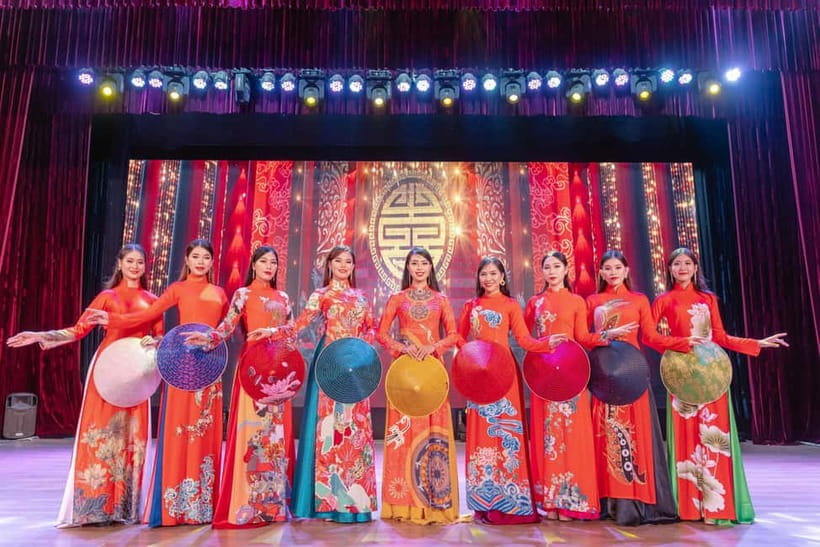
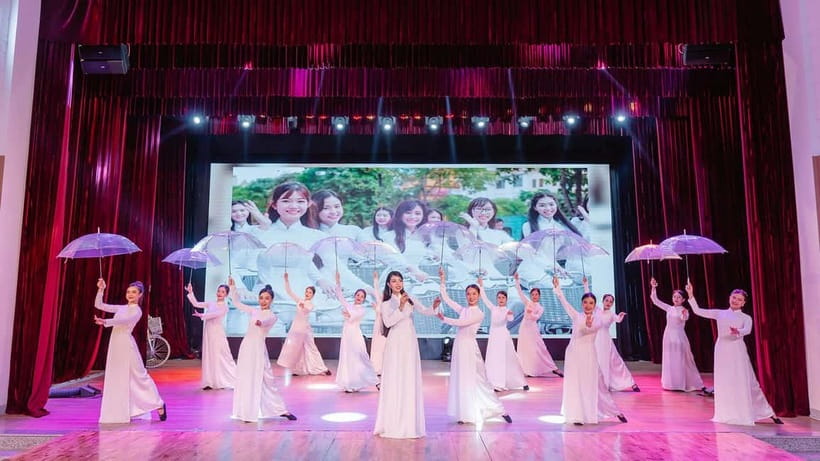
The show focuses on Vietnam’s national dress—the Ao Dai—and presents it through scenes tied to the Nguyen Dynasty. That matters because the Ao Dai can look stylish on its own. Here, it is framed as court attire, so the costumes feel like part of a larger story. You are not only watching dancers in beautiful clothing. You are watching a visual interpretation of hierarchy, ceremony, and traditional movement.
I also like the simple structure: you get a run of court-inspired segments that mix folk dancing with traditional martial arts and coordinated choreography. That combination helps the show stay watchable even if you are not the type who usually loves staged cultural performances.
You can also read our reviews of more tours and experiences in Da Nang



What You’ll See on Stage: Nguyen Dynasty Court Life, Costume-First
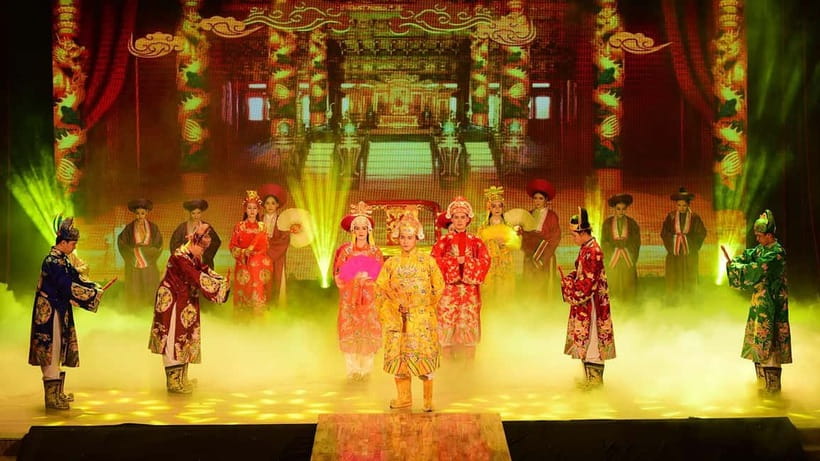
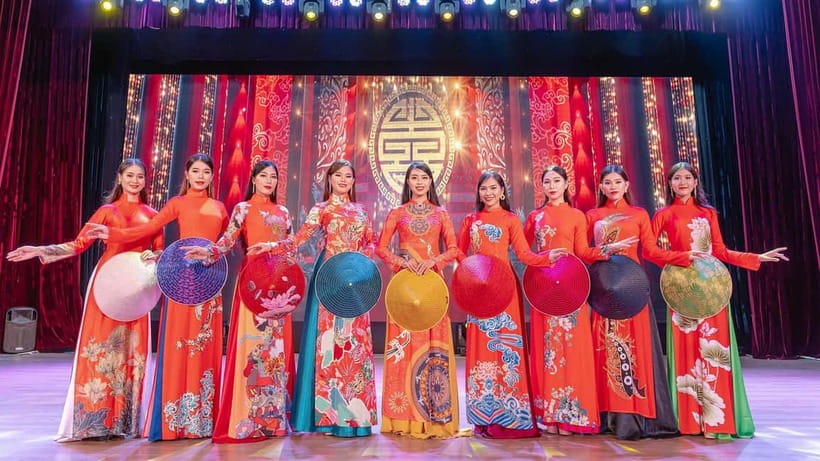
The biggest attraction is the costume work. The performance highlights Ao Dai designs worn by people connected with court roles—think kings, queens, and court officials. Even if you cannot name every detail on the spot, you can still feel the intention: royal attire is meant to look formal, refined, and recognizable.
The show also recreates court scenarios. Expect scenes that feel like they come from an imagined royal court—noble swordplay moments and sequences with synchronized dancers in matching visual styles. These are not random acts thrown together. They are meant to suggest how formal entertainment might have looked in a feudal-era setting.
The effect is mostly visual, and that is a strength. In one hour, you can absorb a lot of information through movement and design. If you are traveling with family, it works because kids and adults tend to follow costumes and choreography quickly. If you are a couple, it works because the show is polished and pretty without needing a long attention span.
Ao Dai, Folk Dance, and Traditional Martial Arts: Why This Mix Works
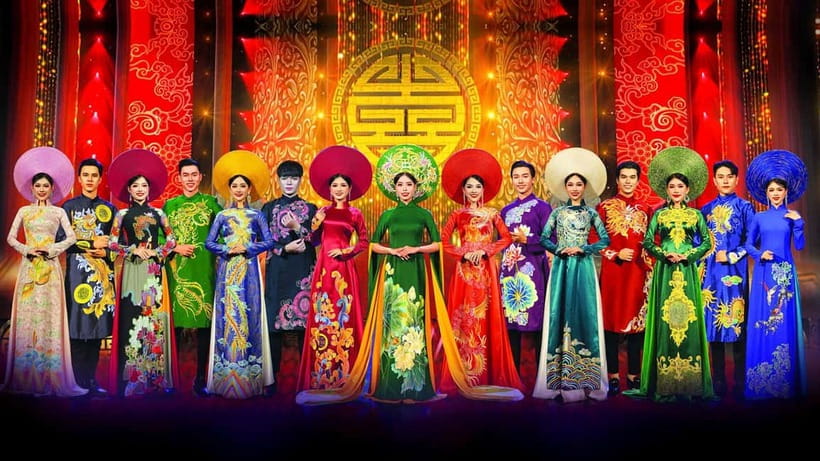
A lot of cultural performances pick one lane—either dance-heavy or story-heavy. This one takes two traditions and uses them like contrast.
- Folk dances bring the grace and rhythm. The movements read clearly even from farther back because they are designed for stage impact.
- Traditional martial arts add sharpness and energy. You get moments that feel more dramatic, especially when the choreography turns toward swordplay and controlled fighting gestures.
When you see those two styles placed next to each other, the show stops feeling repetitive. Dance gives you flow. Martial arts gives you punctuation. Together, they help you stay engaged through the whole performance window.
The choreography is also designed to highlight the Ao Dai itself—how the fabric, silhouette, and colors interact with movement. In the best moments, the costumes look like they are part of the motion, not just something the performers wear.
The Views From Your Seat: A Small Venue Advantage
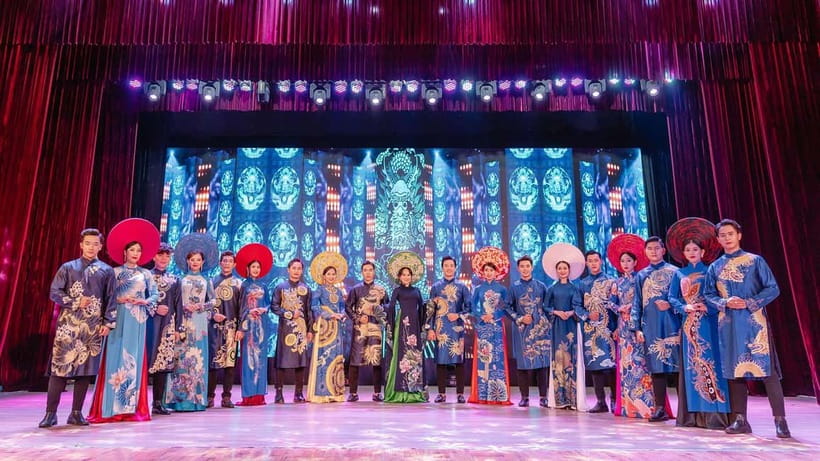
One of the most practical things I like about this show is that the venue is not huge. That usually means better sightlines for more seats, and it fits how this kind of performance works. You do not need a front-row seat to enjoy the costumes and choreography.
From the info you have, you should assume there is a fairly tight performance layout where sightlines matter more than seating upgrades. That is helpful if you want to book quickly and not overthink it.
Still, do not treat this as a stadium show. It is an indoor performance, and the viewing experience depends on showing up on time and following venue rules. If you arrive late, you may miss key costume moments right at the start.
The Pace: How a 1-Hour Show Fits Into Your Da Nang Day
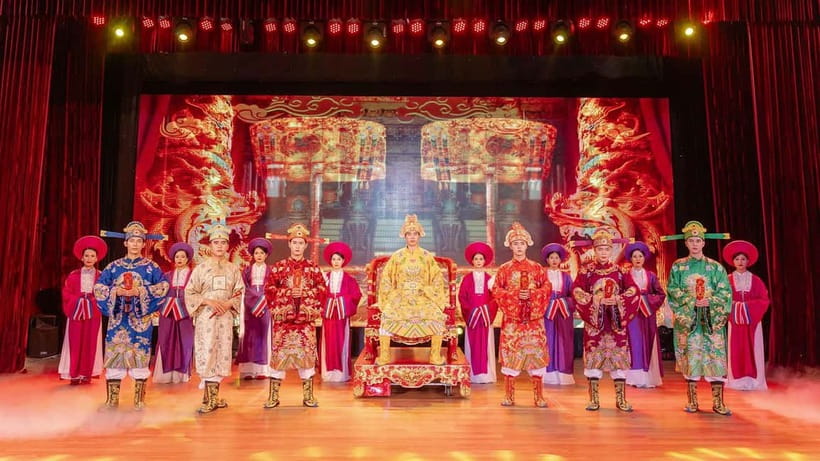
This is a 1-hour experience, which is honestly one of its best values. A lot of cultural stops in Central Vietnam can eat up time—long rides, waits, or multiple hours of wandering. Here, you can plan it like a clean block on your schedule.
The show is also designed to be complete on its own. You do not need to pair it with another activity to feel like you got your money’s worth. That said, it can slot nicely into an evening plan after daytime sightseeing.
What helps the pace is that the performance shifts between styles. You are not stuck watching the same energy level for the full hour. Dance scenes and martial arts scenes alternate, which keeps your attention from drifting.






Price and Value: Is $18 a Good Deal?
Let’s talk money. The ticket price is $18 per person, and it includes the Ao Dai show entrance ticket plus refreshments.
For value, the key question is: what else could you do with $18 in Da Nang that gives you something as specific and local as this? You are paying for a short, staged cultural experience with Nguyen Dynasty costume themes, plus a controlled setting where you can focus on the show instead of navigating language barriers or ticket hassles at multiple stops.
You do not get transportation, and you do not get meals as part of the ticket. That means your real cost depends on how you get there. If you are already in central Da Nang and can reach the venue easily, the pricing feels straightforward. If you would need a car ride from far away, you might feel the total cost creeping up.
Still, for a one-hour show with refreshments included, this is the kind of cultural add-on that usually hits the sweet spot for budget travelers and culture lovers alike.
Included vs. Not Included: What You Should Plan Around
Here’s what you can count on:
- Included: entrance ticket to the show, and refreshments
- Not included: transportation to and from the venue, meals and drinks beyond what is provided, and personal expenses
That leads to a simple strategy. Plan your day so you do not rely on this activity for full meals. If you are hungry before the show, eat beforehand. If you want drinks with dinner, you will need to handle that separately.
Also, because the venue rules limit photography and you should arrive a bit early, keep your phone charged—but do not plan on recording tons of video. Use the time to watch and take in the Ao Dai designs and court scenes live.
Rules That Actually Affect Your Experience: Flash, Photos, and Smoking
This show has a few clear restrictions, and they matter more than you might think.
- No smoking at the venue
- Flash photography is not allowed during the performance
- Photography inside is not allowed (so expect that normal camera use inside the venue may be restricted, not just flash)
If you love taking photos, you might feel disappointed at first. But there is a silver lining: these rules usually help the performers focus and keep the audience respectful. You get fewer distractions, and the show feels more like an event than a social media backdrop.
Also, arrive early. The guidance is to get there 15 minutes before the show starts. That gives you time to settle, find your seat, and get ready to watch without rushing.
One more practical note: the venue is not accessible for wheelchair users or people with mobility impairments. If mobility access is a factor for you or someone in your group, plan ahead so the experience stays comfortable.
Who This Ao Dai Show Is Best For (and Who Might Skip)
This is a strong pick for:
- families looking for a cultural evening that stays entertaining
- couples who want something pretty and calm, not a loud party
- culture lovers who like traditional clothing and performance arts
- anyone who appreciates craftsmanship and stage costumes more than lecture-style history
It is also a good choice if you want a low-stress activity. You are not committing to a long tour. You are committing to one hour of focused, choreographed storytelling.
Who might think twice:
- If you mainly want interactive, hands-on history, this is not that kind of experience.
- If you strongly prefer photography during performances, the rules may frustrate you.
- If you need mobility access, the venue limitations could be a dealbreaker.
For most people, though, the balance is right. You get a guided feeling through the performance itself—court scenarios, graceful dance, and martial arts—without having to plan anything complicated beyond getting there on time.
A Note on the Feel: Elegance, Originality, and That Surprise Factor
The show’s tone comes across as polished and elegant. The costumes are described as top-tier, and the staging feels designed to make the Ao Dai the star of the show.
What I also like is the way it can feel more than just spectator entertainment. The pacing and staging create moments where you feel pulled in rather than just watching from the outside. Some performances stay at arm’s length. This one has moments that can feel personal and memorable, including a sense of surprise that makes it more than a routine ticket purchase.
That matters because a one-hour show can easily become forgettable. This one aims to create a moment you talk about afterward—especially if you came for the clothing, the court scenes, or the blend of dance and martial arts.
Should You Book Da Nang: Ao Dai Show?
If you want a short, memorable, distinctly Vietnamese experience in Da Nang, I think it is an easy yes. At $18, with refreshments included and a one-hour runtime, it is a low-risk way to see Nguyen Dynasty-inspired court imagery brought to life through Ao Dai costumes.
Book it if:
- you like cultural performances with good visual production
- you want something easy to fit into your schedule
- you are traveling with family and need an evening activity that works across ages
Skip it (or think twice) if:
- photography is a must for you
- mobility access is needed
- you only want deep historical context rather than staged court scenes
If you do go, show up 15 minutes early, leave your flash at home, and treat it like a live costume-and-choreography event. You will get more out of it by watching closely than by trying to capture every moment.
FAQ
Where is the Ao Dai Show located?
It is in Da Nang, in Central Vietnam.
How long does the show last?
The experience lasts 1 hour.
What is the price per person?
The price is $18 per person.
What’s included with the ticket?
Your ticket includes entrance to the Ao Dai Show and refreshments.
Is transportation to and from the venue included?
No. Transportation is not included.
Are flash photos allowed during the performance?
No. Flash photography is not allowed during the performance.
Is photography allowed inside the venue?
No. Photography inside is not allowed.
When should I arrive before the show starts?
Arrive 15 minutes before the show starts.
Can I cancel for a full refund?
Yes. You can cancel up to 24 hours in advance for a full refund.
Is the venue wheelchair accessible?
No. The venue is not accessible for wheelchair users or people with mobility impairments.