REVIEW · DA NANG
Explore Hoi An ancient town and local villages with a local guide
Book on Viator →Operated by Be Your Feet Travel · Bookable on Viator
Hoi An works best when someone local walks you through it. This private day links the ancient riverside town with real village crafts and food, so you get more than photos, especially at Tran Que/Tra Que and the pottery studios. I like that the day is built around hands-on making (clay) plus guided history, and that food is treated like part of the culture, not just a break. One possible drawback: it’s a long, packed 8–10 hour day, so comfy shoes matter and you’ll want to pace yourself between stops.
You also get the kind of tour experience that feels personal. The guiding names that keep popping up in praise include Dat, Eric, and Hung, and people talk about English communication, friendly conversation, and guides who can shape the day on the spot. If you’re hoping for a slow, laid-back half-day, this isn’t that.
In This Review
- Key moments that make this tour worth your time
- From Da Nang to Hoi An: a full day that stays practical
- Tra Que Vegetable Village: see how the food gets made
- Thanh Ha Pottery Village: making clay beats watching clay
- Lunch reset with banh mi: keep it simple, keep it moving
- Cẩm Thanh water coconut village: basket boat + crab catching
- Hoi An Ancient Town: history you can walk through
- Night market in Hoi An: street food, crafts, and gift hunting
- Dinner with Cao Lầu or chicken rice: end with the local flavors
- Price and value: what $104 buys in real time
- Who should book this private Hoi An village day?
- Should you book Be Your Feet Travel for this Hoi An day?
- FAQ
- How long is the Hoi An ancient town and village experience?
- Do they pick you up from your hotel in Da Nang?
- What does the tour cost per person?
- Is lunch and dinner included?
- Are entrance fees included?
- What activities are included besides sightseeing?
- What meals do you have during the day?
- What is the cancellation policy?
Key moments that make this tour worth your time
- Hands-on clay time in Thanh Ha Pottery Village so you leave with something made by you
- Tra Que farming life at a working vegetable village, not a staged “look-and-leave” stop
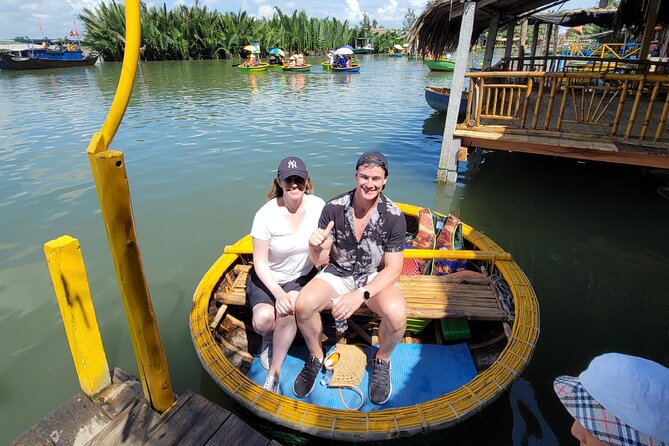
- Cam Thanh basket-boat crab catching in the water coconut area, with a traditional ride
- Hoi An Ancient Town with specific landmarks like assembly halls and the historic core
- Night market food + gift browsing while your guide explains what you’re eating
From Da Nang to Hoi An: a full day that stays practical

This is a private tour from Da Nang that runs about 8 to 10 hours, with pickup offered. You meet your guide at your hotel lobby, and then you spend the day moving between Hoi An’s historic center and nearby village workshops.
I like the structure because it avoids the usual problem: you don’t just arrive, wander, and then scramble to find something worth eating. Instead, you get a run of “why this place exists” stops—farming, pottery, river/coastal life—then you return to Hoi An for the big sights and the night market.
One small note for planning: the itinerary includes several active moments (walking, market browsing, and the water coconut area ride). You’ll be happier if you dress for sun or rain, wear shoes that can handle uneven paths, and bring a light layer just in case.
You can also read our reviews of more guided tours in Da Nang



Tra Que Vegetable Village: see how the food gets made
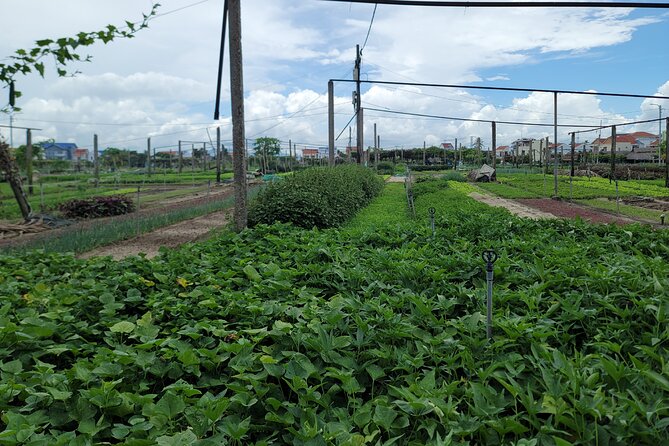
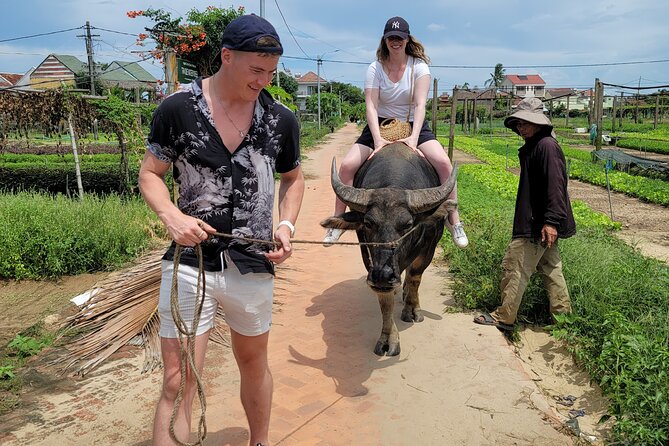
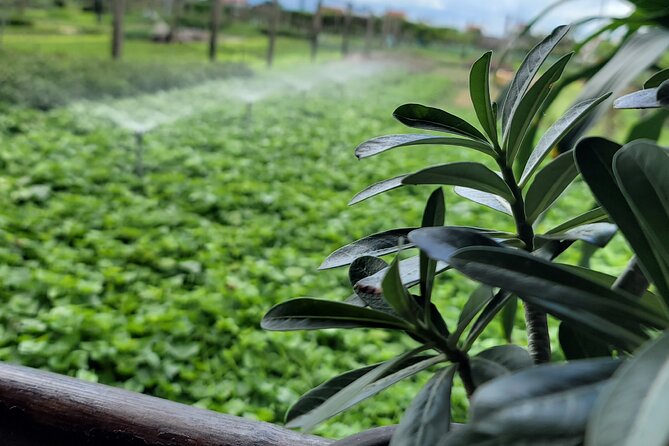
The day begins at Tra Que Vegetable Village, a working area where locals farm vegetables using techniques passed down over generations. The experience is hands-on in spirit: you meet local farmers, learn their methods, and hear the everyday rhythm of village life.
Why this matters: in Vietnam, food culture often starts at the farm gate. When you visit a place like Tra Que, you’re not only buying a snack later—you understand why the ingredients taste the way they do. And because the stop is timed around about an hour, you get the learning without turning your day into a lecture.
What to expect:
- A village visit focused on real people and real working practices
- A relaxed pace where you can ask questions and take photos
- Included time that helps you connect the dots before Hoi An’s food stops
If you’re the type who loves markets, I think you’ll enjoy Tra Que even more because you’ll recognize the “ingredients behind the dishes.”
Thanh Ha Pottery Village: making clay beats watching clay
Next comes Thanh Ha Pottery Village, where you get into the fun part: clay modeling. You’ll create classic pieces of art and spend about an hour working with the craft.
I like this stop because it’s not just a demo. It gives your brain a break from walking and your hands something to do. Plus, pottery is one of the easiest crafts to appreciate with your eyes and your sense of scale—you’ll understand the time and care involved once you try it.
Practical advice:
- Wear clothes you don’t mind getting a little dusty
- If you care about how your piece looks in photos, listen closely to what the instructor wants you to focus on
- Plan to be patient; making something by hand takes time
This is also one of the best “memory-makers” on the day. A bowl or small clay item carries the experience home better than another souvenir shop bag.
Lunch reset with banh mi: keep it simple, keep it moving
After the pottery stop, the day includes lunch (about 30 minutes) with bánh mì. It’s built as a reset before you head into the more active part of the itinerary.
Since the tour also includes dinner later, lunch is usually not meant to be a long, slow meal. That’s good for you if you want to see a lot without losing the day to sitting down. Also, you don’t have to hunt for a place at the exact moment you’re hungry.
If you’re sensitive to spicy flavors, it helps to tell your guide. Even when the meal is simple, you’ll get a better experience by communicating early.
Cẩm Thanh water coconut village: basket boat + crab catching
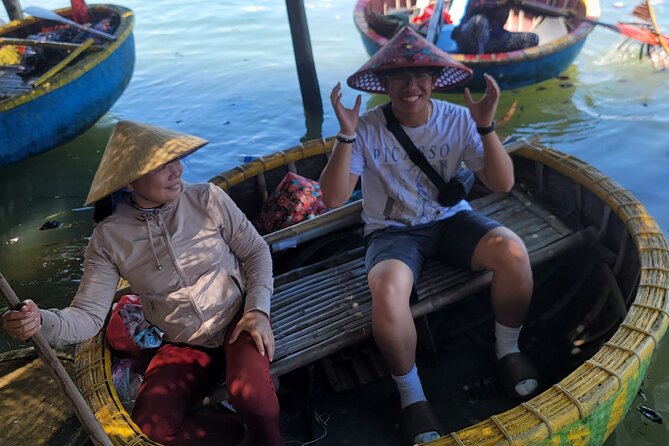
The itinerary then heads to Cẩm Thanh (also spelled Cam Thanh), the water coconut village area. This is about an hour, and it includes an activity that’s more fun than it sounds on paper: you go out in a traditional basket boat and try catching crabs in the calm water.
This is one of those “do it once” experiences that’s hard to replicate later. It’s not just a ride—you actually participate. And because the water conditions are described as calm, it’s less intimidating than some rougher boat outings.
What to be ready for:
- You’ll likely get a little wet, so bring a small towel if you can
- Pay attention to the instructions for boat handling and crab catching
- Bring a neutral mindset: you’ll either get a crab or you’ll get a story, and both are valid
If your group includes kids, this is the stop that tends to win them over, since it’s hands-on and playful instead of museum-style.






Hoi An Ancient Town: history you can walk through
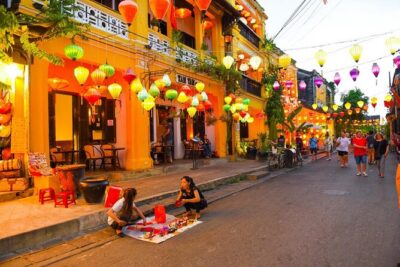
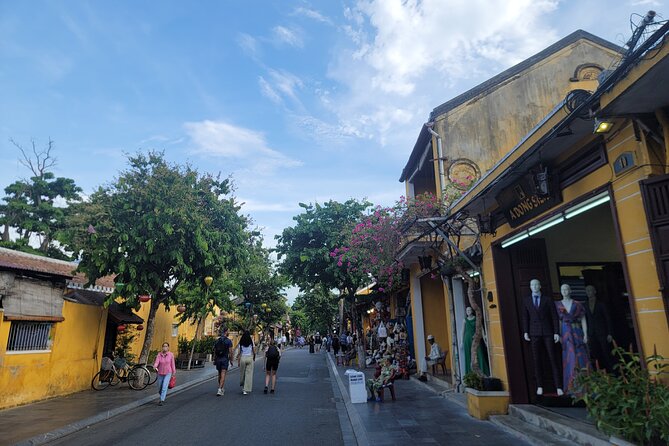
You get a longer stretch in Hoi An Ancient Town—about 3 hours—and this is where your guide really earns their paycheck. You’ll see things like Fujian Assembly Hall, market life, and the historic core that shaped Hoi An as a river port.
The best way to think about this section: you’re being shown the layers. Hoi An wasn’t one culture for centuries—it was a meeting point. The day’s earlier village stops help you understand how local life connects to trade and craft, and then the ancient town gives you the architecture and urban layout.
Also, the Japanese covered bridge is part of the wider Hoi An story, and your time in the ancient area is a good moment to look for that kind of iconic structure when you’re moving between streets.
Practical walking advice:
- Expect narrow lanes and short crossings
- Take breaks when you feel rushed; the guide can keep the story going while you catch your breath
- If it rains, Hoi An still works—just use a light rain layer and slow down your pace
This stop is also where you’ll appreciate the private nature. You don’t have to keep up with a big bus group, and your guide can steer you away from the most annoying bottlenecks.
Night market in Hoi An: street food, crafts, and gift hunting
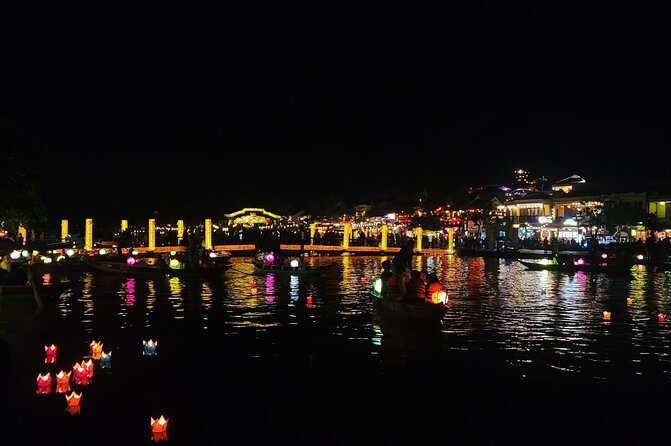
After the historic walk, the day shifts into evening with Hoi An Night Market (about 1 hour). This is your chance to browse stalls selling local handicrafts, clothing, and souvenirs.
The food element matters here. The market is where street snacks make sense, because you can sample in small portions while staying mobile. And with your guide, you’re less likely to accidentally order something that doesn’t match what you like.
How I’d approach it:
- Start with one snack, not five
- Look for items that are being cooked in front of you
- Ask what a dish is and what it tastes like, so you don’t end up with a mystery bite
If you love shopping but hate the pressure, night market browsing feels easier when you’re not doing it alone. You’ll still have freedom to wander, just with a local guide nearby to help you choose.
Dinner with Cao Lầu or chicken rice: end with the local flavors
Your final meal is included as dinner (about 1 hour) featuring Cao Lầu (Hoi An traditional noodle) or chicken rice—and your guide explains what makes the food special. This is one of the best ways to close the loop on the day: you started with village craft and farm life, then you finished with a dish tied to Hoi An itself.
Why this works: guides tend to make the story clearer when the plate is right in front of you. You learn what to watch for in flavor, texture, and local ingredients, instead of trying to remember it later.
If you can, choose based on what you want more right now:
- Go for Cao Lầu if you want noodles and a dish strongly linked to Hoi An
- Choose chicken rice if you want something familiar but still locally done
Either way, dinner is part of why this tour feels complete rather than like random stops strung together.
Price and value: what $104 buys in real time
At $104 per person, this isn’t the cheapest way to see Hoi An—but it can be good value when you compare what you get.
Here’s what you’re paying for that matters:
- Private transportation during the day
- Entrance fees for the included sites
- Lunch and dinner, plus bottled water
- A guide who handles the flow so you’re not bouncing around on your own
The day also includes group discounts and uses a mobile ticket, which is useful when you’re juggling time and places. And the tour is often booked around 72 days in advance, which tells me it’s in demand—often a sign of steady quality and smooth operations.
My quick verdict: if you want a structured day with meaningful village stops and guided ancient-town time, the price is fair. If you mainly care about selfies and want to roam independently, you can probably do Hoi An for less on your own. But you’ll work harder for the same story.
Who should book this private Hoi An village day?
This tour fits best if you want:
- A guided day that connects history, crafts, and food
- Hands-on activities like pottery modeling
- A mix of ancient town walking plus an outdoor river/coastal experience
It’s also a strong option for families—at least that’s the vibe from the guide praises, where kids and parents both seem to have enjoyed the day.
If you’re the type who gets tired from lots of moving parts, you might consider splitting your time: do ancient town one day, villages another day. But if you’re okay with a full schedule, this is one of the easier ways to make Hoi An feel coherent.
Should you book Be Your Feet Travel for this Hoi An day?
I’d book it if you want a local-guided Hoi An day that feels purposeful, not random. The biggest strengths are the guide-led storytelling (names like Dat, Eric, and Hung show up often in praise), the hands-on clay activity in Thanh Ha, and the fact that meals are planned as part of the cultural experience.
I’d skip it—or at least rethink it—if you prefer slow travel, minimal walking, or you dislike structured itineraries. This is built to fill the day, and that’s exactly why it works.
If you’re visiting Da Nang and you want Hoi An to click fast, this tour gives you a solid path: farm village first, craft next, boats and water life, then ancient town and night market.
FAQ
How long is the Hoi An ancient town and village experience?
The tour runs about 8 to 10 hours, depending on the day and pacing.
Do they pick you up from your hotel in Da Nang?
Yes. Pickup is offered, and you meet the guide at your hotel lobby.
What does the tour cost per person?
The price is $104.00 per person.
Is lunch and dinner included?
Yes. Lunch and dinner are included, along with bottled water.
Are entrance fees included?
Yes. Visiting entrance fees are included in the tour.
What activities are included besides sightseeing?
You’ll visit Tra Que Vegetable Village, take part in a clay modeling class in Thanh Ha Pottery Village, and try basket boat crab catching in the Cẩm Thanh water coconut village.
What meals do you have during the day?
Lunch includes bánh mì, and dinner includes Cao Lầu (Hoi An traditional noodle) or chicken rice.
What is the cancellation policy?
Free cancellation is available up to 24 hours in advance for a full refund. If you cancel less than 24 hours before the start time, the payment is not refunded.