REVIEW · DA NANG
Hue City 1 Day Tour (from Da Nang)
Book on Viator →Operated by DIMOTRIP · Bookable on Viator
Hue in one day feels oddly possible. You get a big batch of Hue’s key sights packed into a 10-hour-30-minute day, with a standout drive through the Hai Van Tunnel before you start the royal-and-religious stops.
What makes this tour work is the way the day is structured: you move from mountain tomb views to a classic pagoda, then finish at the UNESCO-listed citadel. I especially liked having an English-speaking guide who kept the flow calm and clear, and I liked that entrance fees for the main stops are included so you don’t spend your day hunting tickets.
One consideration: this is a long day in a coach, and Hue weather can be unpredictable. If rain rolls in, you’ll want to be ready with waterproof layers and a flexible attitude.
In This Review
- Key Highlights That Make This Tour Worth Your Time
- Hue City From Da Nang: Why This One-Day Plan Works
- The Hai Van Tunnel Drive: More Than Just Getting There
- Tomb of Khai Dinh: Royal Architecture That Feels Different
- Thien Mu Pagoda: The Oldest Monument in Hue
- Hue Imperial City (The Citadel): UNESCO World Heritage in Human Scale
- Price and What You’re Really Buying for $52
- Group Size, Guide Style, and Why It Shows Up in Reviews
- Weather Reality in Hue: Plan for Rain Without Panicking
- Who This Tour Is Best For
- Should You Book the Hue City 1 Day Tour From Da Nang?
- FAQ
- How long is the Hue City 1 Day Tour from Da Nang?
- How much does the tour cost?
- What is included in the price?
- What is not included?
- What stops are included during the day?
- Is pickup offered and will I receive a ticket?
- How large is the group?
- What is the cancellation policy and what happens with bad weather?
Key Highlights That Make This Tour Worth Your Time

- Hai Van Tunnel connection: a fast route between Da Nang and Hue that turns travel time into part of the sightseeing mood
- Khai Dinh Tomb for design lovers: architecture and artwork that feel unusual for Vietnam’s royal tomb style
- Thien Mu Pagoda’s long legacy: the oldest monument in Hue, known for royal architecture and classic river views
- Hue Imperial City (UNESCO): a practical way to see the Nguyen Dynasty’s power center without getting lost
- Small group feel (max 35): big enough for comfort, not so huge that questions get ignored
- Included guide + entrance fees: you pay for a day plan, not a pile of add-ons
Hue City From Da Nang: Why This One-Day Plan Works
If you’re basing yourself in Da Nang, Hue can feel like a “real trip.” This tour turns it into a day you can actually manage. The route is built around one main travel fact: Hue is a historic capital city, so you want to spend your time at sites with meaning, not just passing through streets.
You’ll start with a coach ride out of Da Nang and then cross into Hue territory via the Hai Van Tunnel. That matters more than it sounds. Instead of treating the journey like wasted time, this tour uses it as the opening act. It sets the tone: mountains first, then tombs and temples, then the citadel.
The other thing I like is how the day balances “big” landmarks with “readable” time blocks. You’re not crammed into back-to-back rushed stops. The schedule gives you time at each highlight (and that pacing is a big deal in a one-day format).
You can also read our reviews of more city tours in Da Nang



The Hai Van Tunnel Drive: More Than Just Getting There
The Hai Van Tunnel is about 6.28 km long and is considered the longest road tunnel in Southeast Asia. It links Da Nang City and Thua Thien-Hue Province, and it was completed in 2005. For you, that turns into a practical win: less time on winding coastal roads and more time to enjoy the day.
Even if your focus is Hue itself, the tunnel drive gives you a clean “transition moment.” You’re leaving the Da Nang coast behind and heading into Hue’s more historical atmosphere. And since the tour includes transfer by a good-condition coach, you can sit back and keep your energy for the walking and viewing later.
A small tip: keep your camera ready when you exit the tunnel area. The whole day is built around eyes-on-the-sights moments, and this is the first shift in scenery you’ll notice.
Tomb of Khai Dinh: Royal Architecture That Feels Different
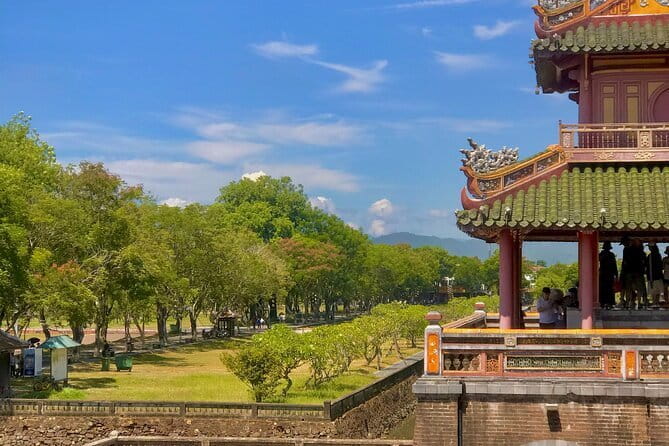
Your first major stop is the Tomb of Khai Dinh, with about 2 hours on site. This tomb is famous for highly sophisticated architecture and unique artistic beauty. It also sits on Ung Son mountain, which helps explain its peaceful feel—green hillside atmosphere around a royal structure that looks carefully engineered rather than just “decorated.”
What I like about starting with Khai Dinh is that it trains your eyes for what comes next. Hue isn’t one “style.” It’s a mix of ideas, symbols, and influences that show up across monuments. Khai Dinh gives you a strong example of royal design choices—how a dynasty wanted to be seen even in death.
A practical note: plan for a bit of uphill terrain and steps. The schedule gives you time, but the tomb is still a tomb—so wear shoes that handle uneven surfaces. If it’s damp, go slow on stairs.
Thien Mu Pagoda: The Oldest Monument in Hue
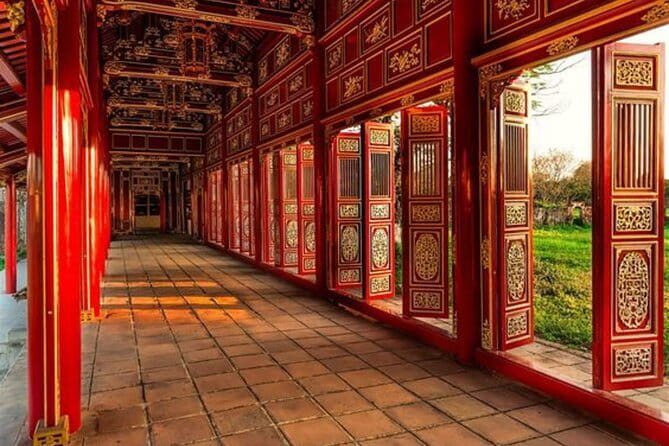
Next up is the Thien Mu Pagoda (about 1 hour included). This is Hue’s best-known religious landmark for a reason. It’s also called the Heavenly Lady Pagoda and is known as the oldest monument in Hue. You’ll see royal architecture, hear the common story connections people associate with the pagoda, and enjoy those classic scenic angles people remember.
The listing description also points out something that matters for your photo plan and your mental map: Thien Mu is known for poetic views. Even when weather isn’t perfect, this is the type of stop where you understand why this city sits on the Perfume River bank. The pagoda’s identity is tied to its setting.
One consideration: one hour sounds short, but that’s the point of a one-day itinerary. Use the time well. Take a steady walk, pause to view from different angles, and don’t spend the whole hour just chasing one angle for one photo. The building details and the view both reward patience.
Hue Imperial City (The Citadel): UNESCO World Heritage in Human Scale
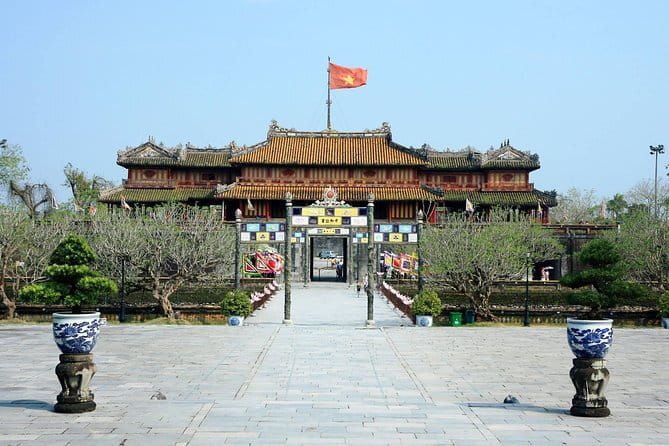
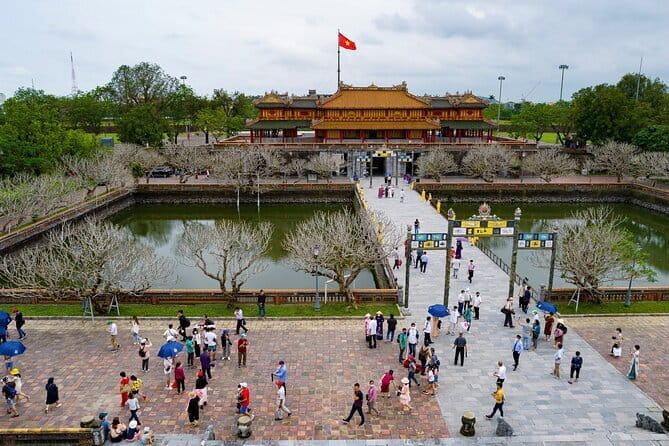
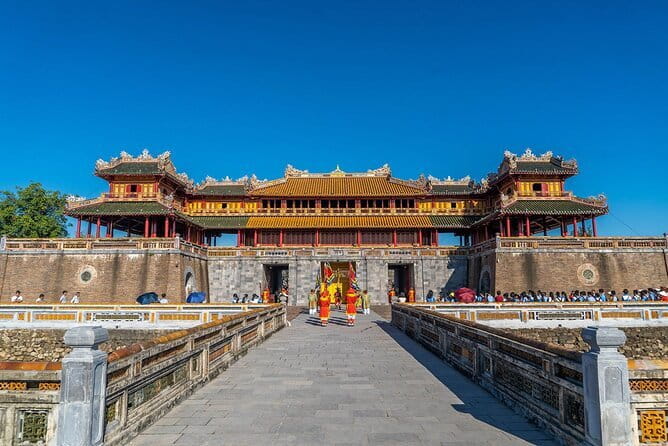
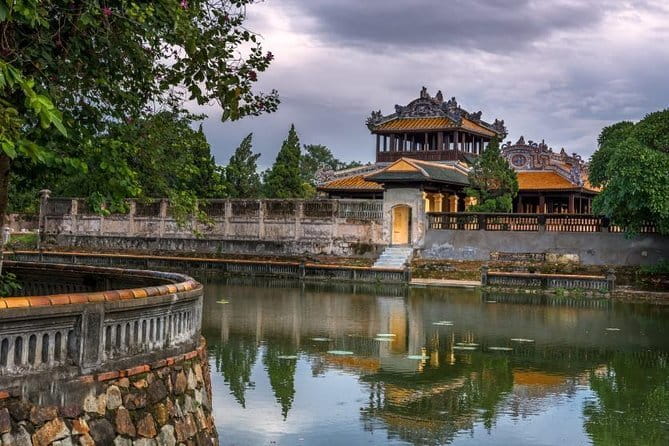
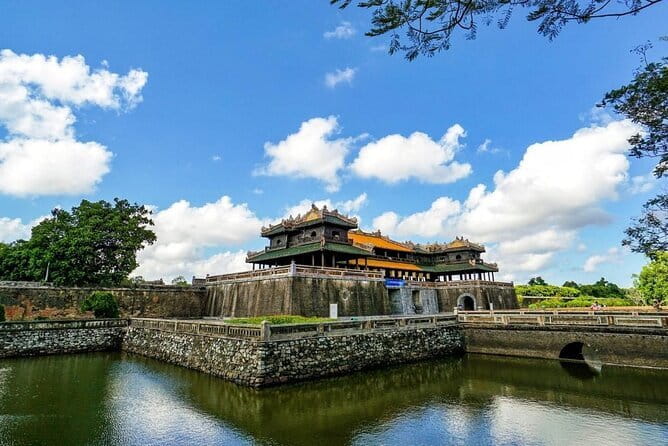
The day ends with Hue Imperial City, also called the citadel (about 1 hour). This UNESCO World Heritage site was built in the early 19th century during the Nguyen Dynasty. Inside, you’ll find palaces, temples, and royal tomb areas that helped define how power was staged in royal Vietnam.
I like ending here because it’s the big “center of gravity.” After Khai Dinh and Thien Mu, the imperial citadel explains the bigger structure of the story. Religious life, royal funerary style, and political authority all point toward the same question: how Hue functioned as Vietnam’s old capital.
Within an hour, you won’t see everything like a week-long trip would. But that’s not the goal of a one-day tour. The goal is to give you the bearings. A good guide helps you connect what you’re seeing to the why behind it, so you leave with understanding—not just photos.
Practical advice: bring patience and hydration habits. Even without lots of walking, the citadel areas can feel open and exposed to weather. Use your time early in the hour for the main viewpoints, then circle back if time allows.
You can also read our reviews of more tours and experiences in Da Nang






Price and What You’re Really Buying for $52
At $52 per person, this tour is priced like a guided day trip, not a budget DIY gamble. Here’s what you’re getting that matters for real value:
- Bottled water
- Good English tour guide
- Transfer by a good-condition coach
- Entrance fees for the sightseeing stops
That combination is the core value. Hue monuments can get expensive when you add tickets one by one, and the coach + guide saves you from the time-cost of figuring out transport. You also get a planned sequence that keeps you moving in a logical order.
What’s not included is tips for the tour guide and driver and personal expenses. That’s normal for Vietnam day tours. If you want a smooth end-of-day experience, budget a little for tipping rather than treating it as an afterthought.
One more value note: the tour uses a mobile ticket, which reduces friction. You show up, get on the plan, and keep your day simple.
Group Size, Guide Style, and Why It Shows Up in Reviews
The tour runs with a maximum of 35 travelers, which usually lands in that comfortable mid-size range. In a day like this, that balance matters: you can ask questions without feeling like you’re speaking into a megaphone, and you’re not waiting forever for the entire group to shuffle forward.
The standout theme from real experiences is the guide quality. People praised guides like An and Vi for being calm, funny, and focused—never rushing, and answering questions about Vietnam. That doesn’t just make the tour pleasant. It helps you understand what you’re looking at, which is the difference between seeing monuments and actually learning from them.
If you care about explanations—why a pagoda matters, what makes a tomb’s architecture distinct, how the citadel relates to the Nguyen Dynasty—this tour’s format is built for that. A good guide turns a checklist into a story.
Weather Reality in Hue: Plan for Rain Without Panicking
Hue is worth visiting in most conditions, but the tour description is honest: this experience requires good weather. If weather is poor, the operator offers a different date or a full refund.
In real life, that means you should pack like you’re going to be rained on at least once. Bring a waterproof layer, a small umbrella, or both. Also, keep a dry bag or zip pouch for your phone and camera accessories.
And keep your expectations realistic: even in wet weather, you’re still visiting tombs, pagodas, and a citadel—things that hold up in rain because you’re mostly moving between structures and viewing points. Bad weather can reduce comfort, but it doesn’t erase the meaning of the places.
Who This Tour Is Best For
This is a strong fit if you:
- want a first trip to Hue without spending extra days there
- prefer guided history and practical timing over DIY planning
- like UNESCO-level sites but also want variety in one day (tomb + pagoda + citadel)
- are traveling from Da Nang and want an organized coach day
It may not be ideal if you:
- want a slow, super-detailed visit where you can linger for hours in each monument
- hate long coach days or are very sensitive to weather changes
- expect a mostly “hands-on” activity day rather than a classic sightseeing route
Should You Book the Hue City 1 Day Tour From Da Nang?
I think you should book this tour if you want a guided, efficient Hue overview with the key landmarks handled for you: Khai Dinh Tomb, Thien Mu Pagoda, and Hue Imperial City—plus the Hai Van Tunnel ride that makes the day feel like one connected trip instead of two separate journeys.
Book it especially if you value pacing and explanations. When the guide is strong—like An or Vi-style service you’ll hear about—your hour at each stop becomes more meaningful than the clock suggests.
If you’re the type who needs total flexibility for weather or refuses long coach days, then consider a different plan. But for most people traveling with limited time, this is a smart way to see Hue without turning it into a logistics headache.
FAQ
How long is the Hue City 1 Day Tour from Da Nang?
The tour duration is approximately 10 hours 30 minutes, and travel time is included in the tour duration.
How much does the tour cost?
The price is $52.00 per person.
What is included in the price?
The tour includes bottled water, a good English tour guide, transfer by a good-condition coach, and entrance fees for the sightseeing stops.
What is not included?
Tips for the tour guide and driver and personal expenses are not included.
What stops are included during the day?
The tour includes the Hai Van Tunnel, Tomb of Khai Dinh, Thien Mu Pagoda, and Hue Imperial City (the Citadel).
Is pickup offered and will I receive a ticket?
Pickup is offered, and you’ll have a mobile ticket.
How large is the group?
The tour has a maximum of 35 travelers.
What is the cancellation policy and what happens with bad weather?
You can cancel for a full refund up to 24 hours before the experience starts. The tour requires good weather; if it’s canceled due to poor weather, you’ll be offered a different date or a full refund.