REVIEW · DA NANG
Da Nang “The Ao Dai” Show: Timeless Vietnamese Elegance
Book on GetYourGuide →Operated by Vietnam TravelMART · Bookable on GetYourGuide
Ao Dai meets Vietnam’s timeline in one hour. In Da Nang, this Ao Dai Show at the Culture House of Ngu Hanh Son District turns traditional clothing into a story that moves from dynasties to modern life.
I really like how the program explains what you’re seeing in plain language, with English support so you can follow along. I also love the costume craft, especially the way the show layers royal court style next to everyday clothing and folk traditions.
The second thing I liked most is how it stays watchable, not lectur-y. You’ll see highlight scenes like the Nguyen Dynasty royal court, a recreated old-market street, traditional wedding rituals, and the white Ao Dai school uniform segment.
One possible drawback: if you’re hoping for a museum-level, super-detailed history lesson, this is still a stage show. It’s designed to be fun and readable, so you may want to pair it with another quick history stop in Da Nang for extra context.
In This Review
- Key Things I’d Plan Around
- Entering the Culture House of Ngu Hanh Son District
- What the Ao Dai Show Actually Covers in Its One-Hour Story
- Nguyen Dynasty Court: “Timbre of the Royal Palace” Energy
- The 300 Years of Ao Dai Segment and the Old Market Scene
- Traditional Wedding Segment: Past Ritual Meets Present Meaning
- Lotus Dance: Symbolism in Movement
- White Ao Dai School Uniform: Education, Discipline, and Poise
- The Ao Dai Show Finale: Royal Meets Folk Meets Modern
- Narration, English Support, and How to Watch It Well
- Price and Value: Is $17 a Good Deal?
- Who This Ao Dai Show Suits Best (and Who Might Skip)
- So, Should You Book the Da Nang Ao Dai Show?
- FAQ
- How much does the Da Nang Ao Dai Show cost?
- How long is the show?
- Where is the meeting point?
- Is there an English host or greeter?
- Do I need to arrive early?
- What languages is the show available in?
- What’s included in the ticket?
- Is transportation included?
- Can I cancel and get a refund?
Key Things I’d Plan Around
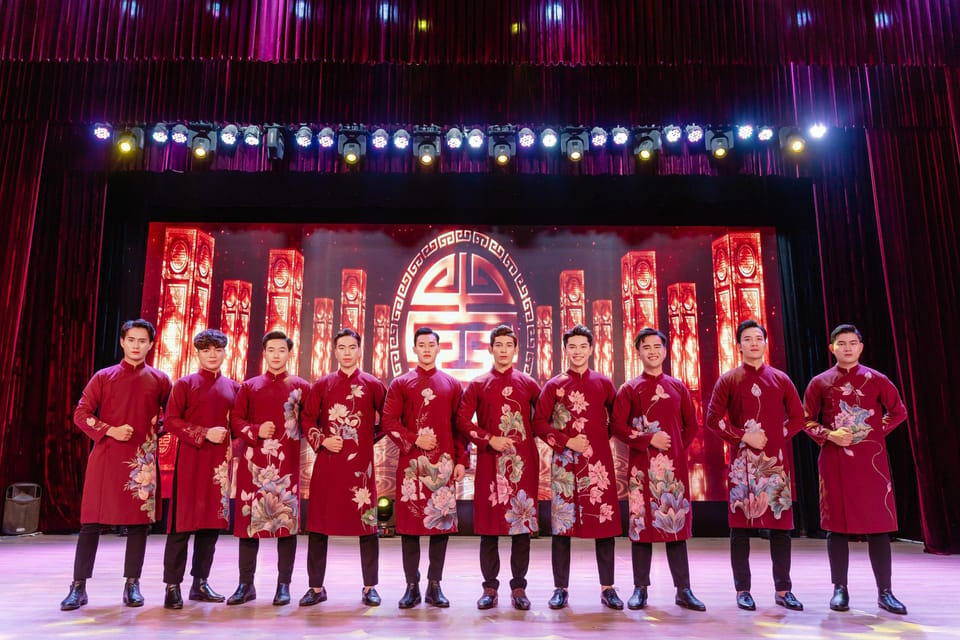
- English narration support on stage sides helps the story land even if you’re not fluent in Vietnamese.
- Nguyen Dynasty royal court scenes bring the dignity of court life to the stage through costume.
- Old Market Ao Dai recreation shows how clothing shaped everyday identity across centuries.
- Wedding, lotus dance, and school-uniform moments cover big cultural themes without getting boring.
- Interactive touches make it feel less like a passive performance.
- Refreshments plus a small gift are included, so you’re not waiting around hungry.
Entering the Culture House of Ngu Hanh Son District
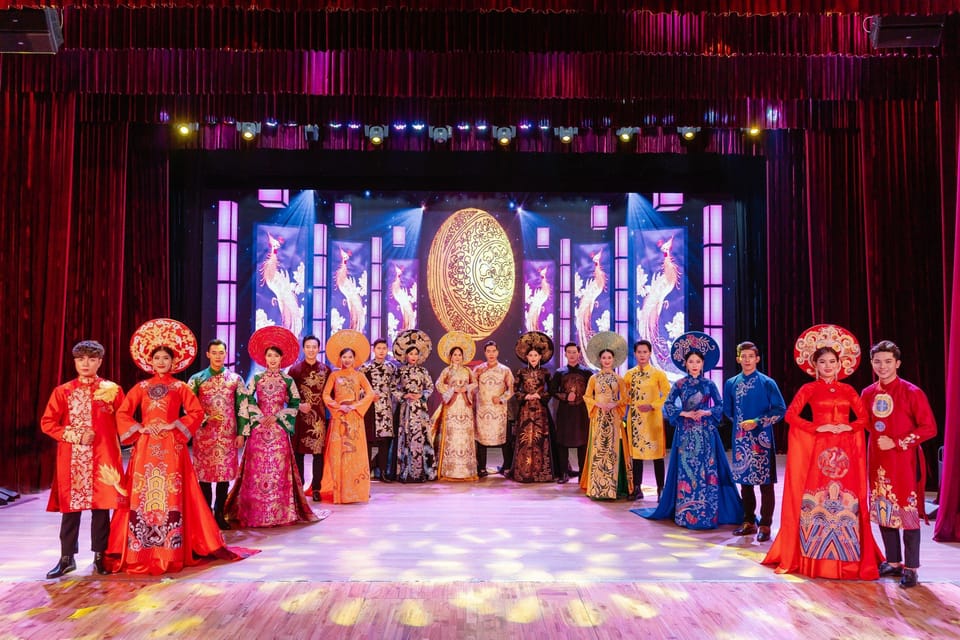
The venue is the Culture House of Ngu Hanh Son District, and it’s a straightforward stop in central Da Nang. The show is listed for a one-day visit, and the big practical tip is timing: arrive at least 15 minutes before show time. That buffer matters because you’ll need to show your name and booking number for entrance access.
This is one of those evenings that works even if your day schedule ran long. It’s a single planned block of time, and the format is easy to understand: sit, watch, follow the narration, and enjoy the costume changes as the story moves through Vietnam’s past.
If you’re traveling as a couple, it’s also a nice “agreeable” activity. One person can be fully into fashion and dance, while the other can still appreciate the history themes and how they’re explained.
You can also read our reviews of more tours and experiences in Da Nang


What the Ao Dai Show Actually Covers in Its One-Hour Story
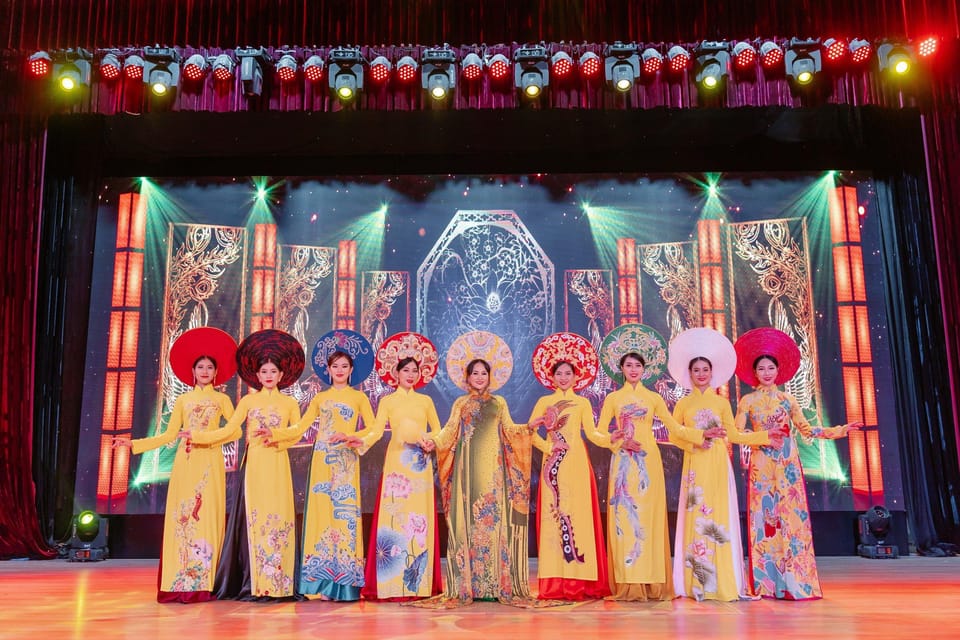
The show tells a Vietnam timeline through Ao Dai, connecting royal court culture with folk traditions and later modern influences. It doesn’t just say the clothing is beautiful. It explains why the look matters and how it changed over time.
You’re looking at a program that spans nearly 300 years of Ao Dai evolution, with special attention to the Nguyen Dynasty era, when Ao Dai is presented as the national dress. The structure is built for clarity: scenes are staged like snapshots, then tied back together by the narration and English displays on stage sides.
The show also uses big, recognizable themes so you always know what you’re watching:
- royal pageantry
- everyday market life
- family rituals like weddings
- symbolic dance inspired by the lotus
- education and the white-uniform image tied to a famous early girls’ school
That mix is part of why I think it’s great value for $17. You’re getting a costume show with cultural meaning, not just a fashion display.
Nguyen Dynasty Court: “Timbre of the Royal Palace” Energy
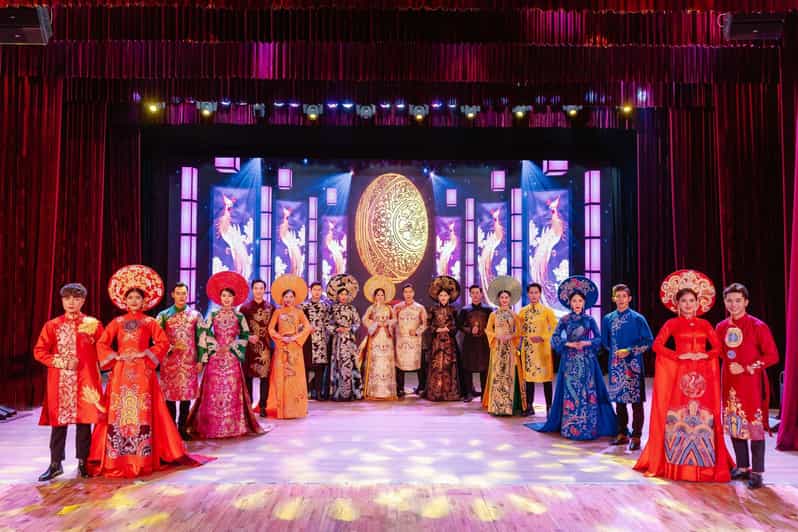
One of the opening highlights is the Nguyen Dynasty segment, described as Timbre of the Royal Palace. This section focuses on the feeling of court life—how clothing signals rank and role. You’ll see royal-style costumes for kings, mandarins, empress dowagers, and maidens.
Even if you don’t know the historical details, the costumes do a lot of the storytelling for you. Court scenes tend to be visually dense, but this show handles it with clear staging and narration. That’s a big reason the experience works for mixed groups—some people lean into the history, while others simply enjoy the artistry and visual discipline of royal dress.
If you like costume theater, you’ll probably find yourself watching for small changes between roles: how each figure’s outfit reads at a glance. It’s like learning a cultural language, but in a way that doesn’t require note-taking.
The 300 Years of Ao Dai Segment and the Old Market Scene
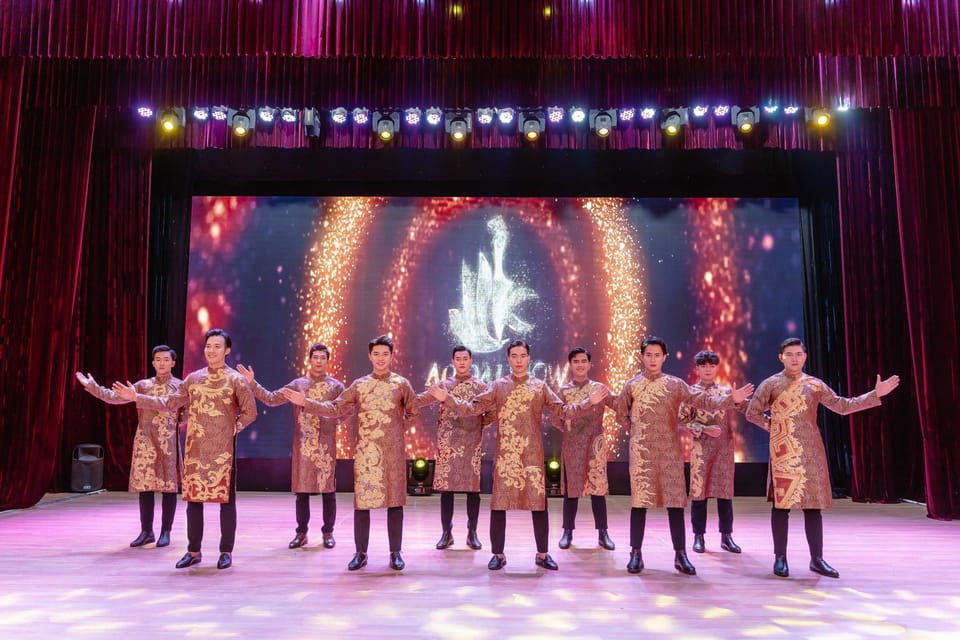
Another standout is the 300 years of ancient Vietnamese Ao Dai section, built around an Old Market recreation. This part shifts from the palace to more everyday life, specifically around trade activity from the 17th to the 19th centuries.
The old-market styling is where Ao Dai becomes more than a formal outfit. You see it presented as part of ordinary people’s identity—simple, humble, elegant, and reverent in the way the characters wear it. The effect is subtle but important: it helps you understand how national dress can carry both culture and daily dignity.
This segment is also a nice pace-break. After the formal court vibe, the old-market scene feels more human and grounded. You can connect it to the idea that Vietnamese culture isn’t just the royal story; it’s also what people wore, sold, and lived in.
Traditional Wedding Segment: Past Ritual Meets Present Meaning
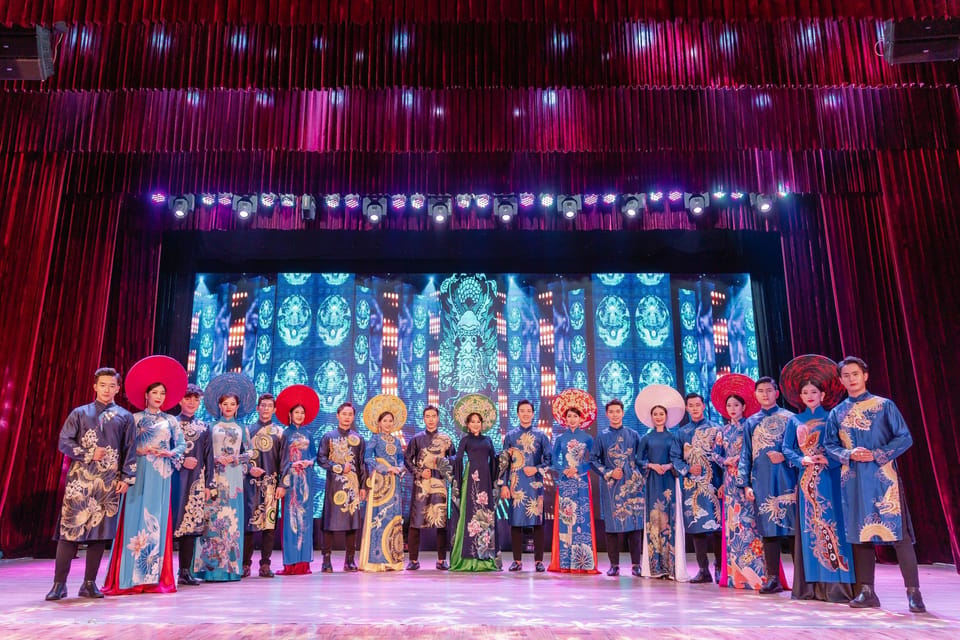
The show includes a Traditional Wedding performance that captures the beauty of Vietnamese wedding rituals. It’s staged to show cultural standards from past traditions and how they relate to present-day wedding customs.
What I like about this segment is that it doesn’t treat weddings as decoration. It frames the wedding as a cultural moment with meaning—both in form and in the social values connected to family life.
If you’re celebrating a trip milestone, this is also a sweet scene. Even if you’re not, you’ll likely appreciate the visual clarity. Weddings are one of those themes where everyone understands the emotional arc, even across cultures.






Lotus Dance: Symbolism in Movement
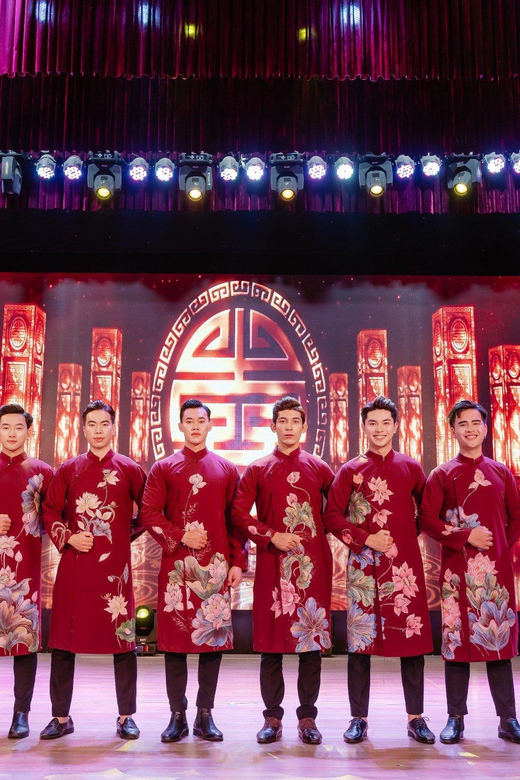
Then there’s the Lotus Dance, inspired by Vietnam’s national flower. The choreography blends traditional and contemporary dance elements, using graceful movement and sweet melodies to communicate purity and elegance.
This is the “feel-good” chapter. After the court and the historical snapshots, the lotus dance gives the show room to breathe. It also helps you appreciate Ao Dai as something that moves well onstage. Fabric and motion go together, and this segment lets you see that relationship clearly.
If your group includes people who sometimes get restless at cultural performances, this is usually the moment they perk up again. It’s pretty, symbolic, and easy to watch without needing extra background.
White Ao Dai School Uniform: Education, Discipline, and Poise
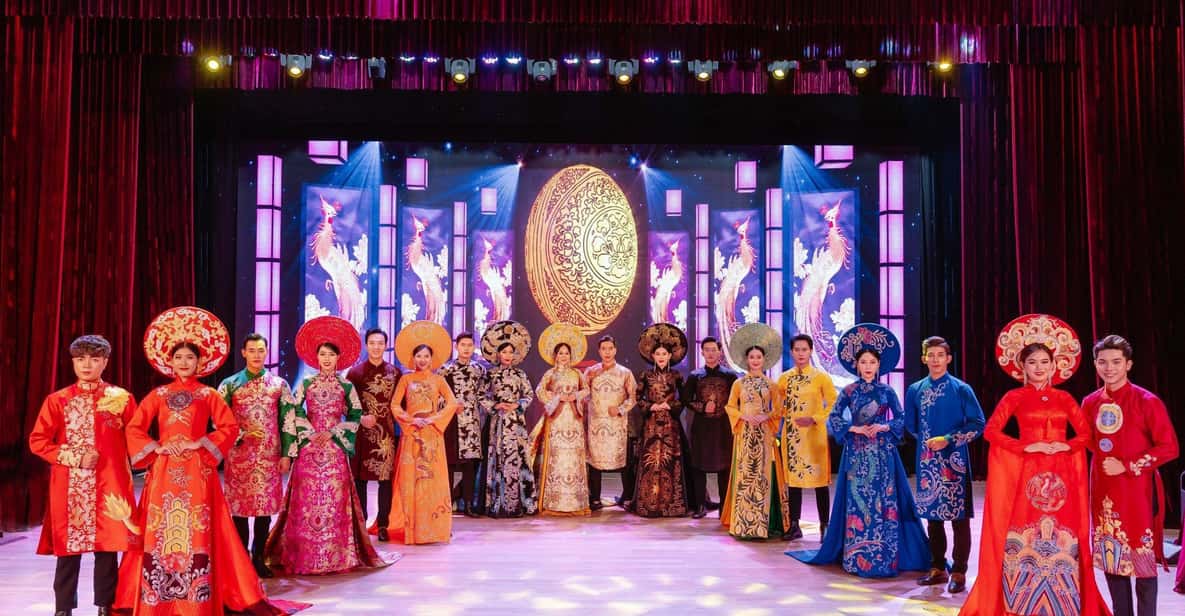
One of the most memorable scenes is the white Ao Dai school uniform segment linked to Dong Khanh—described as the inaugural girls’ school in Vietnam.
The show presents the uniforms as more than just clothing. It ties the image of schoolgirls in white Ao Dai to ideals like education, simplicity, elegance, politeness, humility, and delicate communication. It also connects schooling to skills in childcare and family care.
This section is powerful because it reframes what Ao Dai represents. In many places, the national dress is seen as ceremony or tradition for special occasions. Here, it’s also about daily formation—how young people learn to carry themselves and their responsibilities.
If you care about social history, this is your anchor scene. It gives the show one of its strongest themes: cultural evolution isn’t only political. It’s also about how education changes generations.
The Ao Dai Show Finale: Royal Meets Folk Meets Modern
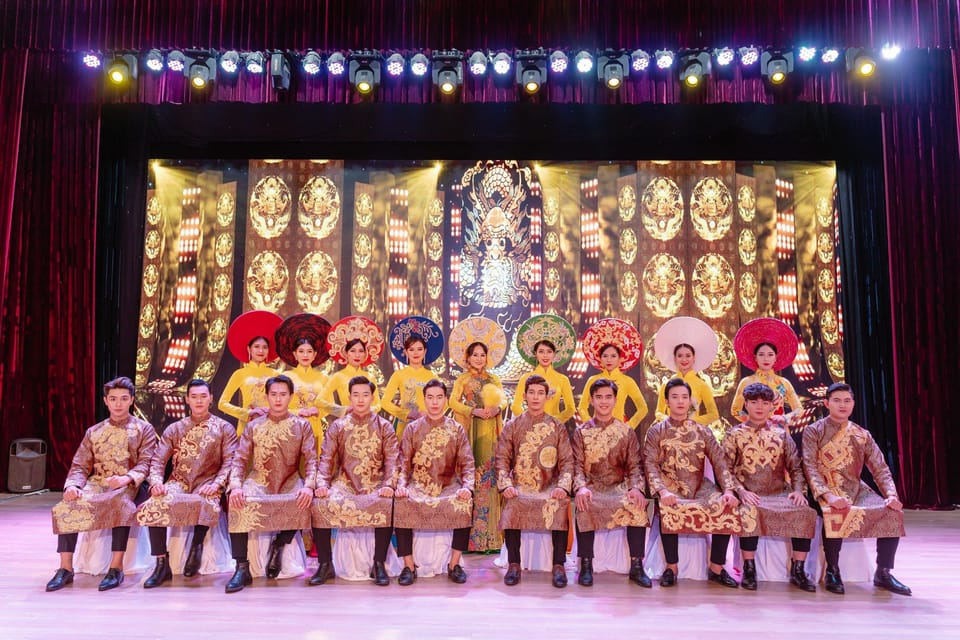
The end section is essentially the glue. The program brings it together through an Ao Dai story that bridges royal court and ordinary people, blending traditional and modern aspects.
You’ll see how Ao Dai evolves across time—how the look becomes associated with Vietnam’s national identity, and how it keeps adapting while still feeling recognizably Vietnamese. This final thread is what makes the show more than a sequence of separate dances.
Think of it like a timeline you can see. Each scene gives you a different angle, and the finale makes sure you understand the through-line: Ao Dai isn’t frozen in history. It’s a living part of cultural change.
Narration, English Support, and How to Watch It Well
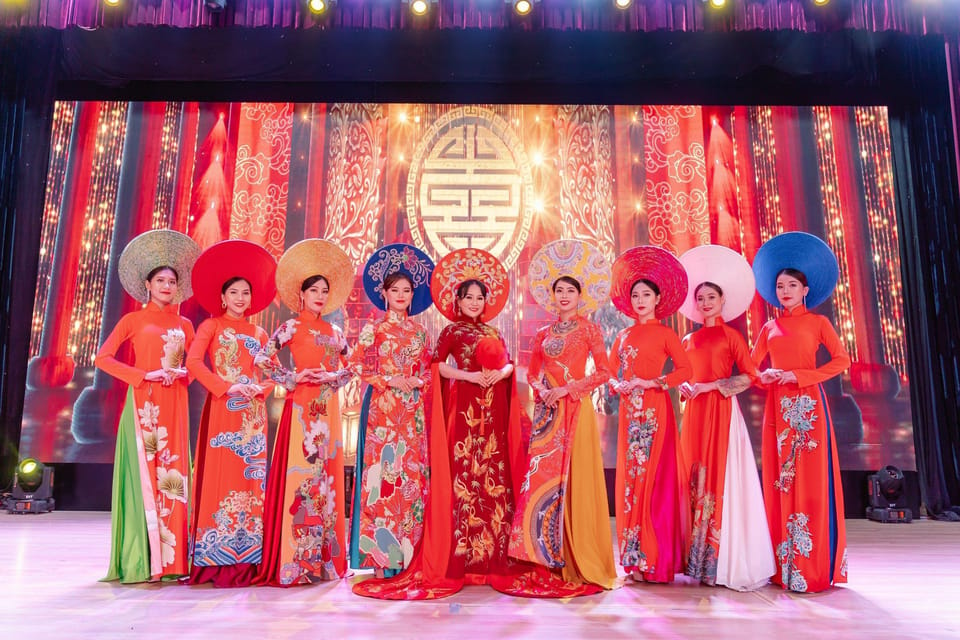
Here’s the practical part: you’ll want to watch the stage, but also check the English narration screens. One review noted that the narrative is displayed at either side of the stage in English, which helps if you want the story while you’re watching costumes and choreography.
I’d also plan your seat choice with your style in mind. Since you’re watching dance and costume details, aim for a spot where you can see both the performers and the English displays. Arriving early helps because you’re more likely to get settled comfortably before the show starts.
Another smart move: keep expectations realistic. This is designed to be interactive in small ways. One review specifically described an interactive component that even included each visiting country as part of the performance. That’s fun, but it’s not the kind of interaction where you’ll control the whole show. You’re still there to watch; the interaction just keeps it lively.
Price and Value: Is $17 a Good Deal?
At $17 per person, this show is priced like a thoughtful cultural outing rather than a luxury ticket. And in my view, the value comes from three things you get all together:
- a one-hour performance with multiple themed chapters
- clear cultural narration in English (with help on stage sides)
- a broad range of scenes: court life, market life, weddings, symbol dance, and school-uniform imagery
If you’re in Da Nang for a short stay, this is also efficient. It’s one block of time. You get cultural depth without needing to plan transport for a multi-stop day.
You do not have transportation included, so you’ll want to factor in how you’ll get there and back. Still, once you’re on-site, the show itself includes the ticket plus refreshments and a small gift.
Who This Ao Dai Show Suits Best (and Who Might Skip)
I’d recommend this for:
- couples who want something more special than a typical night market
- families with kids who like costume and dancing (the show is built around clear scenes)
- travelers who enjoy culture explained through performance rather than lecture
- anyone who wants a quick way to connect Ao Dai to Vietnamese history
You might consider skipping if:
- you want deep, academic history instead of a stage story
- you prefer shows where music and dancing are the only focus and don’t care about cultural context
But if your goal is to understand why Ao Dai is treated as national dress and cultural symbol, this show makes that connection fast.
So, Should You Book the Da Nang Ao Dai Show?
Yes—if you want a memorable, easy-to-follow cultural night in Da Nang. The $17 price feels fair for a full themed program, and the English narration support makes it more accessible than many costume shows.
I’d book it especially if your schedule is packed. This is one of those experiences that can genuinely improve how you see Vietnamese culture without demanding extra research time.
If you do book, plan for a calm arrival. Show up 15 minutes early, have your booking name/number ready, and use the English displays as your map. Then sit back and enjoy the best part: watching centuries of Vietnamese identity move across the stage in Ao Dai.
FAQ
How much does the Da Nang Ao Dai Show cost?
The price is $17 per person.
How long is the show?
The experience is listed for 1 day and the show is presented as a short, single event on that day.
Where is the meeting point?
The meeting point is the Culture House of Ngu Hanh Son District.
Is there an English host or greeter?
Yes, there is a host or greeter who speaks English.
Do I need to arrive early?
Yes. Please be present at least 15 minutes before the show time, and be ready to show your name and booking number for entrance access.
What languages is the show available in?
The show is available in English.
What’s included in the ticket?
The ticket includes the Ao Dai Show entrance ticket, refreshments, and a small gift.
Is transportation included?
No. Transportation is not included.
Can I cancel and get a refund?
The experience offers free cancellation up to 24 hours in advance for a full refund.