REVIEW · DA NANG
MY SON HOLYLAND-Morning or Afternoon Tour from HOI AN or DA NANG
Book on Viator →Operated by My son Private Tours · Bookable on Viator
My Son never feels like just another stop—it feels like a lost kingdom. You’ll visit the My Son Sanctuary UNESCO ruins and come away understanding the Champa Kingdom through clear, English-guided storytelling. I especially like how the tour connects the temples to the people who built them, and how you’re pointed toward the details you’d normally miss in the bas-reliefs. One thing to consider: if you’re looking for a deep, modern take on Vietnam’s later conflicts, the discussion may not match that level of expectation.
The setting helps, too. You move through a valley surrounded by jungles and mountains while your guide explains what you’re seeing—temples built and rebuilt across many centuries. I also like the half-day format with hotel pickup and included admission, because it lets you fit history into a real travel day. Just don’t expect a long, slow hike; there’s a short walk, but comfy shoes still matter.
In This Review
- Key highlights in plain terms
- My Son Sanctuary: turning UNESCO temples into real Cham culture
- Pickup from Hoi An or Da Nang: smooth logistics for a half-day history fix
- Getting around the sanctuary: buggy transfer plus a short walk
- Inside the ruins: temples across centuries, from towers to bas-reliefs
- The mortarless building lesson: a detail that makes the site feel alive
- Champa Kingdom context: why My Son matters beyond the stones
- Guide quality: English explanations, tailored pacing, and real warmth
- Price and value: what $62.42 buys you in real travel terms
- Who should book this My Son Holyland tour?
- Should you book this tour?
- FAQ
- How long is the My Son Holyland tour?
- Where do you get picked up?
- What’s included in the price?
- What can I see at My Son Sanctuary?
- Is this tour private?
- What is the cancellation policy?
Key highlights in plain terms
- UNESCO Cham temple ruins with towers and Hindu stone remains you can actually study
- Temples built and rebuilt from the 4th to the 13th century, so you see change over time
- Mortarless building explained, with a focus on how the Cham made it hold
- English-speaking guide who walks you through the site in organized groups
- Jungle-and-mountain valley views that make the ruins feel atmospheric, not staged
My Son Sanctuary: turning UNESCO temples into real Cham culture
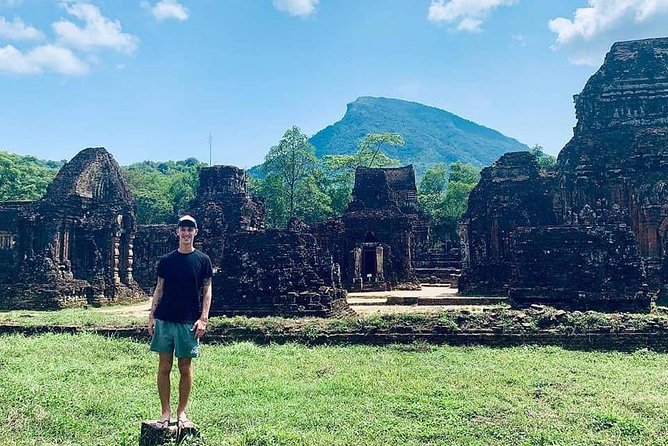
My Son is one of those places where the stones look quiet, but the story is loud. This UNESCO site was part of the lost Cham kingdom, with temples connected to the wider sweep of Champa history, from early centuries onward. On this tour, you’re not just dropped into the ruins and sent off with a map. You’re guided through what those temple areas mean and how they relate to Cham religious life.
One reason I like this experience is that you’re guided to look at the right elements. You spend time around the Hindu remains of tower-temples, including decoration carved in bas-relief. That means you can shift from a general wow-the-ruins look-old reaction to a more satisfying, grounded one: you start noticing the details and understanding why they mattered.
And the setting works as a second teacher. The valley around My Son has jungle and mountains, and that helps you “read” the place. It feels less like an indoor museum and more like something that grew in a living landscape.
Potential drawback to keep in mind: this is a focused historical culture tour, so it’s not designed to cover everything you might read about Champa or Vietnam in books. If you want broader political history in great depth, you may find the time limits a little restrictive.
You can also read our reviews of more tours and experiences in Da Nang
Pickup from Hoi An or Da Nang: smooth logistics for a half-day history fix
This tour is built around convenience. You get hotel pickup from either Hoi An or Da Nang, and you move by modern air-conditioned car or minivan. For many people, that matters as much as the ruins. My Son is far enough from town that arriving on your own usually adds stress: timing, transport, and getting back before dinner plans.
On the schedule for the morning slot, you’re picked up around 8:00a.m. and reach the sanctuary area around 9:15. You’re then set up to start exploring in time for the guided portion. Even better, the day is paced so you’re not stuck in transit for hours. The whole experience is about 4 hours (approx.), which is a sweet spot for travelers who want culture without draining their whole day.
Two small details also help: you get cold bottled water and cold tissues. In Vietnam’s heat, those tiny things stop you from spending your energy on basics instead of the site.
One more practical note: you’ll use a mobile ticket, which is handy when you’re juggling phone battery, photos, and plans for the rest of the day.
Getting around the sanctuary: buggy transfer plus a short walk
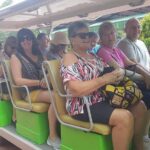
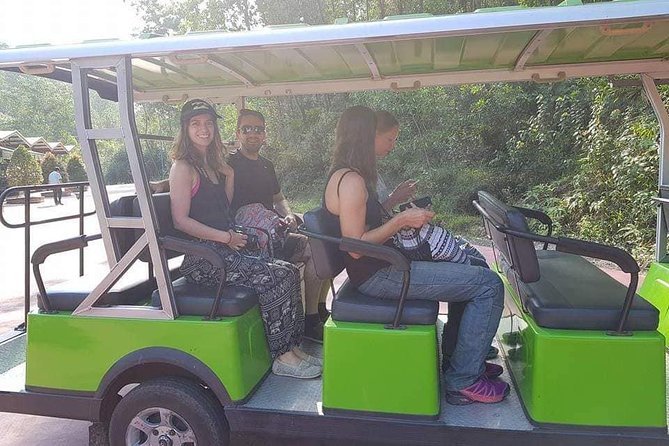
Once you arrive at My Son, you take a buggy for a short transfer, then do a walk portion to the sites. The walking isn’t described as long or brutal, but it’s still a walk, and you’ll enjoy it more with shoes that won’t make you regret the effort halfway through.
That buggy part is more than convenience. It helps you spend your limited half-day time where it counts: standing close to the temples, noticing carvings, and letting the guide explain what you’re looking at. If you’ve been to ruins before where you waste time just “getting oriented,” this format saves energy for the good part.
Also, the guided route is organized in a way that helps your brain connect everything. You won’t just wander randomly. The tour covers different groups of temple areas—moving through the site in sections so the bigger picture starts to form.
Inside the ruins: temples across centuries, from towers to bas-reliefs
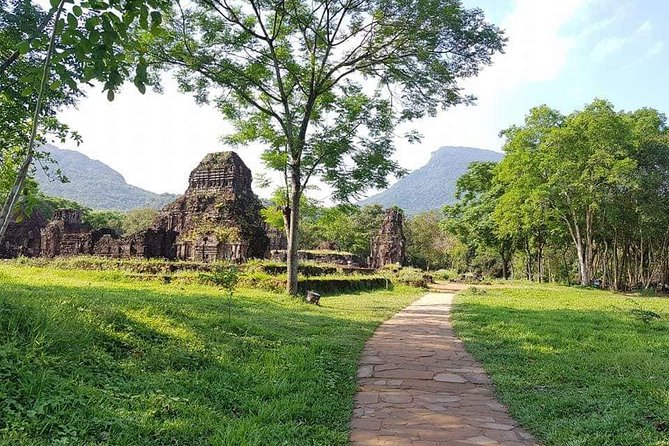
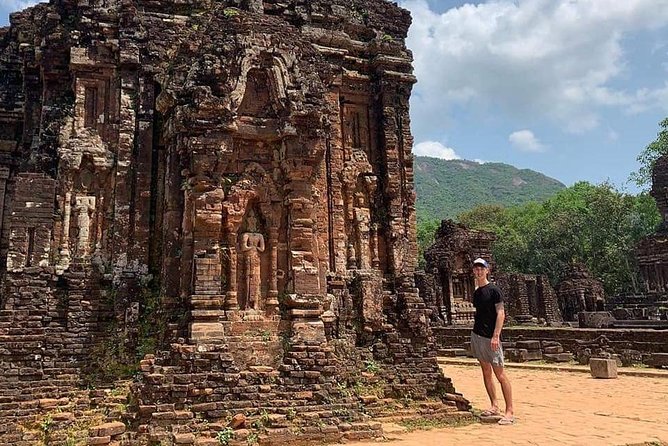
Here’s where My Son earns its reputation. The tour focuses on temples built and rebuilt from the 4th century to the 13th century. That spread of time is key. It turns the site from a single-time snapshot into a timeline you can experience, even in a few hours.
You’ll see tower-temples with Hindu remains, and you’ll be guided toward the bas-reliefs. Bas-relief carving is easy to ignore if you’re just walking past. With a guide pointing out what the decoration is doing, those surfaces become more than “pretty stone.” They become evidence: clues to how religious imagery and artistic choices fit into Cham culture.
Another highlight is the way the tour treats restoration and rebuilding. Since these temples were rebuilt across centuries, you’ll be better able to understand why parts of the sanctuary look different and what that might suggest about changing needs, influence, or worship patterns.
Is there a drawback? The ruins are spread across several temple groupings, and time is limited. You’ll leave with a solid understanding of the big elements, but you won’t have hours to study every carving like a scholar. If you’re the type who wants to photograph every square inch, you might want extra time on your own after the guided portion.
The mortarless building lesson: a detail that makes the site feel alive
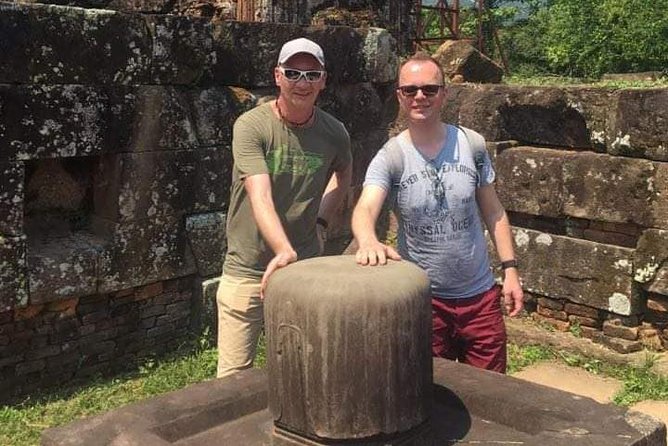
One of the most memorable parts of this tour is the focus on a practical question: how the Cham people built the temples without using mortar.
That’s not trivia for trivia’s sake. When someone explains the mortarless building approach in a clear, accessible way, it changes how you look at the structures. Instead of thinking only about age, you start thinking about engineering choices—how blocks or bricks were fitted, how shapes could lock together, and how design could help structures survive.
Even if you don’t leave with a technical diagram in your head, you’ll leave with a stronger sense of intention. You’re not just seeing ancient art; you’re seeing ancient problem-solving.
And it connects to the wider meaning of My Son. The temples weren’t random piles. They were tied to the religious life and power of the Champa kingdom. Understanding the construction method helps you respect the effort behind the spiritual and political significance.




Champa Kingdom context: why My Son matters beyond the stones
My Son is presented as part of a larger Cham story: the lost champa kingdom and Cham culture. During the guided walk, you learn how the temples relate to the kingdom and how the Cham people understood their world through religious sites.
This is where the tour becomes more than sight-seeing. If you’ve ever stood at ruins feeling impressed but unsure what you’re looking at, you’ll appreciate this approach. The guide organizes the site into sections—so you connect temple groups to a coherent narrative rather than a pile of facts.
This also helps you place My Son in a larger historical sweep. The information shared frames the temples within a long span of time, from early beginnings to later centuries, which is important because Champa history wasn’t one single moment. It was evolving.
One more thing I value: the guide focuses on culture, not just chronology. You’re asked to understand the Cham people, not only the dates.
Guide quality: English explanations, tailored pacing, and real warmth
A good guide can make or break a ruins tour. Here, the tour includes a professional English-speaking guide, and that shows in the structure of the visit. You’re taken through temple groups in a way that supports comprehension, and explanations are tied to what you’re seeing, not just delivered as a lecture.
Names that have come up with this operator include Andy, Uncle Chinh, and Phi. Each name matters because they represent a style: clear intro to history and background, and a willingness to adjust the experience. One account even described tailoring the trip into a bigger day outing, which tells me this tour isn’t stuck in a rigid script.
If you’re traveling with kids, you’ll likely like the family-friendly vibe. There’s at least one clear example of a guide working well with young children while keeping the visit understandable.
So, the guide angle is a major reason people feel satisfied here. The ruins are impressive, sure. But you’re paying for the way the experience gets translated into understanding.
Price and value: what $62.42 buys you in real travel terms
At $62.42 per person for about 4 hours (approx.), the main value question is simple: does the package reduce stress and add real insight?
For this price, you get:
- hotel pickup via air-conditioned car or minivan
- a professional English-speaking guide
- cold bottled water and cold tissues
- entrance ticket included
That’s not just “transport plus a ticket.” It’s the combo that makes half-day tours work. You’re not spending your limited time hunting down the right entry point, figuring out where to stand for photos, or trying to translate a site into meaning on the fly.
What’s not included is straightforward: drinks and personal expenses. So if you like iced drinks during hot walks, plan to buy those separately. But you won’t arrive empty-handed, since water is included.
The private format also matters. This is described as a private tour/activity with only your group participating. That generally means fewer distractions and more chance to ask questions without feeling rushed by a larger crowd.
Who should book this My Son Holyland tour?
This is a strong pick if you:
- want an organized, English-led understanding of My Son rather than a self-guided wander
- like half-day sightseeing that still feels substantial
- care about Champa culture and Hindu temple remains and want those details explained
- are traveling with kids and want a guide who can keep things friendly and clear
It’s also a reasonable option if you’re short on time while staying in Hoi An or Da Nang. The pickup makes it easy to slot in without turning your day into a logistics problem.
Who might look elsewhere? If your main goal is a heavy, modern political deep-dive—or if you want very long hours in a museum-style pace—this may feel too compact. The tour stays focused on temples, culture, and what you can see and understand during the time you have.
Should you book this tour?
Yes, if you want My Son to make sense. This tour does a good job turning ruins into a cultural story: the 4th to 13th century temple timeline, the Hindu tower-temple remains, the bas-reliefs, and the standout explanation about building without mortar.
Before you book, just do a quick reality check:
- pick the morning or afternoon slot that matches your energy and daylight plans
- wear shoes for a short walk after the buggy transfer
- be ready for a concentrated half-day, not an all-day archaeology seminar
If that fits your travel style, booking is an easy yes.
FAQ
How long is the My Son Holyland tour?
It runs for about 4 hours (approx.), depending on your pickup and timing.
Where do you get picked up?
You’re picked up from your hotel in Hoi An or Da Nang city.
What’s included in the price?
The tour includes an air-conditioned car or minivan, a professional English-speaking tour guide, cold bottled water and cold tissues, and the entrance ticket.
What can I see at My Son Sanctuary?
You’ll visit UNESCO World Heritage site temples built and rebuilt from the 4th to the 13th century, including Hindu remains of tower-temples with bas-relief decoration. You’ll also learn about how the Cham built the temples without using mortar and how the temples connect to the Champa Kingdom.
Is this tour private?
Yes. It’s a private tour/activity, so only your group participates.
What is the cancellation policy?
You can cancel for free up to 24 hours in advance of the experience start time for a full refund.