REVIEW · DA NANG
Da Nang Epic History Tour by Cham Museum & Tasty Cuisine/Cafe
Book on Viator →Operated by Hung Le Travel-The Local Signature · Bookable on Viator
Stone statues, bridges, and street food in 3 hours. This private Da Nang city walk pairs the Cham Museum’s standout Hindu stone sculpture collection with a stop at An Long Pagoda, then threads through the big sights along the Han River, finishing with pho and coffee.
I especially like how the guide frames each stop with stories about why it matters in Vietnamese life—religion, colonial-era communities, and the Vietnam War all show up in the walk. I also like that your ticket time is used efficiently: museum entry, pho (chicken or beef), and a coffee tasting are built in, so you’re not hunting for snacks between landmarks.
One thing to consider: the pacing is walk-and-look style for about 3 hours, and the tour runs best with good weather, so plan comfortable shoes and a backup mindset for rain.
In This Review
- Key Highlights You’ll Actually Feel
- A 3-Hour Plan That Moves Like a Real Walk Through Da Nang
- Entering Da Nang Museum of Cham Sculpture Without Feeling Lost
- An Long Pagoda: Mahayana Buddhism Explained Through Everyday Life
- APEC Park: The Brief Pause Before the Big Views
- Dragon Bridge (666m) and the Han River War-Era Lens
- Da Nang Cathedral, the Chicken Church Nickname, and What Colonial Era Means Here
- Han Market’s French Colonial Build and Chinese Community Stories
- The Hanoi Quarter Pho Stop and Herbal Green Tea Break
- Coconut Coffee and Salt Coffee: Closing the Loop on Vietnam’s Hard Stories
- Price and Value: Does $29 Make Sense Here?
- Who This Tour Fits Best (and Who Might Skip It)
- Should You Book Da Nang Epic History Tour by Cham Museum & Tasty Cuisine/Cafe?
- FAQ
- How long is the Da Nang Epic History Tour?
- Where does the tour start and end?
- Is pickup or drop-off included?
- What’s included in the price?
- Is this a group tour or private tour?
- What food and drinks do I get on the tour?
- What should I wear for the walking portion?
- What is the cancellation policy?
Key Highlights You’ll Actually Feel
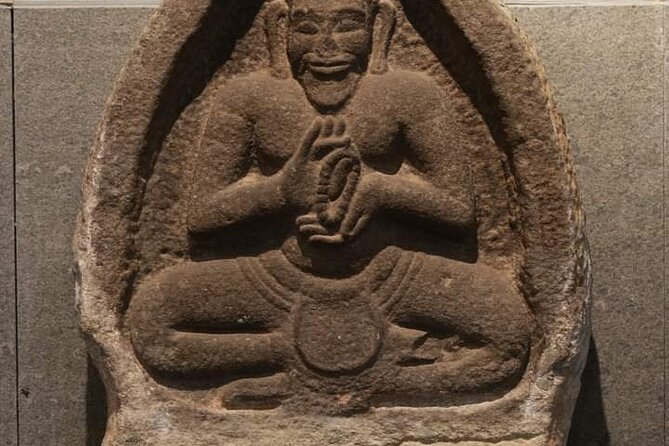
- Cham Museum’s Hindu stone sculpture collection from the 7th–14th centuries tied to the Cham Pa Kingdom
- An Long Pagoda for a practical look at Mahayana Buddhism and local beliefs in everyday life
- Dragon Bridge (666m) plus a riverside perspective on Vietnam War-era Da Nang
- Da Nang Cathedral, locally nicknamed Chicken Church
- Han Market with French colonial history and stories about the Chinese community
- A food-and-drink finish: pho plus coconut or salt coffee (with option to add rice wine tasting)
A 3-Hour Plan That Moves Like a Real Walk Through Da Nang
This tour feels designed for people who want the “heart of the city” in a short window, without turning it into a checklist. You start at the Da Nang Museum of Cham Sculpture, then you keep moving through central Da Nang by foot, with stops that connect history to what you’ll actually see outside.
Because it’s private (just your group), you get more room for questions. And the guide is presented as an English-speaking guide with a historian background, which matters here, because this tour isn’t only about pretty sights—it’s about context.
The price is $29 per person, and that’s where the value starts to make sense. For a typical short walking tour, you’d often pay separately for museum entry and at least one meal. Here, the museum ticket and pho are included, plus a coffee tasting, and there’s also the option of rice wine tasting depending on your selected format.
You can also read our reviews of more historical tours in Da Nang


Entering Da Nang Museum of Cham Sculpture Without Feeling Lost
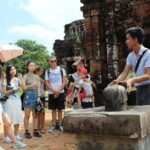
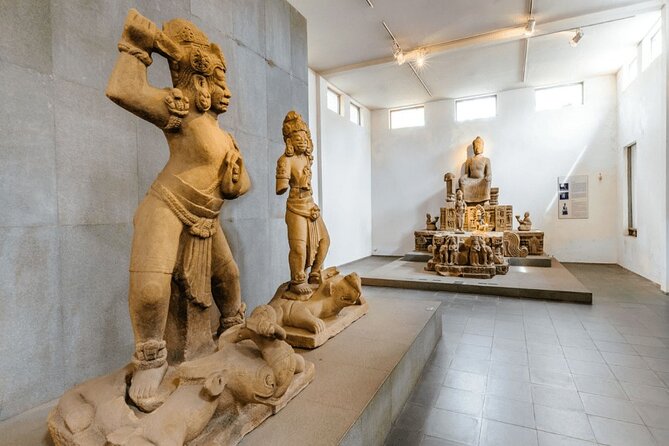
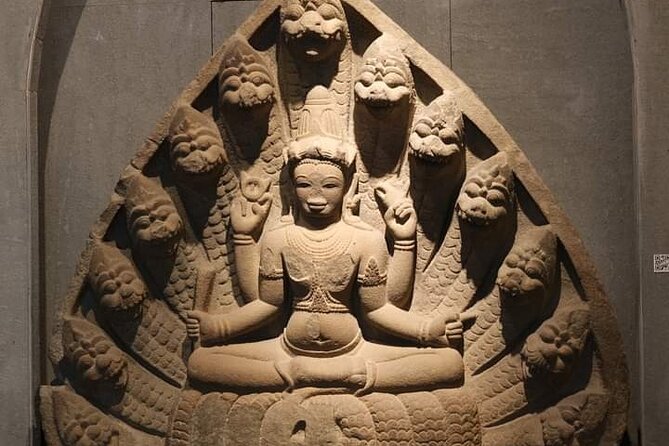
The anchor stop is the Da Nang Museum of Cham Sculpture, described as the world’s largest collection of Hinduism sculptures, with hundreds of antique stone statues dating from the 7th–14th century. If you’re even a little curious about Southeast Asian history, this museum is a strong first move because it sets the regional story before you jump into later layers of Da Nang.
What you’ll get out of this stop is not just “look at statues.” You’ll connect the sculptures to the Cham Pa Kingdom—one of the earliest nations in Southeast Asia—and to the broader cultural world that shows up again later around central Vietnam. The tour also links this to My Son relics, with the helpful geographic note that My Son is about 60 km from Hoi An.
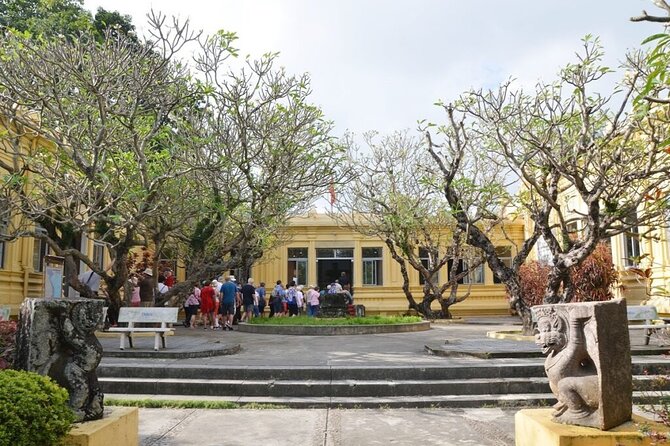
If you’re worried about language or crowd noise, don’t be. The tour format keeps you oriented: you have a guide to point out what to focus on inside the museum and how to interpret what you’re seeing. The museum entry is included, so you don’t have to budget time (or money) for tickets mid-tour.
Small drawback: museum viewing can be still and detail-heavy, so if you prefer lots of open-air scenes first, you might want to mentally pace yourself for the early hours. That said, it’s usually a good way to start while your energy is fresh.
An Long Pagoda: Mahayana Buddhism Explained Through Everyday Life
Next up is Long An Temple, also referred to as An Long Pagoda in the tour description. This part of the itinerary shifts from ancient stone art to living spiritual practice.
You’ll learn about Mahayana Buddhism and local beliefs, with stories about how those ideas affect local life. That framing is what makes this stop more useful than a quick photo stop. Instead of only seeing what the site looks like, you get a guide-led sense of how religious practice connects to daily routines and community meaning.
One practical note: this is a walking tour that keeps you moving, so keep your expectations realistic. You’re there long enough to absorb the stories and get the cultural meaning, not to do a standalone deep retreat-style visit.
If you like places where religion shows up as a living system (not just an artifact), you’ll probably enjoy this stop a lot.
APEC Park: The Brief Pause Before the Big Views
After An Long Temple/An Long Pagoda, the itinerary includes a stop at APEC Park. This is not the centerpiece like the museum or Dragon Bridge, but think of it as the kind of break point that keeps the flow manageable.
I like these “in-between” stops because they reduce the whiplash of going from indoor details to major outdoor landmarks. Even without a lot of detailed description provided, you can treat this as a transition: stretch your legs, get your bearings, and then head toward the photo-ready sites.
Dragon Bridge (666m) and the Han River War-Era Lens

Then comes the star landmark: Dragon Bridge, described as the most iconic bridge on the world, stretching 666 meters. Even if you’ve seen images of it before, standing near it in person tends to hit differently—especially when your guide is tying it to the city’s larger story.
Right after, you’ll walk along the Han River, using Da Nang’s history as a base for the Vietnam War to frame what you see. The tour specifically points out American constructions built to serve the war, and it notes that Da Nang was the strongest military base before 1975.
That’s an unusual angle for a city bridge walk, and I think it’s the real differentiator. You’re not just admiring architecture; you’re being encouraged to read the riverfront like a historical layer.
Consideration: if you’re sensitive to war themes, you’ll still get the context, but keep in mind the tour intentionally includes that angle. You can keep it at a conversational level with your guide if you’d rather not go heavy on details.
You can also read our reviews of more museum experiences in Da Nang

Da Nang Cathedral, the Chicken Church Nickname, and What Colonial Era Means Here
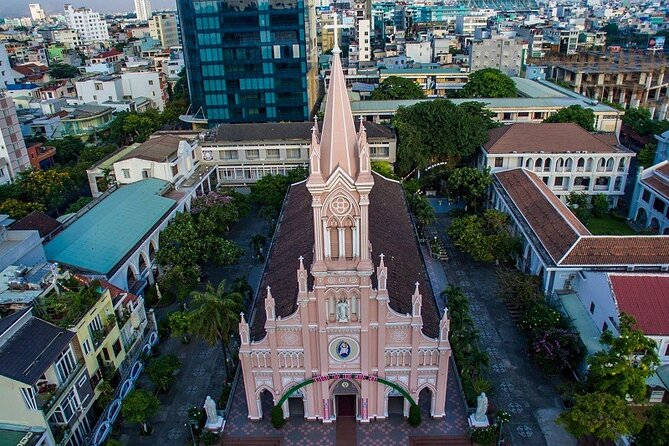
Your next stop is Da Nang Cathedral Church, locally nicknamed Chicken Church. That nickname alone draws people in, but the value is what it signals: this is a part of Da Nang where local naming and local identity rub against outside influences.
The tour doesn’t frame it as a lesson in labels—it’s more like a moment to see how communities relate to the buildings around them, even when those buildings arrived through colonial-era history. If you like tours that show you how places get meanings over time, this stop works.
Then the walk shifts toward the local market zone, where the stories widen again.
Han Market’s French Colonial Build and Chinese Community Stories
Han Market is on the itinerary as the next major stop, described as the biggest market in central Vietnam built by French during colonial periods. That’s a useful detail because it tells you the market isn’t only about daily shopping—it’s also a shaped space created under specific historical power.
You’ll also hear stories about the Chinese community living in Vietnam, which helps explain why you’ll often see market culture that feels layered, not one-note. Markets are where history shows up as practical life: what people buy, how they trade, and how communities gather.
One of the best ways to enjoy this section is to resist the urge to treat it like a shopping run. Instead, let the guide steer you toward the “why” behind the scene, then sample if you want.
Small drawback: markets can be loud and visually intense. If you prefer quieter sightseeing, you may want to keep your attention on the guide’s story points and move through at a comfortable pace.
The Hanoi Quarter Pho Stop and Herbal Green Tea Break
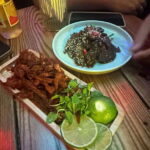
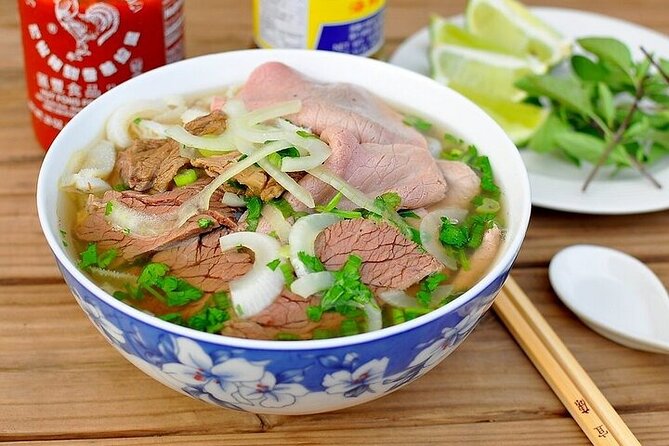
You’ll stop for food in a corner of Da Nang known as the Hanoi Quarter, where the tour frames the pho as a best-of choice. You get pho included as chicken or beef, and the format makes this more reliable than grabbing a random bowl on your own.
The tour also includes Ha Noi herbal green tea at the Ha Noi corner. Even if you’re not a tea person, that part matters because it’s a simple pause that keeps you from getting wiped out late in the tour.
I like that the pho stop is inserted as a breather, not an afterthought. With a 3-hour tour, you’re trying to enjoy landmarks and still leave with the feeling you ate something you’d actually recommend.
A quick practical note: if you have strong dietary restrictions, you’ll want to confirm the chicken vs beef option suits you, since the tour data doesn’t mention alternatives beyond those two.
Coconut Coffee and Salt Coffee: Closing the Loop on Vietnam’s Hard Stories
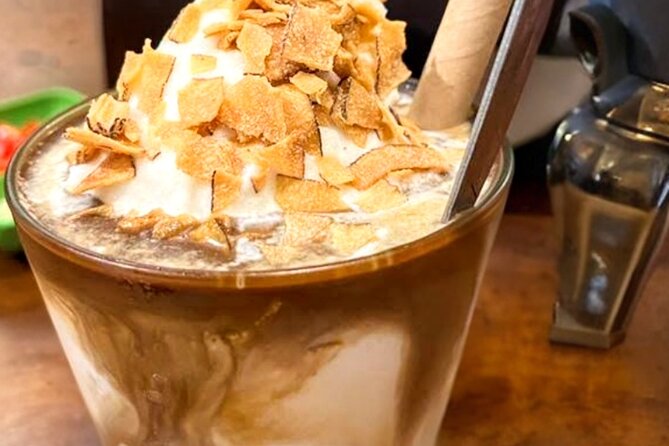
The final flavor of the experience is the coffee tasting. You’ll end with coconut coffee or salt coffee, described as some of the best coffee in Vietnam, paired with stories about Vietnam’s past and the wars that affected your father’s generation’s sleep—based on the tour’s presentation.
This ending is powerful for one simple reason: coffee is modern daily life, and yet the guide uses it as a bridge back to the country’s recent history. It’s a gentle way to end—people often remember the flavors longer than the facts, which means the story sticks too.
If you’re a coffee fan, this is likely the part that will feel most personal. If you’re not, it still works because the tasting gives you a concrete finale after all the sights.
Price and Value: Does $29 Make Sense Here?
At $29 per person, the tour looks like good value because multiple costs are bundled into one block of time:
- Cham Museum entrance tickets (museum entry is explicitly included)
- Pho (chicken or beef) included
- Coffee tasting (coconut or salt coffee) included, plus tea at the Hanoi corner
- A private English-speaking guide with historian background
You still pay attention to what’s not included: pickup/drop-off is not part of the deal, and you’ll need to handle that on your own. But the meeting point is at the Da Nang Museum of Cham Sculpture, and the tour notes it’s near public transportation, which helps.
Also, group discounts are mentioned, and the tour uses a mobile ticket. If you’re traveling with friends and can share the group cost, the value likely climbs.
Where this price becomes less of a deal: if you already plan to visit these sights on your own and you don’t care about guided storytelling. But if you want the context—why the Cham sculptures matter, how Buddhism shows up locally, why the riverfront reads differently—this is a sensible way to pay for interpretation, not just sightseeing.
Who This Tour Fits Best (and Who Might Skip It)
This works best for you if:
- You want a short, walkable way to cover major central Da Nang highlights
- You’re curious about the Cham Pa Kingdom and how Da Nang’s story layers over time
- You like food built into the route (pho plus coffee)
- You enjoy guides who connect places to real Vietnamese life and memory
It might not be your top choice if:
- You dislike war history framing, since the Han River section explicitly references the Vietnam War and American constructions
- You want a slower pace or lots of free time at each stop (this is about flow and guidance, not long independent wandering)
Should You Book Da Nang Epic History Tour by Cham Museum & Tasty Cuisine/Cafe?
I’d book it if you want a compact tour that mixes ancient Cham culture, religious practice, modern city icons, and street-level food—all with a guide positioned to explain rather than just point. The price is low enough that you’re not taking a big risk, and the bundled museum entry plus pho plus coffee tasting makes it feel efficient.
Book it a bit earlier than later if you can. The tour info notes that on average it’s booked about 60 days in advance, which usually means the provider schedules fill up faster in peak season.
If you’re on the fence, my practical advice is this: if your dream Da Nang day includes both history stops and eating your way through the city, this tour matches that plan without wasting time. If you’d rather do only one major museum or only beachy vibes, you might get more pleasure building a lighter day on your own.
FAQ
How long is the Da Nang Epic History Tour?
It runs about 3 hours (approx.).
Where does the tour start and end?
It starts at the Da Nang Museum of Cham Sculpture at Số 02 Đ. 2 Tháng 9, Bình Hiên, Hải Châu, Đà Nẵng 550000, Vietnam, and it ends back at the meeting point.
Is pickup or drop-off included?
No. Pick up /Drop off is not included.
What’s included in the price?
The tour includes a private English-speaking guide (with historian background), Cham Museum entrance tickets, pho (chicken or beef), and tasting coconut coffee or salt coffee (based on your selected option). It can also include Ha Noi herbal green tea, and rice wine distillery & tasting if you choose that option.
Is this a group tour or private tour?
It’s a private tour/activity, meaning only your group participates.
What food and drinks do I get on the tour?
You’ll have pho (chicken or beef), coconut coffee or salt coffee, and Ha Noi herbal green tea. There may also be rice wine distillery tasting depending on the option you selected.
What should I wear for the walking portion?
The experience is a walking route through multiple stops, so plan for comfortable footwear. The tour lasts about 3 hours and moves between sightseeing points.
What is the cancellation policy?
You can cancel for a full refund up to 24 hours in advance of the experience start time. The experience requires good weather, and if it’s canceled due to poor weather, you’ll be offered a different date or a full refund.
![[Free E-sim] Old School Vietnam Cafe Trip in Da Nang - Dragon Bridge and Love Bridge: how to make a short time window work](https://m.insidedanang.com/wp-content/uploads/free-e-sim-old-school-vietnam-cafe-trip-in-da-nang-400x267.jpg)