REVIEW · DA NANG
Da Nang War Tour History: Spanish-French Attack to American Base
Book on Viator →Operated by Hung Le Travel-The Local Signature · Bookable on Viator
War follows you in Da Nang’s views.
This Da Nang War History Tour stitches together the 1858 French-Spanish attack and later American presence in Vietnam, using real landmarks instead of abstract storytelling. I especially like how the day starts with the Marble Mountains caves and temples, then shifts to Son Tra’s wartime set-pieces like the American Radar area. One thing to think about: it’s a long day (about 9–10 hours), so you’ll be on your feet and in and out of vehicles for multiple stops.
The route is built for people who want meaning, not just photos. You’ll pair scenery with context at Hai Van Pass (including Hai Van Tower) and then head up Son Tra for the Lady Buddha complex and the Da Nang Museum of Cham Sculpture. If you prefer slow pacing or heavy museum time only, this may feel like too much—because it’s a “see the key places” day.
In This Review
- Key stops worth planning for
- Da Nang’s war timeline, from 1858 raids to today’s viewpoints
- Marble Mountains: caves and temples as your opening act
- Hai Van Pass and Hai Van Tower: seeing why 1858 mattered
- Son Tra Peninsula: American Radar, Landing Zone references, and the Spanish Cemetery
- Lady Buddha at Bai But Pagoda Complex: a 67-meter pause for your brain
- Da Nang Museum of Cham Sculpture: Champa art as the long prelude
- How the 9 to 10 hours works in real life
- Price and value: what $29 buys you
- Who this tour suits best (and who might want a different day)
- Should you book this Da Nang War History Tour?
- FAQ
- How much does the Da Nang War History Tour cost?
- How long is the tour?
- What are the main stops on the tour?
- Are entrance tickets included?
- Is pickup included?
- Are meals included in the price?
- Do I get a mobile ticket?
- Is this tour private?
- What happens if the weather is bad?
Key stops worth planning for

- Marble Mountains caves and temples: short, visually packed time in a place that locals and visitors love.
- Hai Van Pass and Hai Van Tower: a clear way to understand why this area mattered during the 1858 French attack.
- Son Tra Peninsula wartime sites: American Radar (Magic Eyes of Indochina) plus the American Landing Zone concept on the ridge.
- Spanish Cemetery tied to the 1858 campaign: learn why about 400 French and Spanish lives were lost in Indochina.
- Lady Buddha at Bai But Pagoda Complex: a 67-meter statue stop that gives you a reset from heavy topics.
- Da Nang Museum of Cham Sculpture: 250 Hindu-era sculptures that connect you to the Champa Kingdom before the modern war layers.
Da Nang’s war timeline, from 1858 raids to today’s viewpoints

Da Nang is one of those cities where history isn’t trapped behind a ticket booth. You can still read the past in the terrain—passes, peninsulas, ridges, and coastlines. This tour frames the story in two big arcs: the 1858 French-Spanish attack (with Hue’s defense in mind) and the Vietnam War era, when the area became strategic for American operations.
What makes this format work is that it doesn’t ask you to memorize dates first. Instead, you see a place, learn why it mattered, then move on. That’s a big win when your attention span is fighting the heat and the long drive.
You can also read our reviews of more historical tours in Da Nang



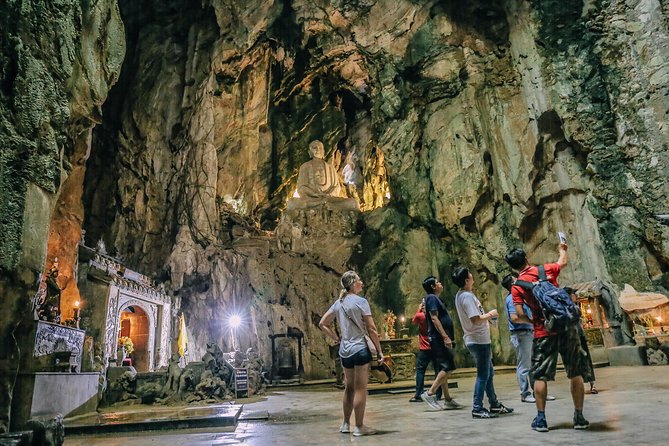
Marble Mountains: caves and temples as your opening act

Marble Mountains is the kind of stop that feels like a full morning even when it’s only two hours. You get admission ticket access, and the key appeal is the network of caves and temples spread across the limestone formations. The mountain also features sculpturing activities, which helps the stop feel more like a living craft tradition than a single monument.
Practical side: this is a walking-heavy start. Wear shoes that can handle uneven cave and temple areas. If you’re sensitive to stairs or climbing, take your time on the first climb—don’t rush, because you’ll want your legs later for the rest of the day.
Why it fits a war-history theme: even though Marble Mountains isn’t presented as a battlefield site in this day’s schedule, it sets a “place-first” tone. You’ll be better at understanding why ridges and passes mattered once you’ve warmed up on the terrain.
Hai Van Pass and Hai Van Tower: seeing why 1858 mattered
Hai Van Pass is one of those natural routes that history keeps using. The tour focuses on Hai Van Tower, built by the An Nam Kingdom to help stop the French attack on the Hue Imperial route in 1858. That’s the kind of detail that makes a scenic viewpoint feel more grounded.
Expect about two hours here, with admission tickets included for the tower depending on your option. This stop also includes learning how to access the peak area. The value isn’t just the tower itself—it’s the ability to look at the pass and understand how movement through this corridor could change the outcome of campaigns.
One consideration: viewpoints on the pass can be windy or bright. Bring something for sun protection and a light layer if you get chilly in the shade.
Son Tra Peninsula: American Radar, Landing Zone references, and the Spanish Cemetery

This is the emotional center of the day, and it’s packed with names tied to different sides of the war story.
On Son Tra Peninsula, you’ll visit American Radar (Magic Eyes of Indochina). The point of this stop is less about high-tech gadgetry and more about the strategic logic: radar and observation were about seeing what was coming before it arrived. You’ll also hear about the Vietnam War Landing Zone (LZ) on Son Tra Peak, described as a helicopter airport serving during the war era.
Then comes the darker counterweight: the Spanish Cemetery. The tour specifically connects it to the 1858 campaign, noting that about 400 Spanish and French people lost their lives in Indochina. It’s not a long stop by itself, but it lands hard, because the story turns from “tactics” into “loss.”
Additional wartime context you’ll hear about includes Red Beach 2 and My Khe Beach. The useful takeaway: you’ll start linking observation points on the ridge with real shoreline references below, so the geography stops being random.
Two practical tips for this portion:
- Bring water and take shade breaks when you can, since this part of the day is likely the most exposed.
- Keep your phone camera ready, but also give your eyes a moment—some of the best understanding comes when you pause and look without framing every second.
Lady Buddha at Bai But Pagoda Complex: a 67-meter pause for your brain

After the wartime sites, the tour shifts to Lady Buddha, a large statue complex at Bai But Pagoda on Son Tra Peninsula. The highlight here is scale: the Lady Buddha statue is listed at 67 meters tall, and the stop runs about one hour with admission ticket included (depending on your option).
This isn’t just a scenic breather. It helps your day make sense emotionally. You’ve just learned about conflict tied to this coastline and ridge. Then you get a calm cultural stop with big views—use it to reset before the final museum stop.
If you like photography, it’s a good place to slow down. If you don’t, you can still use it as a comfortable buffer—short enough to avoid exhaustion, but meaningful enough to prevent the day from feeling like only heavy topics.






Da Nang Museum of Cham Sculpture: Champa art as the long prelude

The tour ends with the Da Nang Museum of Cham Sculpture, focusing on Hinduism-era art from the Champa Kingdom. The museum collection is described as about 250 statues, spanning from the 2nd to the 17th century.
This stop adds perspective. War history in Vietnam can swallow everything else if you only focus on the 1800s and the 20th century. The Cham Kingdom context widens the lens and shows how deep the region’s cultural roots go. It’s a nice contrast to the battlefield-focused segments of the day.
The schedule gives you about one hour, with admission tickets included depending on your option. That’s enough time to appreciate the variety without feeling trapped in a long museum marathon. If you’re the type who reads everything, you might wish you had more time, but one hour is also a realistic pace for a full-day itinerary.
How the 9 to 10 hours works in real life

This tour is listed as about 9 to 10 hours. That means you should plan around a long stretch of movement plus several site stops.
The good news is the day is structured like a story arc:
1) Marble Mountains as your terrain warm-up
2) Hai Van Pass to explain the 1858 defense angle
3) Son Tra Peninsula for Vietnam War observation and the Spanish Cemetery loss
4) Lady Buddha for a reset
5) Cham Sculpture Museum for cultural depth
Transport is handled by modern private car depending on the option, and pickup is offered. If you like not thinking about logistics, this is a relief. If you’re prone to car-sickness or prefer short rides, you might want to request more direct routing when booking.
Also, bring a basic strategy for meals. Meals aren’t included, and the day is long enough that skipping food can turn the best viewpoints into a grumpy moment. Simple snacks can make the schedule feel easier.
Price and value: what $29 buys you

At $29 per person, this tour is positioned as a value-heavy day. The real question isn’t only the sticker price—it’s what’s bundled.
Your listed inclusions can cover several admission tickets depending on your selected options, including:
- Cham Museum entrance tickets
- Military museum entrance tickets (depending on option)
- Marble Mountains entrance tickets (depending on option)
- Hai Van Pass Tower entrance tickets (depending on option)
- American Landing Zone entrance tickets (depending on option)
- Mineral water
- A private certificate English-speaking guide
- Round-trip transfer by modern private car (depending on option)
That ticket bundle matters. Even when you’re not a museum person, admission costs stack up across multiple stops. With this format, you’re paying for a guided route that links multiple sites, rather than just paying for one attraction.
On the flip side, meals and travel insurance aren’t included. And some entrance items are explicitly “depending on the option,” so confirm what your exact plan covers before you go.
Who this tour suits best (and who might want a different day)
This Da Nang War History Tour is a great match for you if:
- You like your sightseeing tied to a clear story, not random checkboxes.
- You want major Da Nang landmarks plus war-era context in one day.
- You’re okay with a packed schedule and a few walking segments.
It may be less ideal if:
- You want a slow, unhurried day with only one or two stops.
- You dislike walking caves/temple areas at the start of the day.
- You only want war history and prefer to skip cultural stops like the Cham Sculpture Museum.
As a bonus, the tour is described as private (only your group participates). That can make it easier to ask questions and move at a comfortable pace with your guide.
Should you book this Da Nang War History Tour?
Book it if you want a “see the place, understand the meaning” day. The combination of Marble Mountains, Hai Van Pass and Hai Van Tower, Son Tra Peninsula’s American Radar and Spanish Cemetery, plus Lady Buddha and Cham sculpture gives you both emotional weight and cultural breadth.
I’d especially consider it if you’re short on time in Da Nang. At $29 and with key admission items often included depending on options, you’re getting a lot of stops without having to piece everything together yourself.
But if you’re the kind of person who hates packed days, choose a lighter plan instead. This one is for people who want momentum.
FAQ
How much does the Da Nang War History Tour cost?
The price is $29.00 per person.
How long is the tour?
The duration is listed as 9 to 10 hours (approx.).
What are the main stops on the tour?
The schedule includes Marble Mountains, Hai Van Pass (Hai Van Tower), Son Tra Peninsula (American Radar and American Landing Zone), Lady Buddha, and the Da Nang Museum of Cham Sculpture.
Are entrance tickets included?
Entrance tickets are included depending on your option. The list includes Cham Museum tickets, military museum tickets (depending on option), Marble Mountains tickets (depending on option), Hai Van Tower tickets (depending on option), and American Landing Zone tickets (depending on option).
Is pickup included?
Pickup is offered. Round-trip transfer by modern private car is included depending on your option.
Are meals included in the price?
No. Meals are not included.
Do I get a mobile ticket?
Yes. The experience includes a mobile ticket.
Is this tour private?
Yes. It’s described as a private tour/activity, and only your group will participate.
What happens if the weather is bad?
The tour requires good weather. If it’s canceled due to poor weather, you’ll be offered a different date or a full refund. It also requires a minimum number of travelers, and if that minimum isn’t met you’ll be offered a different date/experience or a full refund.