REVIEW · DA NANG
Surf Lessons
Book on Viator →Operated by Da Nang Outdoor Adventures · Bookable on Viator
First wave anxiety fades fast here. This 2-hour surf lesson at My Khe Beach pairs a relaxed learning setup with close coaching and a real shot at standing up. I like that the classes stay small, with a 1:4 instructor-to-student ratio, so you’re not lost in a crowd.
What I also like is the “ready to go” setup: rash vests for hot months, wetsuits for cooler ones, plus surfboards, wax, and safety coaching included. One thing to keep in mind is timing: it’s weather-dependent, so you’ll want a flexible day in Da Nang.
If you want an easy first step onto a board, this is a solid way to do it without guessing. The vibe is friendly, the pace is beginner-focused, and the beach makes the learning feel achievable.
In This Review
- Key things that make this surf lesson work
- Entering Da Nang’s surf zone at My Khe Beach
- What “2 hours” really means: the lesson rhythm for beginners
- From sandy board drills to catching your first waves
- Equipment and coaching that keep you from stalling out
- Photos, video, and how to actually use them
- Price and value: why $44 can be a smart first step
- The logistics that matter day-of (and the ones you can ignore)
- Who should book this lesson (and who should think twice)
- Should you book Da Nang Outdoor Adventures’ surf lesson?
- FAQ
- Where do I meet for the surf lesson?
- How long is the surf lesson?
- Is the lesson suitable for beginners?
- What’s included with the lesson?
- Do they take photos or videos?
- What happens if the weather is poor?
- Can I get a full refund if I cancel?
Key things that make this surf lesson work
- Small group coaching (max 6) so you get real feedback as you try to paddle and pop up
- Land practice first: you rehearse paddling, balance, and pop-up mechanics before you’re in the water
- Year-round gear included (rash vests in summer, wetsuits in winter)
- Lots of wave time after a quick instructor demonstration, not a long lecture
- GoPro photos/videos sent later so you can remember what your first attempts looked like
Entering Da Nang’s surf zone at My Khe Beach
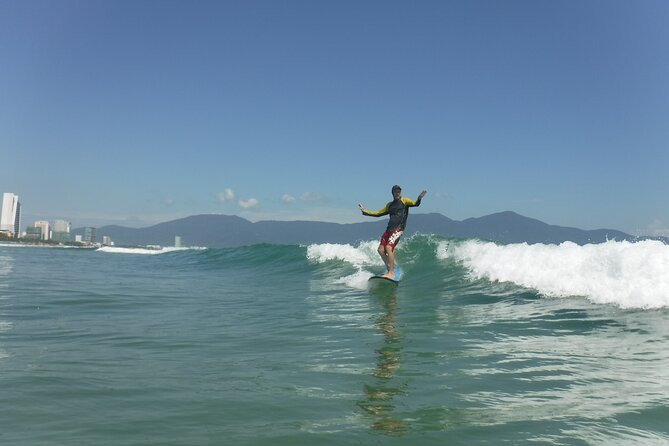
Da Nang’s My Khe Beach is the star of this lesson for a reason. It’s sandy underfoot and usually calm enough for a first session, which matters when your brain is busy trying to coordinate arms, legs, and balance at the same time. The course runs right by the beach, so you’re not spending the whole day shuffling between places.
This is also a practical location. The meeting point is at 35 An Thượng 5, Ngũ Hành Sơn, Đà Nẵng, and it’s near public transportation, which helps if you’re moving around town between beaches and meals. You’ll also be back at the same meeting point when it’s done, so you’re not locking into a complicated end-of-tour transfer.
One useful detail: My Khe Beach is widely recognized as a top beach, and that usually comes with the kind of infrastructure and accessibility that makes lessons simpler. You don’t need to fight your way through a maze to start learning. You just show up, gear up, and get started.
You can also read our reviews of more tours and experiences in Da Nang



What “2 hours” really means: the lesson rhythm for beginners
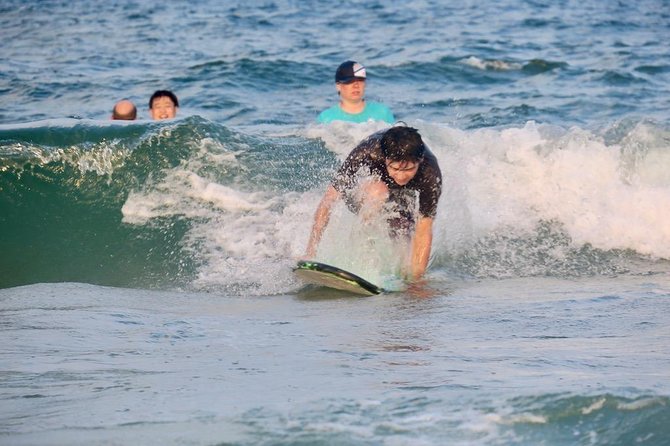
This lesson is about two hours, and it’s structured to keep momentum high. You’re not going to spend all your time watching others or waiting around. The instructors build a smooth flow from basics on land into practice in the water.
Here’s the rhythm you can expect:
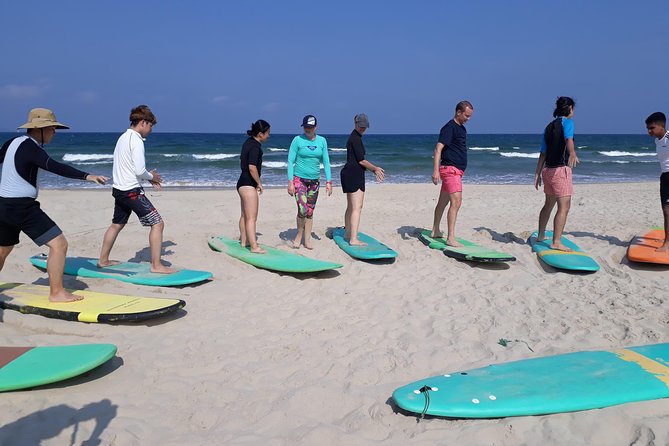
- First you get the basics on land, including how to paddle, how to do the pop-up, and how to find balance on the board.
- Then you get water safety covered, which is important because surfing is fun partly because it has rules.
- After that, you head into the waves and practice what you just rehearsed.
The payoff is that you’ll actually get time to catch waves. The instructors give a quick demonstration so you can see the “catch” moment, then you spend the rest of the session in the water working on it. For a first lesson, that’s the key. You learn fastest when you can repeat the same motion and adjust one thing at a time.
Instructors also take notes in real time. With a max group size of 6 and a 1:4 ratio, you’re more likely to get quick corrections that match what’s happening in your body at that exact moment.
From sandy board drills to catching your first waves
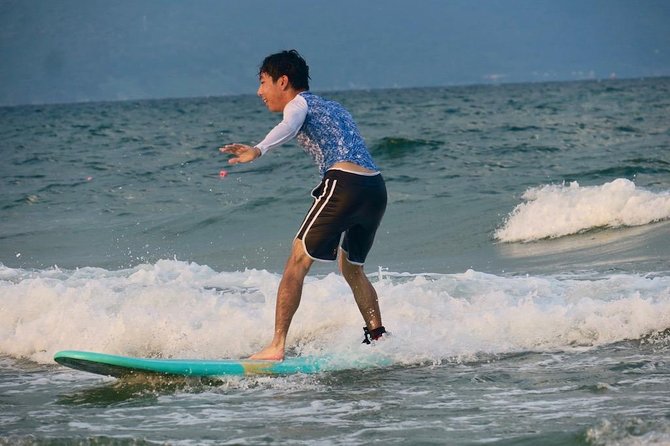
The biggest mental shift in surfing is going from thinking to reacting. This lesson helps you make that shift in two steps: land practice, then water practice.
On land, you’ll rehearse the motions you need to stand up. You’ll learn what to do with your arms during paddling, how to position your feet for the pop-up, and how to stay balanced once you’re upright. It’s simple coaching, but it’s not vague. For first-timers, clarity beats hype.
Then you move into the surf. The instructor gives a quick look at how to catch a wave, so you aren’t guessing when the right moment arrives. After that, you’re in the main event: catching waves and refining the pop-up timing and stance.
One practical benefit of the beach setup (and this showed up in learner experiences): the session tends to be on fine sand with conditions that don’t feel extreme. That makes a huge difference the first time you wipe out. You’re less focused on where your board is going and more focused on getting back into position.
Also, the sessions are designed so you’re not just standing on a board in silence. You get guidance while you practice. That means you’re more likely to experience that first successful ride—even if it’s short. Short counts. They build confidence.
Equipment and coaching that keep you from stalling out
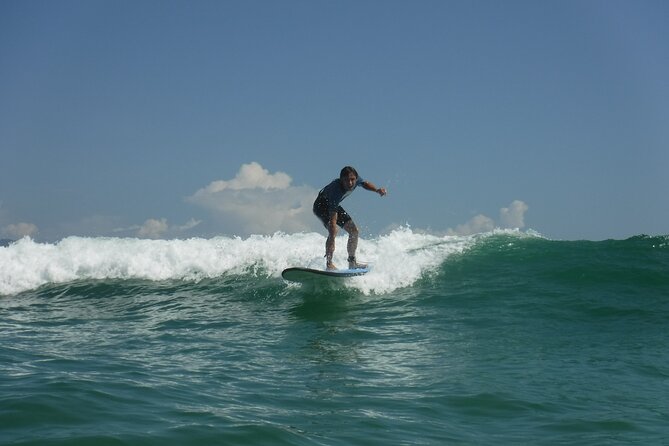
One of the most underrated parts of a first surf lesson is what you wear and what you use. Here, everything needed for the lesson is included: rash vests, wetsuits, wax, and surfboards. That saves money and time, and it also removes the stress of figuring out what to bring.
The instructors also keep things practical across seasons. Rash vests for summer and wetsuits for winter means you’re not sitting through your lesson shivering or overheating. You can focus on learning instead of gear anxiety.
Coaching style matters too, and the vibe here leans into encouragement. I like that it doesn’t feel like you’re being graded. In real beginner sessions, the goal is to get you stable and comfortable on the board. Several instructors are praised for being friendly and patient, and named examples from instruction experiences include Owen and Tien. When you hear that kind of consistency, it usually means the teaching method is repeatable, not random.
And remember: ratio beats motivation. A 1:4 setup gives you more direct attention when you’re paddling too far back, popping up too late, or wobbling after standing. You don’t have to wait for someone to notice.
Photos, video, and how to actually use them
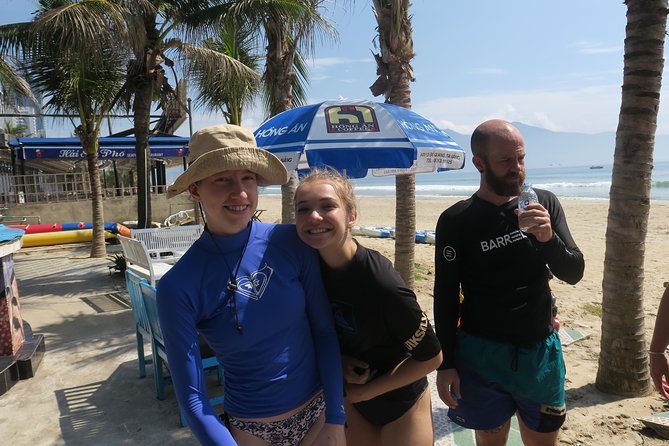
You’re likely to remember the feeling more than the details, so I like that this lesson includes media capture. They take photos and videos using a GoPro and send them to you later.
That matters for two reasons. First, you can spot what your body did during the pop-up—like whether you looked down too early or stepped your feet too wide. Second, you can compare your second attempt to your first one. That’s how you improve when you come back for another session.
When you get the footage, don’t treat it like a “gotcha.” Treat it like a checklist: watch your paddle timing, then watch your pop-up sequence, then watch how long you stayed balanced.
Also, a small tip from what people often wish they had: don’t skip your sunscreen. Two hours in the sun can be harsher than expected, especially with water reflection.






Price and value: why $44 can be a smart first step
At $44 per person for about two hours, this is priced in a way that makes sense for a first-timer who doesn’t want to overcommit. You’re paying not just for access to waves, but for coaching time, beach-based instruction, and equipment.
A lot of costs sneak up on beginners: board rental, wetsuit/rash vest, wax, then the “wait, who teaches me this part?” question. Here, the lesson includes rash vests or wetsuits, wax, and surfboards, plus instruction throughout. The result is that your real expense is learning—not problem-solving logistics.
The small-group structure (max 6) adds value too. When you’re in a crowd, surfing becomes a waiting game. Here, you’re more likely to get correction while you try again.
One extra plus: the operator offers good rates on half-day surfboard rental for beginner boards. If you find you love it after the lesson, that can turn a one-time try into a repeatable activity without going back to square one.
The logistics that matter day-of (and the ones you can ignore)
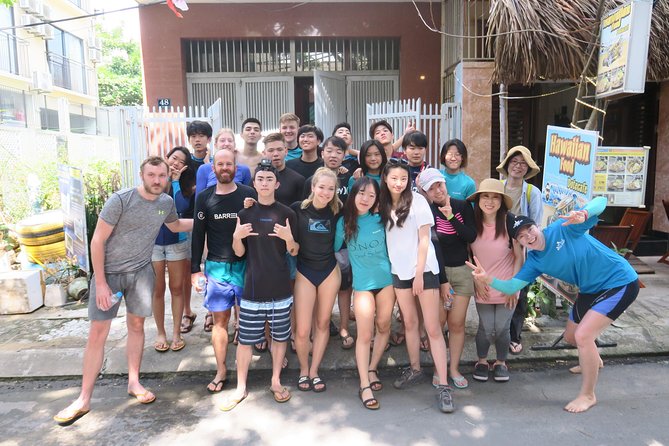
This lesson is simple. Meeting is at 35 An Thượng 5, Ngũ Hành Sơn, Đà Nẵng, and it ends back there. You’ll get confirmation at the time of booking, and you can use a mobile ticket.
Duration is approximately two hours, so plan your day with enough slack. Surf timing can feel unpredictable because conditions drive the session. You don’t want to schedule a “must be on time” lunch right after and spend the whole lesson staring at your watch.
Also, remember it requires good weather. If poor weather shuts it down, you’ll be offered a different date or a full refund. In practice, that means you should avoid locking your entire schedule too tightly the day you book.
Who should book this lesson (and who should think twice)
This lesson is a great fit if you’re:
- Trying surfing for the first time and want instruction that starts on land
- Looking for small-group coaching rather than crowd chaos
- Traveling with a schedule that can accommodate a short, two-hour activity by the beach
- People who appreciate having the gear provided so you don’t shop for it first
You might think twice if:
- Your trip is extremely rigid and you can’t handle a weather-related reschedule
- You want a longer “only in the water” session. This one mixes land basics and safety with time on the waves, which is smart for beginners but not as long as some people expect.
Should you book Da Nang Outdoor Adventures’ surf lesson?
Yes—if you want a first surf experience that feels achievable. The mix of land coaching (paddle, pop-up, balance), safety basics, and real time practicing in the water is exactly what you need when you’re new. Add the practical value of included gear, the small max group size, and the GoPro photos/videos, and it’s a strong deal for $44.
Book it especially if you’re staying near My Khe Beach or you’re looking for a fun day that’s active but not exhausting. If you’re someone who panics when learning anything new, the patient, encouraging instruction style (names you may hear like Owen and Tien) is a good sign that you’ll get guided step-by-step instead of thrown into the deep end.
FAQ
Where do I meet for the surf lesson?
The lesson meets at 35 An Thượng 5, Ngũ Hành Sơn, Đà Nẵng 550000, Vietnam. The activity ends back at the same meeting point.
How long is the surf lesson?
It’s about 2 hours.
Is the lesson suitable for beginners?
Yes. It’s an introductory surf lesson designed to help you get comfortable balancing on the board, practicing the pop-up, and learning the fundamentals to begin catching waves. Most people can participate.
What’s included with the lesson?
You get rash vests or wetsuits (seasonal), wax, and surfboards, along with instruction. The course also covers water safety and includes time practicing in the waves.
Do they take photos or videos?
Yes. They use a GoPro to take photos and videos during the lesson and send them to you later.
What happens if the weather is poor?
This experience requires good weather. If it’s canceled due to poor weather, you’ll be offered a different date or a full refund.
Can I get a full refund if I cancel?
You can cancel up to 24 hours in advance for a full refund. If you cancel less than 24 hours before the start time, the amount paid will not be refunded.