REVIEW · DA NANG
5 Dishes Cooking Class with Market Trip in Da Nang
Book on Viator →Operated by DaNang Apron Up Cooking Class · Bookable on Viator
A market tour makes cooking feel real. This 4-hour Da Nang class turns the usual eat-somewhere plan into a do-it-yourself food lesson, starting with shopping at Chợ Bắc Mỹ An and finishing with you learning to cook five well-known dishes. You’re not just watching instructions; you’re learning ingredients first, so the flavors make more sense when you’re back in the kitchen.
I like two things most. First, the market trip isn’t an optional photo stop. You get a chance to see local ingredients up close and learn what can replace what later, which is exactly what helps when you try to cook at home. Second, the class feeds you a full meal: you’ll make dishes like Bánh Xèo and Bún Bò Huế, then eat together with homemade rice vodka.
One consideration: if the schedule shifts, your market time could shrink. One review mentioned a delay caused by a previous class and an English skill gap with an instructor, so if language clarity matters a lot for you, go in with patience and plan to ask follow-up questions.
In This Review
- Key Highlights You’ll Actually Use
- How This Da Nang Class Packs 5 Dishes Into 4 Hours
- Finding 07 Nguyễn Bá Lân: The Start Point That Keeps You On Track
- Chợ Bắc Mỹ An Market Stop: More Than Shopping
- Cooking Five Classic Dishes: What You’ll Make and Why It Matters
- Bánh Xèo and Bún Bò Huế: Learning Vietnamese flavor foundations
- Fresh roll: A skill that travels well
- Young jackfruit salad: Crunch, tang, and control
- Avocado ice-cream: The sweet closer
- The Meal With Homemade Rice Vodka: How the Class Ends
- Vegetarian, Vegan, and Allergy-Friendly Options
- Group Size and Timing: What 30 People Means for You
- Price and Value: Is $39 a Good Deal?
- What You’ll Like Most (Based on What People Emphasize)
- Who Should Book This Class in Da Nang?
- Quick FAQ
- FAQ
- How long is the cooking class in Da Nang?
- Where do I meet for the class?
- What dishes do you cook during the class?
- Does the experience include a market trip?
- Is the class suitable for vegetarian or vegan diets?
- Can you accommodate allergies?
- Is there a limit on group size?
- What do I receive at the end?
- Should You Book This Cooking Class?
Key Highlights You’ll Actually Use
- Market-first learning at Chợ Bắc Mỹ An so ingredients and swaps make sense.
- Five dish coaching in one session without feeling rushed through one recipe only.
- Instructor explanations named in reviews (including Jenny) that people call out as careful.
- Homemade rice vodka served with the meal you cooked.
- Take-home proof of the experience: cookbook and certificate.
- Small group cap of 30 for a more manageable class size.
How This Da Nang Class Packs 5 Dishes Into 4 Hours
If you’ve ever left a cooking class thinking, I can’t remember what I did, this format is built to reduce that problem. The tour is about 4 hours from start to finish and runs as a set flow: meet, market, cook, eat, then wrap up with your materials. That timeline matters because it keeps the class focused on practical skills rather than a long lecture.
The big idea here is simple: learn ingredients first, cook better second. Starting at a real market gives you context for the dishes you’ll cook later, and it also helps you understand what you can substitute back home when a specific ingredient isn’t easy to find.
You can also read our reviews of more shopping tours in Da Nang
Finding 07 Nguyễn Bá Lân: The Start Point That Keeps You On Track
The meeting point is 07 Nguyễn Bá Lân, Bắc Mỹ An, Ngũ Hành Sơn, Đà Nẵng. You’ll want to arrive 15 minutes early so you can check in and get moving while the market section is still fresh.
This is also one of those small details that changes the whole experience. If you show up late, you’ll likely lose time at the most useful part of the tour, which is the shopping and ingredient learning. If you like a smooth start, set a calendar reminder and give yourself buffer time.
Good to know: the tour is near public transportation and uses a mobile ticket, so you should be able to coordinate easily without dealing with printouts.
Chợ Bắc Mỹ An Market Stop: More Than Shopping
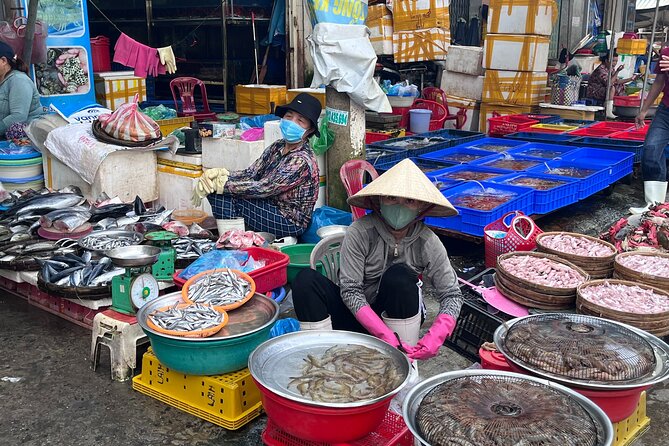
The market part is the whole point of doing this class rather than taking a random cooking video and calling it a day. You visit Chợ Bắc Mỹ An, shop for ingredients, and learn how to think about what goes into the recipes.
Here’s why that’s valuable. Many cooking classes teach steps, but they don’t teach decision-making. Seeing ingredients in the local context helps you understand which flavors are essential and which ingredients can be replaced. That means when you try to recreate the meal later, you’re not guessing.
Expect to come back from the market with a clearer mental map of the dishes you’ll cook. You’ll be looking for ingredient basics like herbs, fresh produce, and other key items that show up across the recipes.
Cooking Five Classic Dishes: What You’ll Make and Why It Matters
Back in the cooking space, you’ll learn to make five dishes:
- Bánh Xèo
- Bún Bò Huế
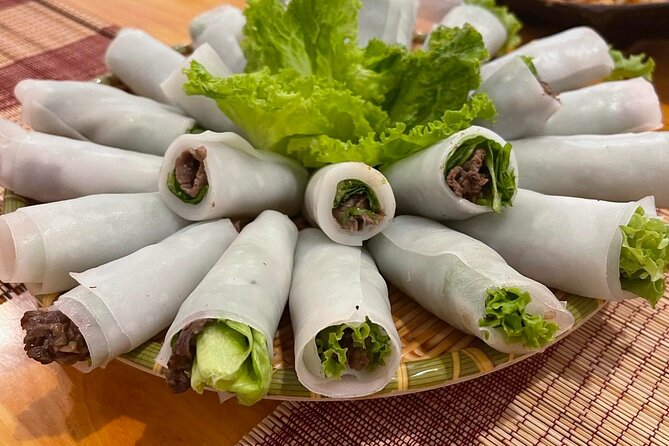
- Hoi An fresh roll (fresh roll)
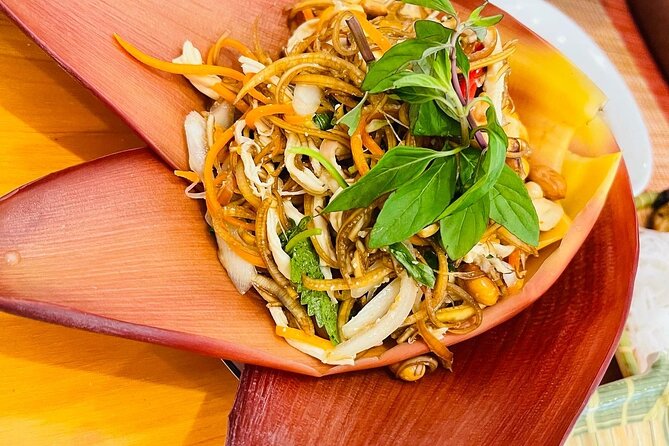
- Young jackfruit salad
- Avocado ice-cream
This lineup is a smart mix. You get savory dishes, something noodle-soup style, a fresh roll, a salad with a tangy crunch, and then a sweet finish with ice-cream. That variety helps you practice different flavor building tools, not just one technique repeated five times.
Bánh Xèo and Bún Bò Huế: Learning Vietnamese flavor foundations
Bánh Xèo (Vietnamese savory pancake) and Bún Bò Huế (spicy noodle soup) both reward attention to seasonings and balance. Even if you’ve only eaten them before, cooking them helps you notice how herbs, aromatics, and salty/sour/spicy balance all show up together.
You’ll be in a real teaching loop: ingredient choices lead to flavor decisions, which leads to how the dish should smell and taste while it cooks. That feedback is what helps you stop cooking by memory and start cooking by understanding.
You can also read our reviews of more tours and experiences in Da Nang



Fresh roll: A skill that travels well
A fresh roll is one of those dishes that makes you feel capable fast, because the core skill is assembly and freshness. If you want to recreate something simple but impressive at home, this is the kind of recipe that can work without a huge ingredient list—especially after you learned what the market substitutes can be.
Young jackfruit salad: Crunch, tang, and control
Young jackfruit salad is the sort of dish that teaches you how texture and acidity matter. Jackfruit brings a firm, crisp feel, and salads like this are usually about controlling sourness and balancing it with herbs. In practical terms, it’s the recipe you’ll remember because the texture is so obvious when it’s right.
Avocado ice-cream: The sweet closer
Finally, avocado ice-cream gives you a cool finish after savory food. Even if you’re not an ice-cream person, this is a useful lesson because it teaches you how to treat fruit-based creaminess without it turning heavy.
The Meal With Homemade Rice Vodka: How the Class Ends
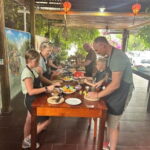
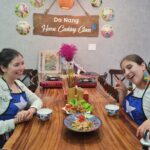
After cooking, you eat the meal together. This isn’t a small snack situation. The format is designed so the dishes you made become your dinner, and it’s served alongside homemade rice vodka.
That part is fun in a social way, but it also signals something practical: the class is built around real local dining rhythms. In other words, you’re learning the food and how it lands on the table, not just doing kitchen tasks and leaving.
If you don’t want alcohol, your best bet is to mention preferences ahead of time when you book. The tour data specifically calls out dietary requests, and it’s reasonable to ask about drink options as well when you confirm.
Vegetarian, Vegan, and Allergy-Friendly Options
The tour can cater for vegetarian, vegan, and allergies. You’ll need to mention your needs in a special request when booking.
This matters because cooking classes often struggle with substitutions. Having an operator prepared to adapt usually means you’ll be able to participate fully, not just watch while someone else eats. If you have a serious allergy, be clear and detailed in your request so the team can plan safely.
Group Size and Timing: What 30 People Means for You
The class has a maximum of 30 travelers. That number is large enough to feel lively, but small enough that you shouldn’t feel completely lost.
Timing-wise, you’re looking at an approx. 4-hour total experience. That’s enough to go market-to-kitchen-to-table, but it also means you should be ready to focus. If you tend to get distracted by side streets and shopping detours, consider saving extra exploring for after the class ends.
Also keep in mind one review mentioned a delay from a previous class. That’s not something you can predict, but it’s a good reason to build in patience. When your schedule is tight, you’ll want extra buffer time the rest of the day.
Price and Value: Is $39 a Good Deal?
At $39 per person, you’re paying for more than “cook these things.” You’re getting:
- a market trip (ingredient education)
- instruction for five dishes
- a shared meal that includes homemade rice vodka
- a cookbook
- a certificate
For many people, the value comes down to repetition and learning. A single cooking workshop can be fun, but if you don’t understand ingredients and swaps, it’s hard to repeat. Here, the market learning is directly connected to what you’ll cook, which makes the later meal more meaningful and your take-home skills more usable.
You also get a tangible finish: cookbook and certificate. It’s not life-changing paperwork, but it is a real reminder that you learned specific recipes and steps, not just attended an event.
What You’ll Like Most (Based on What People Emphasize)
The strongest praise centers on three themes. First is the careful teaching. Reviews highlight instructors who explain clearly and guide you through the process, including a named instructor like Jenny. Second is the overall food quality: people say the dishes are delicious, and the menu feels like a full meal, not a sampling exercise. Third is the combined market-and-cook flow, where the market stop is considered a major part of the experience rather than filler.
The main “watch-outs” are practical: possible delays and language clarity with some instructors. If you’re planning a day trip with strict timing, give yourself wiggle room. If you need step-by-step understanding, arrive ready with questions and don’t hesitate to ask for clarification.
Who Should Book This Class in Da Nang?
This is a great fit if you want a hands-on way to understand Vietnamese food without guessing. It’s especially good for:
- first-timers in Da Nang who don’t know where to start
- food lovers who learn best by cooking with real ingredients
- people who want a menu variety, from savory to dessert
- anyone who likes the idea of cooking with a market-based ingredient mindset
It may be less ideal if your schedule is extremely strict. Since the format is time-bound and a delay can impact market time, plan buffer hours around it.
Quick FAQ
FAQ
How long is the cooking class in Da Nang?
It runs for about 4 hours.
Where do I meet for the class?
Meet at 07 Nguyễn Bá Lân, Bắc Mỹ An, Ngũ Hành Sơn, Đà Nẵng 550000, Vietnam.
What dishes do you cook during the class?
You’ll cook Bánh Xèo, Bún Bò Huế, fresh roll, young jackfruit salad, and avocado ice-cream.
Does the experience include a market trip?
Yes. You start at a market near the meeting point to shop and learn about local ingredients.
Is the class suitable for vegetarian or vegan diets?
Yes. Vegetarian and vegan options are available if you mention your needs when booking.
Can you accommodate allergies?
Yes. The tour can cater for allergies—include your allergy details in a special request during booking.
Is there a limit on group size?
Yes. The maximum group size is 30 travelers.
What do I receive at the end?
You receive a cook book and a certificate.
Should You Book This Cooking Class?
If you want a Da Nang food experience that actually teaches you, this one is a strong choice. The market-to-kitchen format is the key reason it feels different from a basic cooking show, and the menu is well balanced: savory dishes, fresh roll, a tangy salad, then avocado ice-cream.
Book it if you’re hungry to learn and you can give the full 4 hours to the experience. Skip it only if you’re on a tight schedule with zero flexibility, since delays can happen and the market portion is time-sensitive.