REVIEW · DA NANG
5 traditional dishes Da Nang cooking class with market trip
Book on Viator →Operated by Apron Up Cooking Class · Bookable on Viator
Cooking in Da Nang starts at the market. I like the Chợ Bắc Mỹ An shop-first setup, because you learn what to buy and why before you cook. I also love the hands-on pace of making five dishes together, then eating the results right away. One thing to note: some parts are likely shared as a group (and the kitchen can feel tight), so if you want total solo control over every plate, plan for teamwork.
For $39 you get a full run-around of market shopping, cooking tools, and both lunch and dinner, plus coffee or tea, fruit, and rice vodka to sip while you chat. At the end, you leave with a cookbook and a certificate, which makes it easier to recreate your favorites at home. The experience also offers vegetarian flexibility, but the exact swaps can vary by menu choice.
This is a great fit for people who like real food planning, not just watching someone else cook. It works well if you’re traveling with kids too, since the instruction style tends to be patient and friendly (names like Bora, Chi, Blue, and Jenny come up often in how the teaching is described). Come hungry, wear something you don’t mind getting splashed with batter, and you’ll have a solid half-day of Central Vietnamese cooking culture.
In This Review
- Key highlights you’ll care about
- Starting at Chợ Bắc Mỹ An: what the market visit really gives you
- From market to kitchen: how the class runs in 4 hours
- Cook your way through Central Vietnam: the 5-dish menu
- Bún Bò Huế: learn flavor-building without getting lost
- Bánh Xèo: the crisp-correctness lesson
- Fresh roll: quick assembly, delicate texture
- Young jackfruit salad: balance is the skill
- Avocado ice cream and vegetarian swaps: the sweet landing
- The meal part: coffee, rice vodka, fruit, and shared tables
- Who this Da Nang cooking class is best for
- Price and logistics: is $39 worth it?
- Should you book this Da Nang market-to-kitchen cooking class?
- FAQ
- What does the Da Nang cooking class cost?
- How long is the cooking class in Da Nang?
- Where is the meeting point?
- Which dishes will I cook?
- Is there a vegetarian option?
- What’s included with the class meal?
- Do we visit a market during the tour?
- How many people are in the group?
- What do I receive at the end?
- Is free cancellation available?
Key highlights you’ll care about
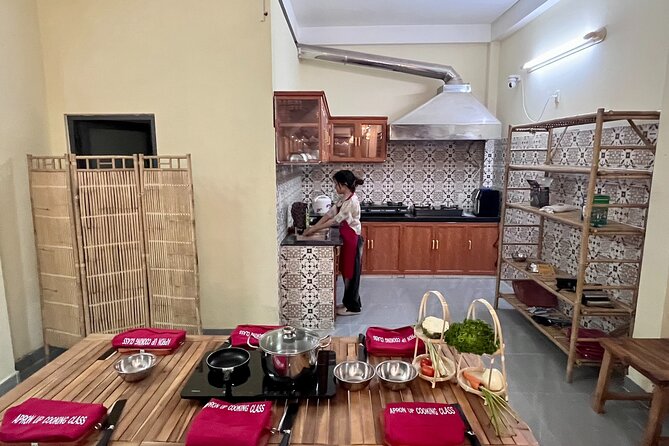
- Market visit first, recipes second: You shop for ingredients at Chợ Bắc Mỹ An before stepping into the kitchen.
- Hands-on cooking for 5 dishes: Expect active participation, not just a demo-style class.
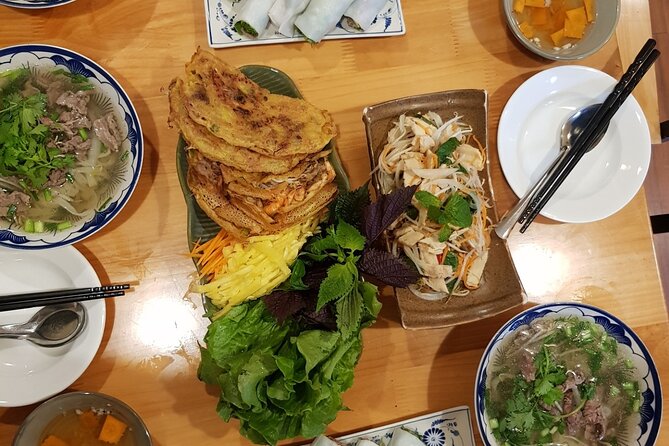
- Central Vietnam variety: Spicy noodle soup, crispy pancake, fresh rolls, jackfruit salad, and avocado ice cream.
- Dietary-friendly menu choices: Vegetarian versions are available for the avocado ice cream and can be adjusted for other needs.
- Small-group feel (sometimes): The tour caps at 30, and some sessions run with a smaller crowd.
- You eat what you cook: The meal is part of the experience, not an afterthought.
Starting at Chợ Bắc Mỹ An: what the market visit really gives you
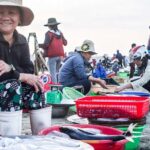
The class begins near 07 Nguyễn Bá Lân in the Bắc Mỹ An area of Ngũ Hành Sơn, with you arriving about 10 minutes early. Then you head to the nearby Chợ Bắc Mỹ An market, which is where the experience starts making sense.
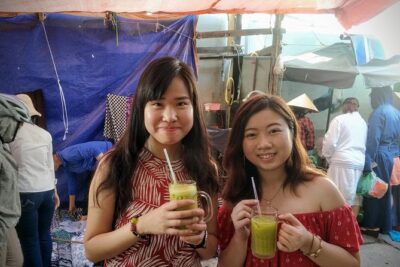
A market visit isn’t just a scenic walk. It’s where Vietnamese cooking becomes concrete: you see the ingredients in real form, learn what’s fresh versus what’s packaged, and get a sense of how people in Da Nang actually stock their kitchens. You also pick up the necessary items for the dishes you’ll cook later, so the class feels connected instead of random.
This is the moment where you’ll learn practical cooking logic, like how some ingredients are chosen for texture (crispness in pancakes), some for balance (sour-sweet elements in salads), and some for aroma (herbs and spices that smell like the region). It’s also a lot of fun to browse with an instructor guiding you, especially if you don’t read Vietnamese well. You’ll pick up a few key words along the way just by hearing them used in context.
If you’re sensitive to crowds, aim to be comfortable in a busy market environment. It’s not an all-night market chaos situation, but it can get active.
You can also read our reviews of more shopping tours in Da Nang
From market to kitchen: how the class runs in 4 hours
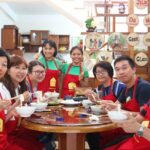
Once the market stop is done, you return to the kitchen and begin cooking. The class is designed to stay within an approximate 4-hour block, which means the pacing is efficient and the teaching is focused.
This is a “join-in” style class, so you’re not just watching. You’ll cook five dishes, using the tools provided, then share the meal together. In many cooking classes, you spend time waiting for turns. Here, the format pushes you to keep moving—mixing, rolling, frying, and assembling—so you get meaningful hands-on time with multiple techniques.
Instructors who lead the class (often mentioned by name as Bora, Chi, Blue, Chi, and Jenny) tend to keep the mood light while still explaining what matters. You’ll hear step-by-step guidance, and you’ll get help when something goes off track—useful when you’re making foods with lots of variables, like pancake batter temperature or how tightly to roll fresh items.
One practical note: expect some group work. A class with multiple dishes and multiple people means not every step can be 100 percent individual, and at least part of the meal may be shared. That’s not a dealbreaker, but it helps to know upfront.
Cook your way through Central Vietnam: the 5-dish menu
The best part of this class is the range. Instead of doing one dish three ways, you get a mini lineup of Central Vietnam favorites. Your join-in menu includes:
- Bún Bò Huế (spicy beef noodle soup)
- Bánh Xèo (crispy Vietnamese pancake)
- Tăm Hữu fresh roll (fresh roll)
- Young jackfruit salad
- Da Nang avocado ice-cream (with a vegetarian version available)
Here’s why this mix works so well for you as a cook.
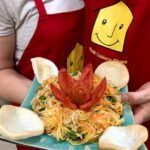
First, it covers different cooking skills. You’ll fry and assemble (bánh xèo), simmer flavors (bún bò huế), build fresh texture (fresh rolls), and balance sour, sweet, and crunchy (jackfruit salad). Then you finish with something creamy and cool (avocado ice cream).
Second, it teaches you how Central flavors behave. Central Vietnamese cooking often leans into spice, herbs, and contrasting tastes. You get that contrast in the same sitting: soup heat, salad tang, crispy pancake crunch, and a sweet dessert at the end.
Bún Bò Huế: learn flavor-building without getting lost
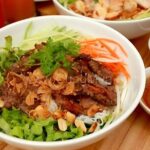
Bún Bò Huế is the dish that rewards patience. It’s not just spicy for the sake of spicy. You’re learning how spice and aroma can work together—so when you taste it, it feels layered, not one-dimensional.
In class, you’ll focus on the core components: the broth base, the noodle pairing, and how the soup comes together as a whole. If you’ve only had this dish at restaurants, cooking it gives you the missing details—what makes it taste like Huế-style comfort and what keeps it from tasting flat.
It’s also a dish that can be a group recipe in practice. That’s normal in a class environment: some steps take time, and soups often require simmering while other stations handle batter or rolling. If you prefer making every step alone, you may find yourself co-authoring parts of the soup. Still, you’ll learn the logic behind it.
Bánh Xèo: the crisp-correctness lesson
If you want one dish that feels instantly satisfying, it’s Bánh Xèo. The “aha” moment here is that crispness isn’t magic—it’s technique plus timing.
You’ll work with batter and learn how to get that thin pancake to cook properly. That’s the kind of skill you can actually take home. When you try bánh xèo later, you’ll remember what you did to affect browning, thickness, and crunch.
And yes, you’ll likely end up talking about how browned is perfect. That’s one of the fun parts of a class like this: you get to compare your pancake reality with the instructor’s standard.
You can also read our reviews of more tours and experiences in Da Nang


Fresh roll: quick assembly, delicate texture
The Tăm Hữu fresh roll is a texture dish. You’re working with wrappers and filling in a way that demands gentleness. The goal is a roll that holds together without turning into something you can’t pick up.
Fresh rolls are also where some people feel the time pressure most, because rolling needs a light hand. If one roll falls apart or tastes a bit plain, don’t take it personally—wrappers and fillings can vary based on moisture and how tightly you roll. Think of it as practice.
If you’re cooking with kids, this is also a good role because it’s hands-on and forgiving as long as the instructor is close by to guide technique.
Young jackfruit salad: balance is the skill
The young jackfruit salad brings the “Vietnam math” of flavor. You’ll combine sweet elements, sourness, and herbs with crunchy textures. It’s the dish that teaches you that salads aren’t always light. They’re built for flavor contrast.
When you cook this in class, you’ll understand why the salad tastes bright rather than just green. It’s the dressing and the ingredient choices that make it work. And because jackfruit has a natural bite, it holds up well when balanced correctly.
This is the dish that works especially well if you want something that cools you down after spice, without turning bland.
Avocado ice cream and vegetarian swaps: the sweet landing
You end with Da Nang avocado ice-cream. It’s a great choice because it gives your brain a break after spicy and crispy dishes.
Avocado ice cream also helps you connect the dots about local desserts. You’ll see how avocado becomes creamy in a way that’s more than just a novelty flavor. It tastes like a real dessert, not a gimmick.
For vegetarians, the class includes a vegetarian version of the ice cream, and the menu is also described as flexible so it can adjust to dietary requirements. What you should do: mention your dietary needs clearly when you book, then double-check with the provider if you’re avoiding more than just meat (for example, dairy or shellfish). The menu is designed to be adjustable, but clarity prevents surprises.
The meal part: coffee, rice vodka, fruit, and shared tables
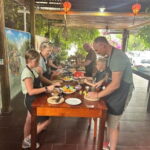
After cooking, you eat your meal. This is one of the biggest value points, because many cooking classes separate cooking time from eating time. Here, you cook, then you sit down and eat the results as part of the flow.
Included with the meal are coffee and/or tea, fruit, and rice vodka. That last part can be a fun cultural touch if you’re open to it, but you don’t have to treat it like a challenge. Even a small sip can help you see how food and drink pair in Vietnam.
You’ll also chat with the instructor during the meal to learn more about local life. This is where you usually get the extra insights that don’t show up in the recipe book—like how people think about everyday cooking speed, shopping habits, or how certain flavor combos are used at home.
Then you receive a cookbook and a certificate, which is great for translating the experience into something you can recreate.
One note: some people mention shared plating or crowded conditions. If you’re easily uncomfortable with limited table space, consider arriving with the mindset that this is a hands-on class day, not a white-tablecloth dinner.
Who this Da Nang cooking class is best for
I think this class fits best if you:
- Want a market-to-kitchen experience, not just a cooking demo.
- Like learning technique fast through a varied menu.
- Enjoy eating what you cook, with a relaxed chat afterward.
- Travel with kids who can handle a couple hours of guided work.
Instructors described in the class experience often come across as patient and upbeat, and that matters a lot when you’re rolling, frying, or trying to match timing on pancakes. If you’re traveling as a couple or small group, you’ll likely feel the benefits even more because you can compare notes on taste and texture while cooking.
If you’re a strict “I want everything individual” person, you might feel the class has some group coordination. But if you’re here to learn and have fun, that shared setup can actually be part of the charm.
Price and logistics: is $39 worth it?
At $39 per person for roughly 4 hours, this is strong value when you look at what’s actually included. You’re paying for:
- A market trip to shop ingredients
- Cooking tools
- Five dishes of hands-on instruction
- Lunch and dinner
- Coffee or tea, fruit, and rice vodka
- A cookbook and certificate
That combination is the key. You’re not just buying a recipe sheet. You’re buying ingredient context and technique practice, then getting a full meal out of it.
Logistically, it’s also easy to slot into a Da Nang day. The meeting point is clearly specified at 07 Nguyễn Bá Lân, and it ends back at the same place. Plus, the tour is capped at 30 travelers, and that cap usually helps keep things manageable.
You’ll want to bring comfortable clothes and closed-toe shoes if you can. Food prep and cooking can get messy, and you’ll feel better if you don’t have to worry about it.
Should you book this Da Nang market-to-kitchen cooking class?
I’d book it if you want one experience that connects Da Nang’s food to real ingredients, then turns that into practical cooking skills. The five-dish menu is broad enough to keep you interested, and the market start helps the class feel grounded instead of just recreational.
Skip it only if you’re looking for a very quiet, highly individual fine-dining style experience with zero group cooking. If you’re okay with a shared kitchen vibe and you like hands-on learning, this is a very solid way to spend a half-day in Central Vietnam.
FAQ
What does the Da Nang cooking class cost?
It costs $39.00 per person.
How long is the cooking class in Da Nang?
The class runs for about 4 hours.
Where is the meeting point?
Meet at 07 Nguyễn Bá Lân, Bắc Mỹ An, Ngũ Hành Sơn, Đà Nẵng 550000, Vietnam. Arrive 10 minutes before the starting time.
Which dishes will I cook?
You cook Bun Bo Hue, Banh Xeo, Tam Huu fresh roll, young jackfruit salad, and Da Nang avocado ice-cream (with a vegetarian version available).
Is there a vegetarian option?
Yes. The menu can be adjusted for dietary requirements, and there is a vegetarian version of the avocado ice-cream.
What’s included with the class meal?
The experience includes lunch and dinner, plus coffee and/or tea, fruits, and rice vodka.
Do we visit a market during the tour?
Yes. You stop at Chợ Bắc Mỹ An to learn about local products and shop for ingredients.
How many people are in the group?
The tour has a maximum of 30 travelers.
What do I receive at the end?
You receive a cookbook and a certificate.
Is free cancellation available?
Yes. You can cancel up to 24 hours in advance for a full refund. If you cancel less than 24 hours before the start time, the amount paid is not refunded.