REVIEW · DA NANG
DaNang Farm-to-Table Cooking Class with Market and Coffee Tasting
Book on Viator →Operated by Jolie Danang Cooking Class · Bookable on Viator
Cooking lunch in Da Nang feels like magic. This hands-on farm-to-table experience starts with a vegetable village walk, then moves to a local market and includes a Vietnamese coffee tasting, all guided in English and French by Jolie Danang’s team. It’s a small-group setup (max 10), so questions don’t get lost in the crowd.
What I really like is how you shop and cook with purpose, not just follow along. The meal you make and the tools/ingredients are included, plus transport during the experience, which keeps the total cost from creeping up. One drawback to plan for: there’s no hotel pickup/drop-off, so you’ll need to get to the start point on your own.
In This Review
- Key highlights to know before you go
- Why a Da Nang farm-to-table class is worth your time
- The 4.5-hour flow: from vegetable village to your lunch table
- Vegetable village stop: herbs you can recognize on sight
- Market visit and Vietnamese coffee tasting: learn what to buy
- The cooking class at a local home: less stress, more technique
- What you might cook in this Da Nang class (and how to repeat it)
- Price and logistics: how the $60 value adds up
- Who this class suits best (and who might want something else)
- Quick tips so you get the most from the day
- Should you book Jolie Da Nang Cooking Class?
- FAQ
- How long is the cooking class?
- How much does it cost?
- How many people are in the group?
- Where do I meet the group?
- Is hotel pickup or drop-off included?
- What language does the guide speak?
- What’s included besides the cooking class?
- Do I get Vietnamese coffee on this tour?
- Is there free cancellation?
Key highlights to know before you go
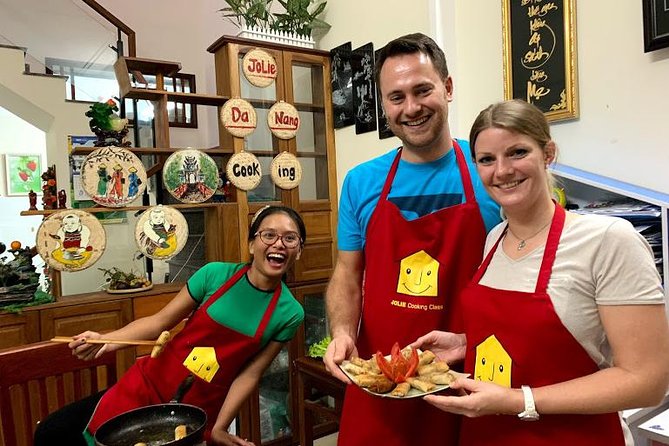
- Vegetable village walk to see how herbs and produce grow, not just how they end up on a plate
- Bilingual guide (English and French) so you can ask real questions about ingredients and technique
- Vietnamese coffee tasting before you start cooking, with flavor cues you’ll notice again in the kitchen
- Hands-on cooking class in a welcoming home setting with step-by-step guidance
- Small-group experience (max 10) for calmer pacing and more one-on-one attention
Why a Da Nang farm-to-table class is worth your time
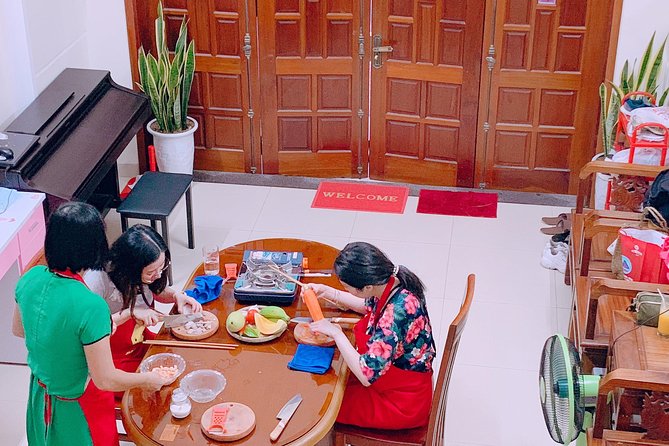
Da Nang food is famous for being light on heavy fats and strong on flavor. The tricky part is that it’s easy to eat your way through Vietnam without learning how the dishes actually come together. This class fixes that. You’re not just tasting; you’re building skills, starting with ingredients and ending with a meal you can confidently recreate later.
The “farm-to-table” angle here is also practical. You see herbs and greens where they grow, then you shop for the same types of ingredients at a market. That link matters. When you understand what leafy herbs do (freshness, aroma, crunch) and how sauces balance sweet, sour, and salty, you stop treating Vietnamese cooking like a mystery.
You can also read our reviews of more food & drink experiences in Da Nang
The 4.5-hour flow: from vegetable village to your lunch table
The experience runs about 4 hours 30 minutes, and it keeps moving without feeling rushed. You’ll begin at 9 Hàm Tử, Bắc Mỹ Phú, Ngũ Hành Sơn, Đà Nẵng 550000, then return to the same meeting point at the end. There’s no separate end stop or long gap between activities; the format is designed to keep you fed, informed, and actively cooking.
Here’s the rhythm you can expect:
- Start with a short walk to a nearby vegetable village
- Head onward to a local market, after a Vietnamese coffee tasting
- Finish at a local home for a hands-on cooking class and relaxed family-style meal
The big advantage is continuity. You learn about ingredients, you pick them out, and you cook with the result. If you like tours where every stop has a job, this one fits that style.
Vegetable village stop: herbs you can recognize on sight
The first part is a walk to a vegetable village where you can see how fresh herbs and produce are grown. This is where the class starts teaching, not just showing. You’re paying attention to what the plants look like, how they’re used, and why certain greens show up again and again in Vietnamese cooking.
From the cooking perspective, the most valuable thing you’ll likely take away is ingredient clarity. Vietnamese dishes rely heavily on herbs that change the whole character of a dish. When you can identify those leaves and herbs by sight, you get better results at home and in restaurants, because you understand what makes the flavor feel complete.
You also get the human side of food. In similar experiences with this same team, guests have said they met the family connected with the garden plot, which adds context beyond a photo opportunity. This is the kind of stop that helps you connect the dish to real people and real farming.
Market visit and Vietnamese coffee tasting: learn what to buy
After the vegetable village, the tour adds a Vietnamese coffee tasting before the market. That sequencing is smarter than it sounds. Coffee in Vietnam isn’t only a drink; it’s part of everyday flavor culture. Tasting it early helps you get your senses tuned, so you’re more aware of sweetness, bitterness, and how balance works when you start cooking.
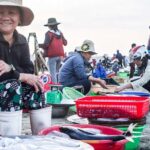
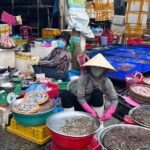
Then you hit the local market to discover essential ingredients used in everyday Vietnamese cooking. This is where your shopping skills improve. Instead of collecting random items, you learn what to look for and what each ingredient is likely doing in a dish—freshness for herbs, texture for vegetables, and depth for sauces.
A bonus detail: you’re guided by someone who speaks both English and French, and the format encourages questions. That’s important because markets can be noisy, and ingredient names don’t always match what you find at home. If you ask the right questions here, you’ll leave with a mental checklist instead of just a shopping bag.
The cooking class at a local home: less stress, more technique
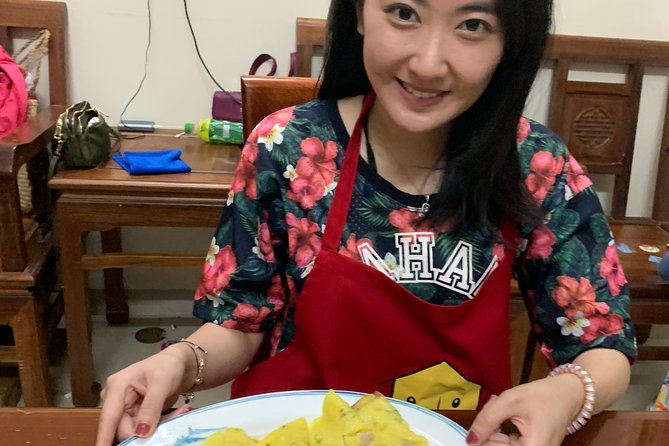
The cooking part happens in a welcoming local home with a hands-on, step-by-step setup. This is where the experience becomes practical. You’re not stuck standing in the back while someone else does everything. You’ll be working through recipes with guidance, then sitting down to eat what you made in a relaxed, family-style setting.
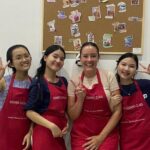
A recurring theme from guests is organization and energy. People have highlighted how the class stays clean and well managed, and how instructors bring fun, high energy into the kitchen. That matters because a cooking class can fall into two traps: chaotic and forgettable, or overly serious and hard to enjoy. Here, the vibe seems geared toward learning.
Also, you won’t be stuck sourcing your own gear. The class includes all ingredients and equipment, so you can focus on technique: timing, mixing, rolling, and assembling. That’s a huge help if you’re not confident in Vietnamese cooking yet.
You can also read our reviews of more shopping tours in Da Nang
What you might cook in this Da Nang class (and how to repeat it)
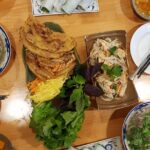
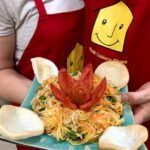
The exact dishes you cook can vary with the day and the flow of class, but the experience is designed around classic homemade Vietnamese cooking. In reviews and info connected to this class, guests have mentioned dishes such as:
- Pho Bo
- Papaya salad
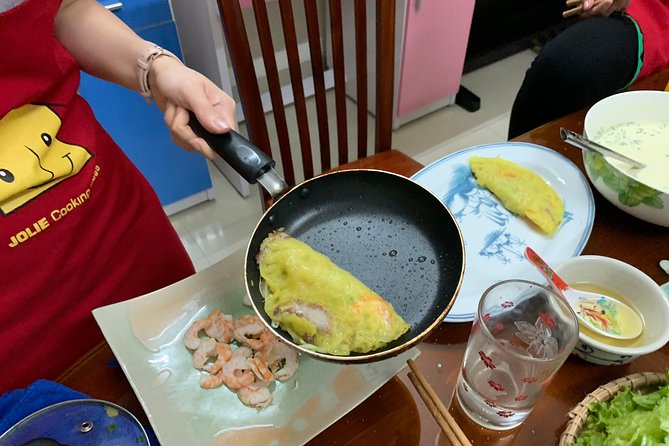
- Pancake rolls
- Aubergine hot pot
Even if you only master parts of each dish, you leave with a strong foundation. Here’s what that foundation tends to be about:
- With something like pho, the learning is about building flavor and understanding how balance works in broth and toppings.
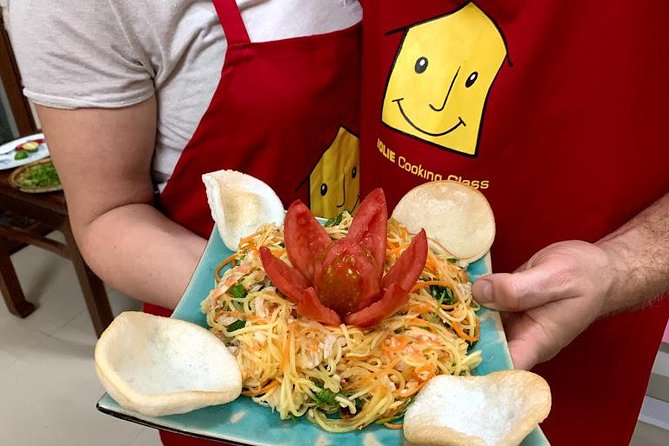
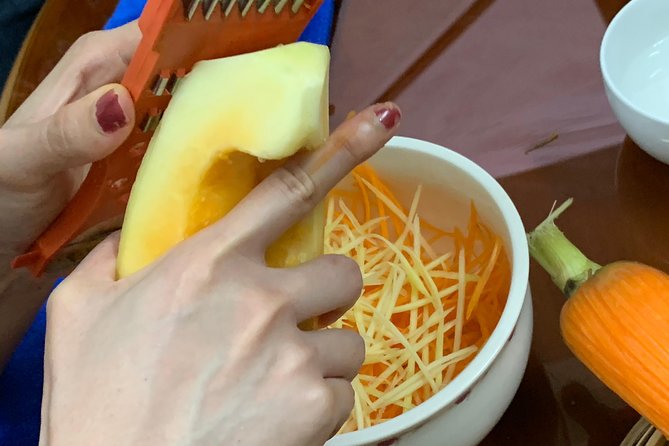
- For papaya salad, you learn that the magic often comes from the mix: how sour and sweet are tuned, and how texture stays crisp rather than soggy.
- Pancake rolls teach rolling and assembly, which is where many people struggle at home. Getting the method from a guide reduces frustration.
- Aubergine hot pot helps you understand how eggplant absorbs sauce and how to keep the dish tasting deep rather than flat.
The best part for value is that you can use this cooking knowledge later. You won’t just remember the taste; you’ll remember what ingredients you used and what steps mattered. That’s how a food tour turns into real skill.
Price and logistics: how the $60 value adds up
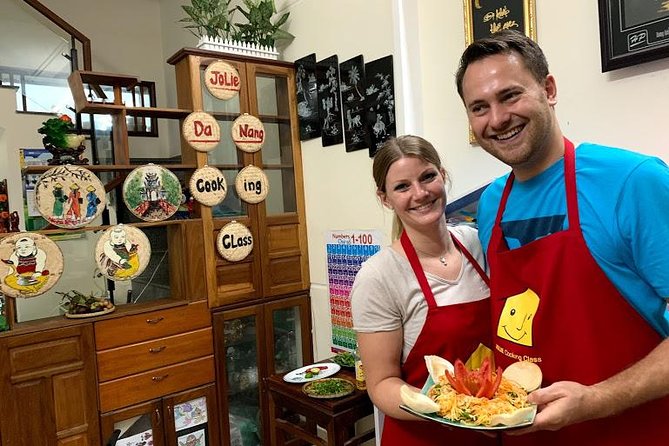
The price is $60 per person for about 4 hours 30 minutes, in a small group (max 10), with transport during the experience, ingredients and equipment, and the meal you prepare. You also get the vegetable village, market visit, and a Vietnamese coffee tasting.
When I look at value in tours like this, I focus on what you don’t have to worry about:
- You don’t need to buy ingredients separately.
- You don’t need to figure out equipment.
- You don’t need to pay for extra transport between stops during the experience.
- You don’t just watch; you cook and eat.
One logistics note: there’s no hotel pickup/drop-off, and the start is at 9 Hàm Tử in Ngũ Hành Sơn. It’s also described as near public transportation, which helps. If you’re staying somewhere convenient, the “no pickup” part is manageable. If you’re farther out, build in time for getting there.
Who this class suits best (and who might want something else)
This tour is a strong fit if you want a hands-on Vietnamese cooking experience with context. It’s especially good for:
- Food lovers who want to learn how dishes work, not just taste them
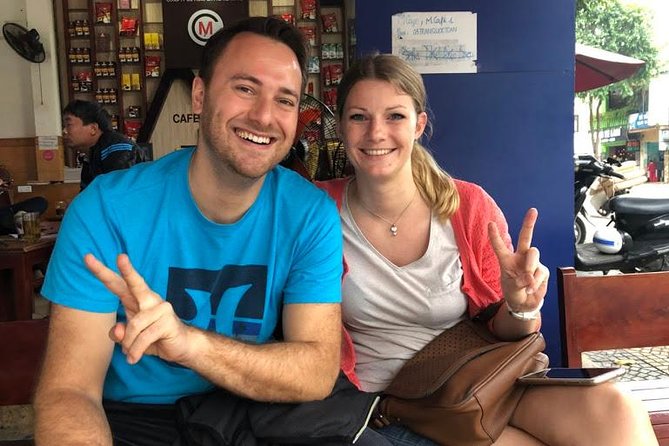
- Travelers who like small groups and real Q&A
- People who enjoy markets and herb-focused ingredient learning
It may feel less ideal if you prefer to spend your day mainly sightseeing rather than cooking. Also, if you dislike walking for short stretches, note that the experience begins with a short walk to the vegetable village before the market.
Quick tips so you get the most from the day
- Wear comfortable shoes. There’s walking between the opening stop and the market.
- Come ready with questions. The guide speaks both English and French, so ask about substitutions you might use at home.
- Don’t overpack. You’ll want your hands free while shopping and cooking.
- If coffee is not your thing, try it anyway. Even a small tasting helps you understand flavor balance.
Should you book Jolie Da Nang Cooking Class?
I’d book this if you want a day that connects farming, markets, and classic cooking into one clean learning path. The small group size (up to 10), the fact that you cook and eat what you make, and the inclusion of ingredients/tools/transport all make the price feel reasonable rather than nickel-and-dimed.
Skip it only if you really don’t want to cook, you can’t get yourself to the meeting point at 9 Hàm Tử, or you’re looking for something purely sightseeing-based with no hands-on work.
If your goal is to leave Da Nang with a usable recipe mindset and ingredient confidence, this one hits the mark.
FAQ
How long is the cooking class?
It lasts about 4 hours 30 minutes.
How much does it cost?
The price is $60.00 per person.
How many people are in the group?
It’s a small-group experience with a maximum of 10 travelers.
Where do I meet the group?
The tour starts at 9 Hàm Tử, Bắc Mỹ Phú, Ngũ Hành Sơn, Đà Nẵng 550000, Vietnam, and it ends back at the same meeting point.
Is hotel pickup or drop-off included?
No. Hotel pick up/drop off is not included.
What language does the guide speak?
The guide speaks both English and French.
What’s included besides the cooking class?
You get a vegetable village and market visit, Vietnamese coffee tasting, the hands-on cooking class, all ingredients and equipment, transportation during the experience, and the meal you prepare.
Do I get Vietnamese coffee on this tour?
Yes. The experience includes a Vietnamese coffee tasting.
Is there free cancellation?
Yes. You can cancel up to 24 hours in advance for a full refund.