REVIEW · DA NANG
Da Nang: 5 famous dishes cooking class with market trip
Book on GetYourGuide →Operated by Apron Up Cooking Class · Bookable on GetYourGuide
A market visit you can actually taste. This Da Nang cooking class blends a hands-on Bac My An market walk with an English-speaking guide, so you learn what to buy and how to use it, not just what to eat. Then you head back to cook a set menu of five famous Vietnamese dishes.
I like that the class is very practical: you shop for ingredients, cook step-by-step, and take home a printed cookbook plus a certificate. One thing to consider: the menu is fixed (with a vegetarian version if you’re vegetarian), so if you have allergies or other strict dietary needs, you’ll want to ask in advance.
In This Review
- Key takeaways before you go
- From 07 Nguyen Ba Lan to the market: why the start matters
- The 4-hour rhythm: shop, cook, eat, go
- What you’ll cook: five famous dishes and the skills behind them
- Bun Bo Hue
- Banh Xeo
- Fresh roll
- Young jackfruit salad
- Avocado ice-cream
- The kitchen meal: fruit, rice vodka, and eating as a group
- Your guide, your pace: English instruction that stays practical
- Price and value: why $40 can be a good deal
- Who should book this Da Nang class (and who should skip it)
- Should you book it?
- FAQ
- FAQ
- How long is the cooking class in Da Nang?
- Where do I meet, and when should I arrive?
- What dishes are included in the menu?
- Is there an option for vegetarians?
- Is the instructor available in English?
- What do I receive at the end of the class?
- Can I cancel and get a refund?
Key takeaways before you go
- Bac My An market stop first, so your cooking starts with real ingredient choices
- English-speaking instruction that keeps you oriented while you work the recipes
- Five-dish menu: banh xeo, bun bo hue, fresh roll, young jackfruit salad, and avocado ice-cream
- Hands-on cooking tools + all ingredients included, so you’re not scrambling for supplies
- You eat what you make, with fruit and homemade rice vodka after class cooking
- Take-home proof: a printed cookbook and a certificate
From 07 Nguyen Ba Lan to the market: why the start matters
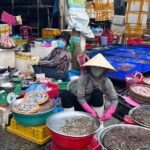
The experience meets at number 07 Nguyen Ba Lan street, Ngu Hanh Son (Da Nang). Plan to arrive about 10 minutes early so you don’t feel rushed. It then connects you to the nearby market with your instructor, which is where the whole day clicks.
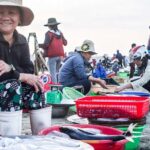
Food classes can turn into a performance. Here, the market part makes it a skill-building outing. You get to see produce, herbs, and common ingredients used in Vietnamese cooking before you ever step near the stove. That means when you cook later, you’re not guessing what something should look like or taste like.
Also, because you’re walking a market with a guide, you’ll pick up the small “how to choose” habits that matter at home. Think: what to look for in fresh items, how ingredients relate to the dishes, and why certain flavors belong together. It’s the difference between eating Vietnamese food and learning the logic behind it.
One practical note: you’ll be moving around the market. Wear comfortable shoes you can stand in, and keep a small water plan in your head, since you’ll be working and cooking for about 4 hours total.
You can also read our reviews of more shopping tours in Da Nang
The 4-hour rhythm: shop, cook, eat, go
This class runs about 4 hours, and it keeps a clean loop: meet up, market walk and shopping, return to the kitchen, cook five dishes, then sit down to enjoy what you made.
Here’s the rhythm you can expect:
1) Meet and head out with your instructor
You start at the Apron Up Cooking Class meeting point and leave as a group for the market stop.
2) Market trip with shopping + ingredient learning
You shop for the ingredients your recipes need. The guide explains what you’re selecting and how ingredients are commonly used.
3) Back to the kitchen for hands-on cooking
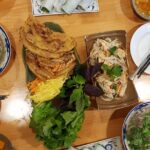
You cook a set menu that includes: bun bo hue, banh xeo, fresh roll, young jackfruit salad, and avocado ice-cream. If you’re vegetarian, you’ll do a vegetarian version instead.
4) Eat together with fruit and rice vodka
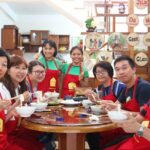
After cooking, the group enjoys the meal you made. You also get fruit, and homemade rice vodka shows up while you chat with the instructor.
5) Cookbook + certificate, then you’re done
The class ends back at the meeting point area with your take-home materials.
The value here is that you’re not just observing. You’re working. And because it’s structured, you get through five dishes in one sitting without feeling like the day is dragging.
What you’ll cook: five famous dishes and the skills behind them
The menu is the headline: five dishes, each teaching a different kind of Vietnamese flavor and technique. Even if you don’t remember every step, you’ll leave with a clearer idea of how Vietnamese home cooking is built.
Bun Bo Hue
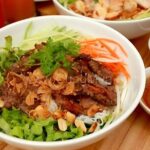
Bun bo hue is known for bold, spicy depth and a comforting bowl feel. In class, you’re not just tasting the flavor—you’re learning how ingredients create that signature balance. Expect something hearty, with a flavor profile that’s sharper and more intense than plain noodle soups.
Skill takeaway: You’ll understand how to think about broth-style seasoning and how heat and aroma work together in Vietnamese cooking.
Banh Xeo
Banh xeo is a crispy Vietnamese savory pancake made with a thin batter. It’s usually eaten with fresh herbs and vegetables, which is part of why it tastes so alive.
Skill takeaway: You get a sense for batter consistency and cooking timing—the difference between a pancake that turns out thin and crisp versus one that feels heavy.
You can also read our reviews of more tours and experiences in Da Nang



Fresh roll
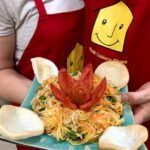
Fresh rolls focus on texture and freshness: soft rice paper, balanced fillings, and a bite that comes from herbs and dipping flavors. This dish is a great “reset” between hotter, heavier recipes.
Skill takeaway: You learn how to assemble without overstuffing, and you’ll get a better feel for portioning and rolling so it doesn’t tear.
Young jackfruit salad
Young jackfruit salad is all about crunch and tangy-salty heat. Jackfruit is a staple ingredient in Vietnam, and this salad shows how it can feel refreshing while still tasting bold.
Skill takeaway: You’ll see how Vietnamese salads use contrasting elements—sweet, sour, salty, and spicy—so the dish tastes balanced instead of one-note.
Avocado ice-cream
Avocado ice-cream sounds like a curveball until you try it. The point of including it is smart: you see how fruit can become a dessert that still feels familiar to Vietnamese flavors.
Skill takeaway: You’ll learn how to turn an ingredient that’s usually used in savory contexts into a creamy sweet treat.
And here’s a practical bonus: your instructor can provide a vegetarian version if you’re vegetarian. So you’re not stuck sitting out or switching to a totally different class format.
The kitchen meal: fruit, rice vodka, and eating as a group
After cooking, you get to eat together. That part matters more than it sounds. When you share the meal you made, you naturally compare what worked, what needs adjustment, and how the dishes taste as a set.
You’ll also receive:
- Welcome tea at the start
- Fruit with your meal
- Homemade rice vodka during the hangout after cooking
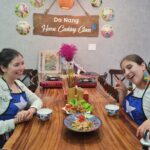
The rice vodka is part of the experience vibe: you’re still in learning mode, but the table becomes social. It’s a good moment to ask questions you might forget while your hands are busy—like what to prioritize when you try the recipes later.
If you’re the type who worries about being “bad at cooking,” this meal setup helps. You’re surrounded by people who are also learning, and you’re tasting the results right away instead of waiting weeks to find out if the recipe works.
Your guide, your pace: English instruction that stays practical
An English-speaking guide is included, and that changes the class from cookbook-only to real skill-building. Clear English matters most at the moments where you’d normally get lost: timing, textures, and how to correct small mistakes.
Instructors you might meet through this kind of class include Chi and Blue, and you may also see names like Daisy and Bora associated with teaching. The common thread is patient, energetic explanations and steady help while you cook.
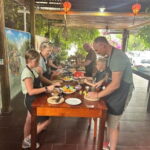
Small-group energy is also a big part of why this works. You might find yourself in a very small group (even as few as four people on some sessions), which makes it easier to get hands-on help and keep your workstation from turning into a crowded production line.
If you’re traveling solo, that’s reassuring. You’re not stuck watching while others get all the attention. The class setup is designed so you can participate.
Price and value: why $40 can be a good deal
At about $40 per person for a 4-hour experience, the best way to judge the value is what you actually get: market trip, guide, all ingredients, cooking tools, and you still get a cookbook and certificate.
Many food experiences charge extra for one of those pieces:
- Cooking instruction only, but you pay for ingredients
- A meal, but not the learning
- A workshop without an actual take-home resource
Here, the package is bundled. You’re paying for:
- Market trip + shopping time with an instructor
- All ingredients for five dishes
- Tools so you can cook without chasing equipment
- Welcome tea, fruit, and homemade rice vodka
- A printed cook book and certificate
Also, the skills translate. If you cook even one dish at home, it can pay for itself compared to a single restaurant meal and a one-time food memory.
If you want a class you can justify beyond just tasting, this is the type of activity where you leave with recipes you’ll actually use.
Who should book this Da Nang class (and who should skip it)
This class is a strong fit if you want a real introduction to Vietnamese cooking and you like the idea of learning from ingredients, not just instructions.
You’ll probably enjoy it if:
- You want to explore Da Nang food culture through a market + kitchen format
- You like hands-on cooking and want to make multiple dishes in one day
- You need English instruction to follow along and feel confident
You should think twice if:
- You’re extremely sensitive to ingredients and need strict allergy handling beyond vegetarian adjustments. The data confirms vegetarian versions, but it doesn’t spell out allergy guarantees.
- You’re traveling with very young children. The class isn’t suitable for kids under 4.
- You’re an advanced senior visitor. It isn’t suitable for people over 95 years.
Good news: it’s listed as wheelchair accessible, so mobility shouldn’t automatically disqualify you.
Should you book it?
Yes, if you want a Da Nang food experience that’s more than eating. The market trip makes the cooking make sense, and the five-dish menu gives you enough variety to feel like you learned something real in one afternoon.
Skip it only if your diet restrictions are complex and you can’t comfortably confirm details ahead of time. Otherwise, this is an efficient, high-value way to get recipes, technique, and Vietnamese flavor in one go—plus a cookbook you can pull out when you’re craving those dishes again.
FAQ
FAQ
How long is the cooking class in Da Nang?
The cooking class runs for 4 hours.
Where do I meet, and when should I arrive?
You meet at number 07 Nguyen Ba Lan street, Ngu Hanh Son, Da Nang. Plan to arrive about 10 minutes before the starting time.
What dishes are included in the menu?
The class covers five dishes: bun bo hue, banh xeo, fresh roll, young jackfruit salad, and avocado ice-cream.
Is there an option for vegetarians?
Yes. The class can provide a vegetarian version if you are vegetarian.
Is the instructor available in English?
Yes. The guide/instructor speaks English.
What do I receive at the end of the class?
You receive a printed cook book and a certificate after the meal.
Can I cancel and get a refund?
Yes. You can cancel up to 24 hours in advance for a full refund.