REVIEW · DA NANG
Da Nang Cooking: Market tour, farming, and cooking class
Book on GetYourGuide →Operated by HOI AN FOOD TOUR · Bookable on GetYourGuide
Cooking Vietnam starts at the farm. I love the mix of market shopping and a hands-on cooking class where you make real dishes like Quang noodle, Pho, and Banh Xeo, not just watch. The one catch: there’s no hotel pickup, so you’ll need to get yourself to the start.
This is built for comfort and focus. The group is small (14 people), and the format stays the same in harsh sun or rain, so you’re not constantly adjusting your plans.
You’ll also appreciate that the menu is flexible. There are three menu options (including vegetarian), and you can book a shorter 2.5-hour cooking-only class or the full 4-hour experience with farming and the market. There’s even an optional coffee workshop (1.5 hours) if you want more Vietnamese flavor homework.
In This Review
- Key things you’ll notice right away
- From organic farm rows to your cutting board
- The market tour: where you learn the ingredient names you’ll actually use
- Farming time: planting and watering like a Vietnamese farmer
- Your menu choices: Quang noodle, Pho, Banh Xeo, and spring rolls
- Menu 1 (Mon, Wed, Fri)
- Menu 2 (Tue, Thur, Sat, Sun)
- Vegetarian option (available as a separate menu)
- Inside the cooking class: hands-on steps for 14 people
- Herbal tea tasting and dessert: a quiet reset after the heat
- Short 2.5 hours or full 4 hours, plus optional coffee (1.5 hours)
- Cooking-only option (about 2.5 hours)
- Full experience (about 4 hours)
- Add-on: coffee making workshop (1.5 hours)
- Price and value: why $25 can make sense here
- Weather and comfort: plan for sun, rain, and active hands
- Who should book this Da Nang cooking class
- Should you book Da Nang Cooking: Market tour, farming, and cooking class?
- FAQ
- What dishes will I cook?
- Is there a vegetarian option?
- How long is the experience?
- Does the class include the ingredients and recipes?
- Is there hotel pickup or drop-off?
- Is the class taught in English?
- How many people are in the group?
Key things you’ll notice right away
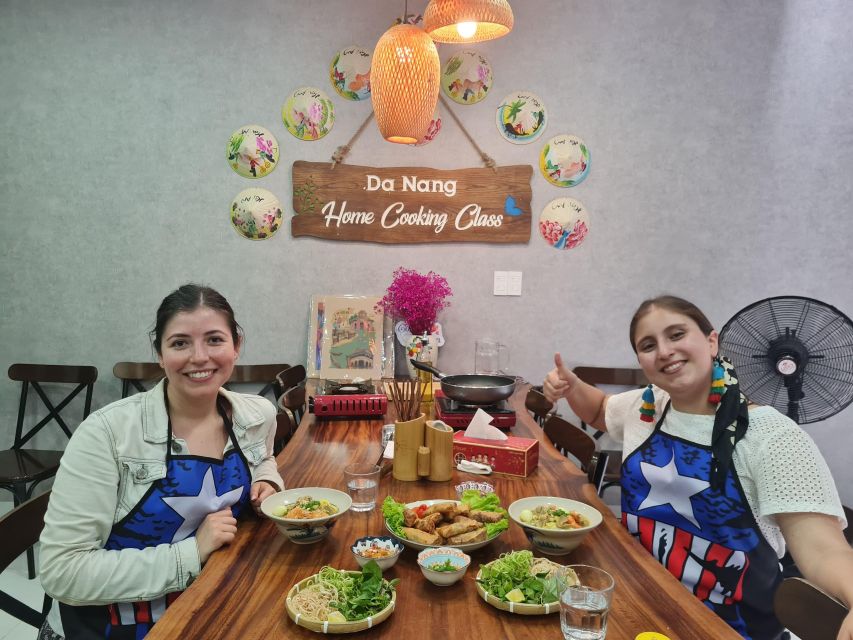
- Small group (14 people): you’ll get hands-on at each step instead of hovering.
- Three menu options, including vegetarian: plan around what you want to cook.
- Farm-to-market flow: you plant and water, then shop fresh ingredients.
- Da Nang staples show up: expect Quang noodle and spring roll variations.
- English instruction plus recipe copies: you can cook again at home with less guessing.
- Herbal tea tasting with organic ingredients: it’s part snack, part lesson.
From organic farm rows to your cutting board
The experience starts at an organic farm, where you learn how vegetables and ingredients grow before you ever touch a stove. Expect some simple farming basics like planting and watering, then moving on to the next stage with a better sense of where flavors come from.
This matters more than you’d think. When you understand how ingredients are grown and handled, you cook with more intention. You also get a calmer mindset for the rest of the day, because you’re not rushing straight from “tour mode” to “kitchen chaos.”
You’re working with an English-speaking instructor (and you may meet teachers like Jane or Nhi, based on past classes). Either way, the teaching style is set up to keep you moving and learning, with room for questions.
You can also read our reviews of more shopping tours in Da Nang
The market tour: where you learn the ingredient names you’ll actually use
After the farm, you head to the local fresh market to pick up ingredients. This is where the trip stops being theoretical. You get to see produce and packaged staples up close and learn what Vietnamese cooks look for.
You’ll also get practical ingredient recognition. Menus rotate, but you’ll commonly deal with things like green papaya or mango, shrimp, fish sauce, and herbs/spices tied to each dish. When you can point to the right ingredient in a market, you can recreate dishes later without doing a web search every time.
One useful tip from the experience: if you’re choosing a time, a morning market visit can mean fewer people. That’s not about comfort only. It’s about hearing the guide and making decisions more easily when the stall area isn’t crowded.
Farming time: planting and watering like a Vietnamese farmer
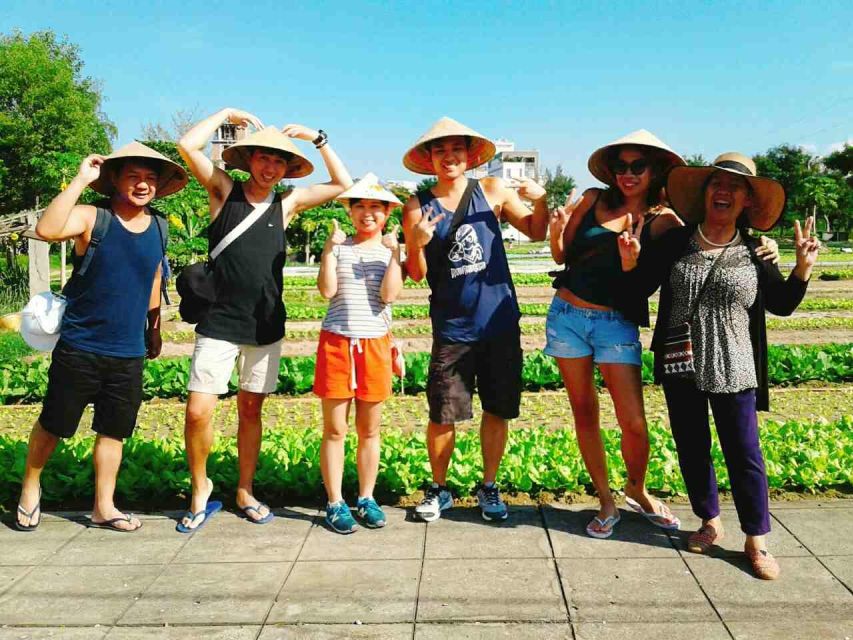
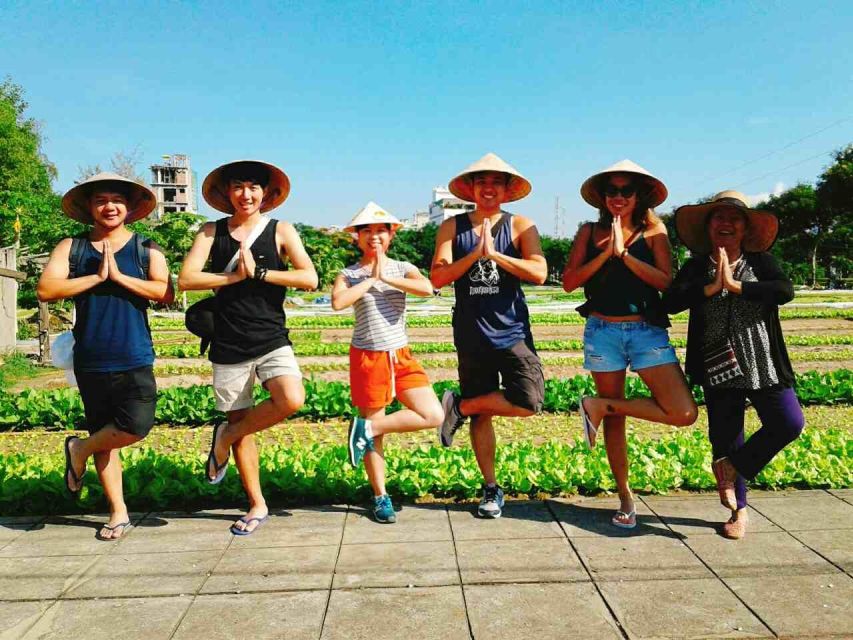
The farming activity is short but real. You practice things like planting and watering in the vegetable gardens, so you’re not just standing by for photos. Even if you’ve gardened before, this part gives you a Vietnam-specific angle on ingredient sourcing.
It also helps the cooking class make sense. Your body learns first. Then your brain connects that to flavor choices later—why certain vegetables taste the way they do, and why texture matters when you’re making items like spring rolls or crispy pancakes.
If you’re traveling with kids, this is one of the easiest segments to enjoy because it’s active. If you’re traveling solo, it’s a great way to break the ice before you start chopping in the kitchen.
Your menu choices: Quang noodle, Pho, Banh Xeo, and spring rolls
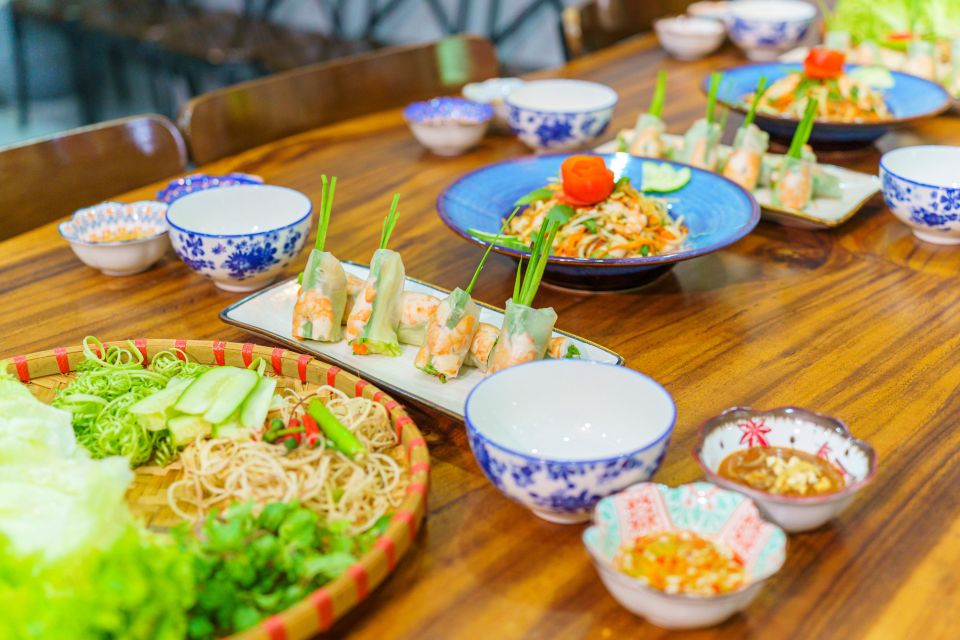
One reason this cooking class feels like a “real meal class” and not a generic show-and-tell is that you cook four traditional dishes. The exact mix depends on the day’s menu.
Menu 1 (Mon, Wed, Fri)
- Quang noodle
- Fish sauce chicken wing
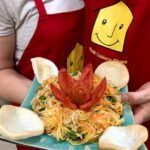
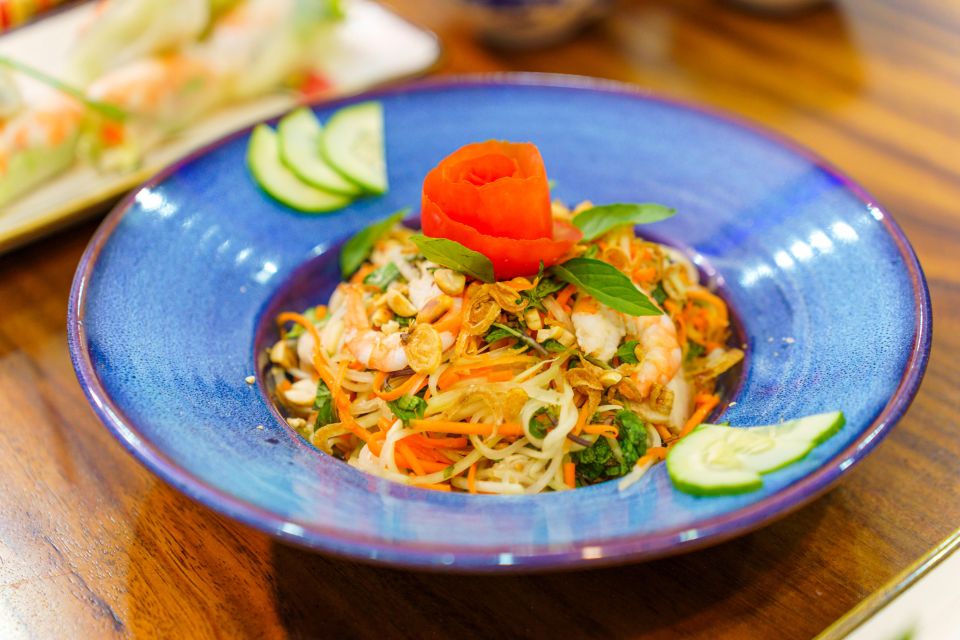
- Green papaya salad with shrimp
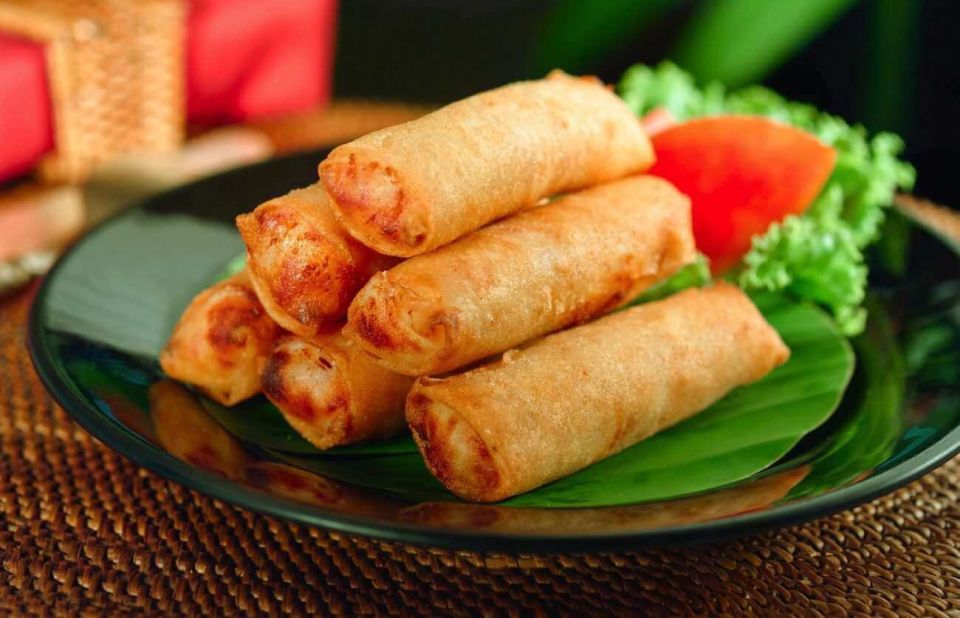
- Deep-fried spring rolls
If you like tangy, crunchy, and fried textures, Menu 1 hits that target. Green papaya is bright and slightly sharp, and deep-fried spring rolls give you that crisp payoff that’s hard to fake at home if you don’t learn the method.
You can also read our reviews of more tours and experiences in Da Nang
Menu 2 (Tue, Thur, Sat, Sun)
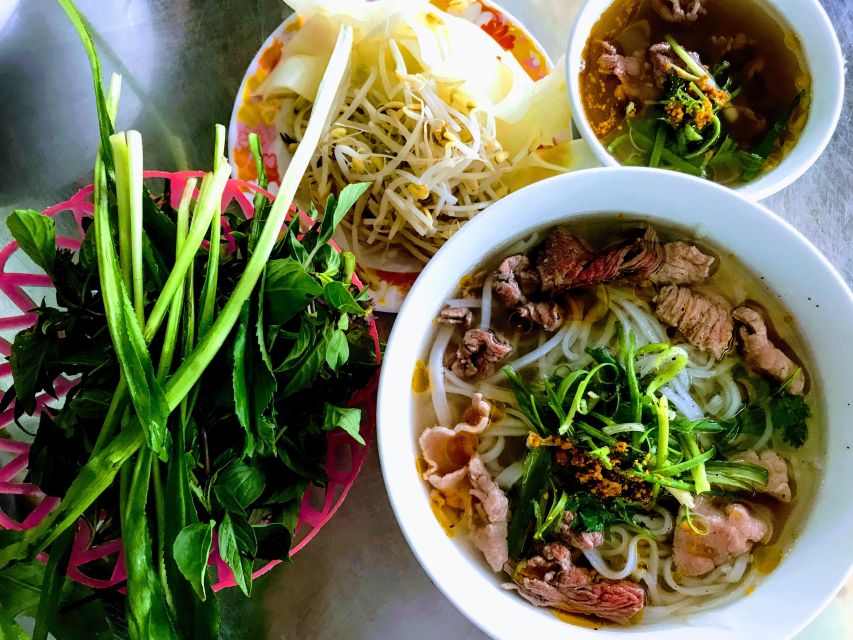
- Beef noodle soup (Pho)
- Crispy Vietnamese pancakes (Banh Xeo)
- Green mango salad with shrimp
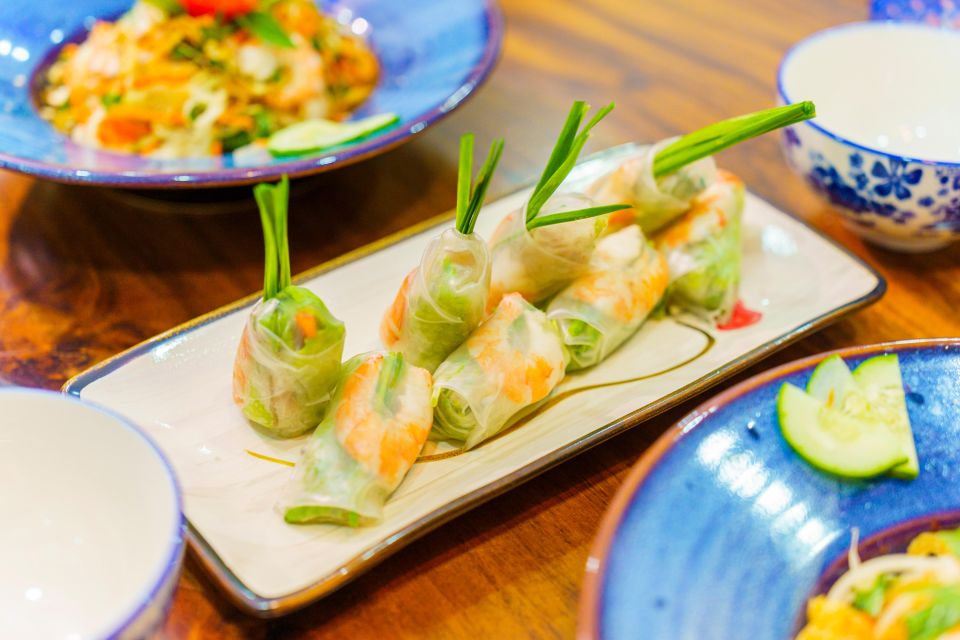
- Fresh spring roll
This menu is great if you want variety in one sitting: hot soup comfort (Pho), crispy crepe-style pancakes (Banh Xeo), and two fresh components with shrimp and fruit-based salads. Fresh spring rolls also teach you technique for rolling and texture balance.
Vegetarian option (available as a separate menu)
- Quang noodle or Pho
- Eggplant stir fry
- Mango salad or papaya salad
- Fried spring roll or fresh spring roll
You’re not just swapping one protein. You still cook a full lineup with vegetables and the same salad logic, so vegetarian diners get a full Vietnamese spread rather than a watered-down version.
Inside the cooking class: hands-on steps for 14 people
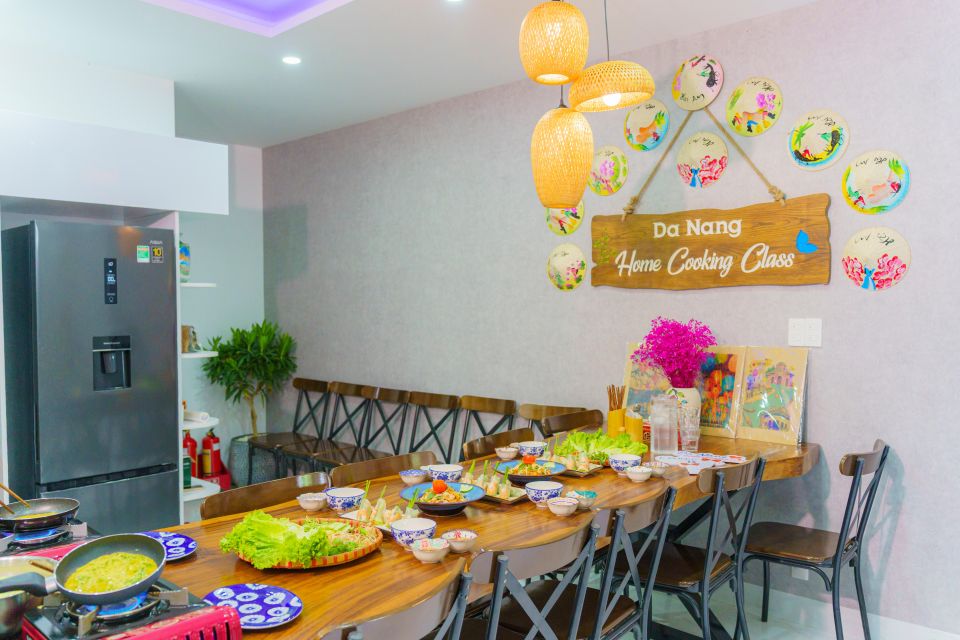
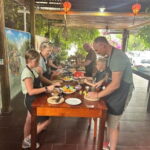
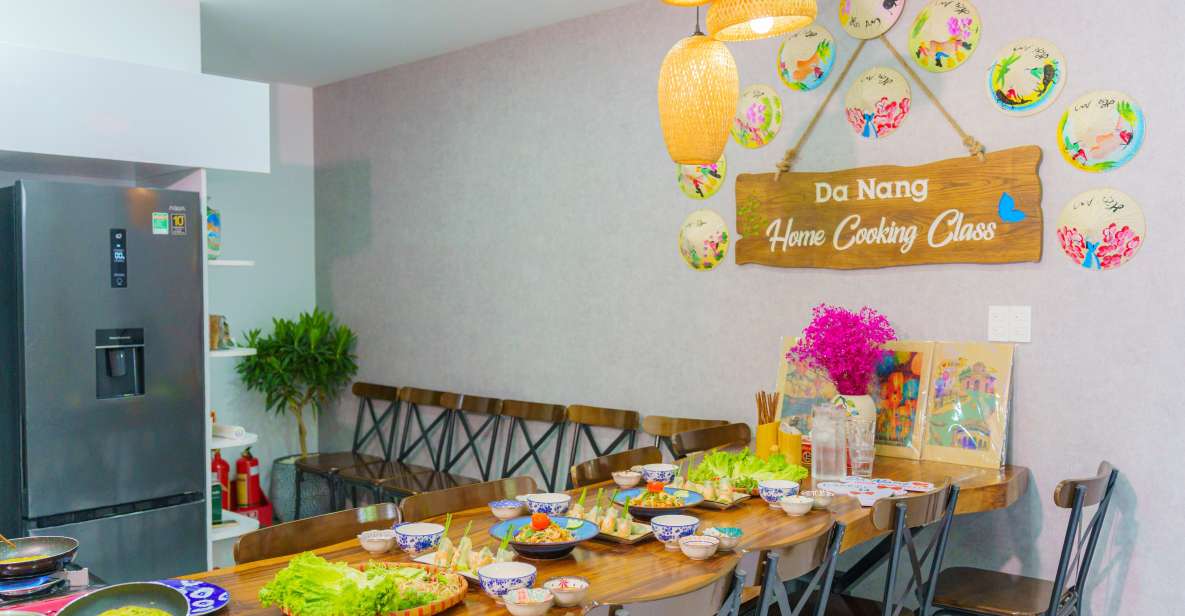
Once you’re in the kitchen, the focus shifts to technique. You’ll cook your four dishes through a guided process, and the small group size (14) is the big advantage here. You’re not waiting in line for a turn. You’re doing things: prep, assembly, cooking, and final plating.
English instruction is built in, and you also get English recipe copies. That’s huge for value. After a class like this, the real question is whether you can reproduce the food when you get home. Recipe pages let you do that.
Past participants highlighted the teachers’ personality and teaching style. Classes led by Jane were described as fun and funny, and instructors like Nhi were praised for explaining a lot and keeping it practical both in the field and in the kitchen. That balance is what you want: clear steps, good pacing, and enough humor that you don’t feel stressed when something is sticky or sizzling.
For the dishes themselves, here’s what you’ll likely be practicing:
- Pho: understanding how soup ingredients and timing work so the broth tastes balanced.
- Banh Xeo: learning how to get the pancake thin and crisp, then managing fillings.
- Quang noodle: working through the noodle-and-topping combination so it feels like the real dish.
- Spring rolls: either rolling fresh neatly or frying them for crispness.
Even if you don’t nail everything on the first attempt, you’ll leave with better instincts than before you arrived.
Herbal tea tasting and dessert: a quiet reset after the heat
This class doesn’t end when the last pan cools down. You get herbal tea (with organic ingredients) and water during the experience, plus dessert.
Tea tasting is more than a finishing touch. It’s a small lesson in Vietnamese flavor thinking. Herbal teas can be cooling, earthy, and lightly aromatic, which is a nice counterpoint to spicy, tangy, and fried dishes. Dessert adds that closure that makes the meal feel complete rather than interrupted by “class end” time.
Short 2.5 hours or full 4 hours, plus optional coffee (1.5 hours)
You’ve got options, and that’s part of the value.
Cooking-only option (about 2.5 hours)
Choose this if you want maximum time efficiency. You still get the hands-on cooking portion, the herbal tea, water, dessert, ingredients included, and English recipes. It’s the best fit if you have other plans in Da Nang and you mainly want the meal skills.
Full experience (about 4 hours)
This is the better choice if you care about the full story: farming activity + market tour + cooking class. The extra time is what transforms it from “cook food” to “learn the ingredient journey.”
If you’re the type who enjoys seeing how ingredients connect to flavor, go full. This is also easier if you want a day that feels more complete without adding extra museum stops.
Add-on: coffee making workshop (1.5 hours)
If you want to extend your Vietnamese culinary education, the coffee workshop is an easy add-on. It’s there for exactly one reason: you’ll come away with another skill to share when you get home.
Price and value: why $25 can make sense here
At $25 per person, this class can feel like a bargain if you compare it to the cost of eating out plus the cost of a cooking activity.
Here’s where the value comes from:
- Four dishes cooked, not one snack-sized item.
- All ingredients included, so you’re not paying extra for what you’ll make.
- English recipe copies so you can repeat the cooking later.
- Tea, water, dessert, which adds to the meal experience.
- Small group size (14), which is often where “value” is hidden. When you can actually participate, you learn more per hour.
The main thing to watch is the time choice. The full 4-hour experience gives you farming and the market, while the shorter class is more meal-focused. Decide based on how much you want the farm-to-market context.
Weather and comfort: plan for sun, rain, and active hands
The experience is designed to keep going whether it’s bright or rainy, and that’s reassuring. Still, you should dress like you’ll be walking outdoors and moving a lot in the kitchen.
Practical basics:
- Wear comfortable shoes you don’t mind getting a bit dirty.
- Bring a light layer if you run cold inside the kitchen.
- Keep hydration in mind even though water is provided during the class.
If you’re hoping for great photos, you’ll have better chances during the early segments (farm and market). Once you’re cooking, you’ll be focused on technique, not wandering.
Who should book this Da Nang cooking class
This is a strong fit if you:
- Want hands-on cooking with a small group.
- Like local dishes such as Quang noodle, Pho, Banh Xeo, and spring rolls.
- Care about ingredients, not just recipes.
- Prefer English support and take-home recipes.
It’s also a good option for couples and friends who want something active together, and it works for families with kids since farming and rolling spring rolls give everyone a role.
If you hate hands-on activities and prefer purely observational tours, you might find it more work than you want. But if you’re excited to cook, this is the type of class that pays you back with skills you can use again.
Should you book Da Nang Cooking: Market tour, farming, and cooking class?
Yes, if you want a class that teaches more than just a dish. The farm-to-market flow, the four-dish format, and the small group size make it a practical way to learn Vietnamese cooking without the usual “watch and hope” feeling.
I’d book it particularly if you’re interested in Da Nang specialties like Quang noodle and you want a clear path from ingredient shopping to the finished plate. Choose the full 4-hour version if you can, because that’s where the experience becomes more than cooking. Choose cooking-only if your schedule is tight and your priority is the meal skills.
FAQ
What dishes will I cook?
You’ll cook 4 traditional dishes, chosen from the day’s menu. Menu 1 includes Quang noodle, fish sauce chicken wing, green papaya salad with shrimp, and deep-fried spring rolls. Menu 2 includes Pho, Banh Xeo, green mango salad with shrimp, and fresh spring rolls. A vegetarian option is also available with Quang noodle or Pho, eggplant stir fry, a mango or papaya salad, and fried or fresh spring rolls.
Is there a vegetarian option?
Yes. There is a vegetarian option menu that swaps in vegetable-based dishes like eggplant stir fry and vegetarian-friendly spring roll choices.
How long is the experience?
The duration is listed as 150 to 270 minutes depending on which option you choose. There’s a shorter cooking-only class of about 2.5 hours and a full experience of about 4 hours (farming, market tour, and cooking).
Does the class include the ingredients and recipes?
Yes. All ingredients are included, and you receive recipe copies in English.
Is there hotel pickup or drop-off?
No. Pick up and drop off at your hotel is not included.
Is the class taught in English?
Yes. The instructor is English speaking, and the materials are provided in English as well.
How many people are in the group?
The class size is about 14 people, which keeps the experience personal and hands-on.